Email Pre-Send Checklist: 12 Checks Before You Hit Send
An Email Pre-Send Checklist helps you verify audience, links, mobile layout, accessibility, authentication, tracking, timing, and more before every campaign.

Md. Yaikub Hossain Razon
An Email Pre-Send Checklist is a final quality-control pass that confirms your audience, copy, links, design, personalization, accessibility, sender setup, tracking, and schedule before a campaign launches. The best checklist reviews both what subscribers see and what mailbox providers evaluate, then finishes with a real test of the final email.
That review matters because inbox providers now have clear sender requirements. Google requires senders to Gmail accounts to keep spam rates reported in Postmaster Tools below 0.3%. Bulk senders must also meet additional authentication and unsubscribe requirements. Yahoo also tells bulk senders to keep spam complaint rates below 0.3%.
This guide is for marketers, designers, founders, agencies, and email teams. Use the 12 checks below before newsletters, promotions, launches, and other marketing campaigns.
What Is an Email Pre-Send Checklist?
An Email Pre-Send Checklist is a repeatable list of quality checks completed immediately before an email campaign launches.
It confirms that the final campaign is accurate, functional, readable, properly targeted, and technically ready for delivery.
A good checklist covers four areas:
|
Area |
What You Check |
|
Content |
Copy, subject, preheader, offers, personalization |
|
Design |
Mobile layout, images, buttons, dark mode, accessibility |
|
Technical |
Links, tracking, authentication, test sends |
|
Launch |
Audience, unsubscribe, schedule, approval |
The checklist should complement your normal production workflow.
It should not replace writing, design, testing, or campaign strategy. Instead, it acts as the final launch gate.
Email Pre-Send Checklist at a Glance
Before sending any important marketing email, confirm these 12 items:
-
Correct goal and audience
-
Correct sender, subject, and preheader
-
Accurate copy and personalization
-
Working links and tracking
-
Correct CTAs and landing pages
-
Working images and alternative text
-
Mobile, desktop, and dark-mode layout
-
Accessibility
-
Sender authentication and deliverability basics
-
Unsubscribe and footer information
-
Final test email
-
Schedule, time zone, and approval
Save this checklist as part of your standard campaign workflow.
1. Confirm the Campaign Goal and Audience

Before sending, confirm exactly why the email exists and who should receive it. Your message, CTA, offer, and recipient segment should support the same campaign goal.
Start with one sentence:
This email is being sent to [audience] so they will [desired action].
Then check:
-
Correct list or segment selected
-
Expected recipient count
-
Required suppression groups applied
-
Unsubscribed contacts excluded where applicable
-
Recent buyers excluded from offers they already completed
-
Geographic targeting correct
-
Lifecycle or customer stage correct
-
Frequency rules respected
The audience count deserves special attention.
If you expected 25,000 recipients but see 2,500 or 250,000, review the filters again.
Do not rely only on a familiar segment name. Open the segment rules and inspect them.
What should I check before sending an email campaign?
Check the audience, subject line, preview text, copy, links, personalization, images, responsive layout, accessibility, authentication, unsubscribe process, tracking, test email, and schedule.
That sequence covers both subscriber-facing quality and technical readiness.
2. Check Sender Details and Inbox Copy

The From name, From address, Reply-To address, subject line, and preview text should all be intentional. These elements shape the subscriber's first view of the campaign.
Review:
-
From name
-
From email address
-
Reply-To address
-
Subject line
-
Preview or preheader text
Your subject should accurately represent the content.
Avoid leaving internal words such as “test,” “draft,” or placeholder text in production campaigns.
Preview text should add useful context rather than repeat the subject word for word.
For example:
Subject: Your September product update
Preview: Three improvements designed to make your workflow faster.
The two lines work together.
Also check what appears when preview text runs out. Some inboxes may pull nearby email text when the preheader is too short.
3. Proofread Copy and Personalization

Proofread the final exported campaign, not only the original copy document. Personalization, template edits, and last-minute changes can introduce differences.
Check every:
-
Heading
-
Paragraph
-
CTA
-
Caption
-
Price
-
Date
-
Discount
-
Promo code
-
Product name
-
Phone number
-
Footer
-
Legal statement
Then test personalization.
Do not review only a subscriber with complete data.
Test at least:
-
A contact with all profile data
-
A contact missing a first name
-
A contact in another segment
-
A contact receiving conditional content
Make sure fallback text appears naturally.
For example, a missing first name should never leave an unfinished greeting.
If your ESP supports dynamic blocks, preview each important variation before approval.
4. Test Every Link and Tracking Tag

Every clickable element should lead to the intended destination. That includes more than the primary CTA button.
Test:
-
Main CTA buttons
-
Text links
-
Images with links
-
Logo links
-
Product cards
-
Navigation links
-
Social icons
-
Preference-center links
-
Unsubscribe links
-
Footer links
Do not stop when the page loads.
Confirm the destination is the correct page for that specific campaign.
Next, inspect tracking parameters.
Check:
-
utm_source
-
utm_medium
-
utm_campaign
-
utm_content, when used
Use consistent naming across the campaign.
Tracking errors can make a successful campaign difficult to measure accurately.
Should every email link be tested?
Yes. Every user-facing link should be tested before an important campaign launches.
A link can technically work while still pointing to an old product, wrong offer, staging page, outdated article, or incorrect tracking configuration.
5. Verify CTAs and Landing Pages

The primary CTA should clearly tell readers what happens next. The destination page should continue the promise made inside the email.
Check whether:
-
CTA text describes the action
-
Primary CTA is easy to identify
-
Button destination is correct
-
Offer matches the landing page
-
Product availability is current
-
Promotional code works
-
Price matches the destination
-
Campaign deadline matches the website
-
Mobile landing page works well
For example, an email promising “View the New Collection” should lead directly to that collection.
The landing page and email should feel like one journey.
MailEditor can help you create structured CTA sections with responsive email layouts and reusable content blocks. Explore the MailEditor HTML email builder
6. Review Images and Alt Text

Every important image should load correctly and support the message even when images are unavailable. Check image sources, sizing, alternative text, and image-blocked behavior.
Review:
-
Image URLs
-
Image quality
-
File dimensions
-
Aspect ratio
-
Mobile scaling
-
Logo visibility
-
Linked images
-
Alternative text
-
Background-image fallback
-
Image-blocked layout
W3C guidance says informative images should have text alternatives describing their essential information. Decorative images can use empty alternative text.
Do not place your entire campaign message inside one image.
Important information should remain available as live text whenever practical.
If Gmail or Outlook image behavior is part of your QA, use MailEditor’s dedicated troubleshooting guide rather than duplicating that topic here. Read how to fix email images not displaying
What alt text should an email image have?
Alt text should explain the information or function of an important image.
For linked functional images, describe the action or destination. Decorative images should generally use an empty alt attribute so assistive technology can ignore them.
7. Preview Mobile, Desktop, and Dark Mode

Review the final design at multiple widths before sending. A desktop preview alone cannot confirm how the email behaves on phones or different inbox environments.
Check mobile for:
-
Heading wrapping
-
Body text size
-
Button width
-
Button spacing
-
Column stacking
-
Image scaling
-
Padding
-
Alignment
-
Long URLs
-
Footer readability
Then review dark mode.
Look at:
-
Logo visibility
-
Text contrast
-
Button contrast
-
Background colors
-
Transparent images
-
Icons
-
Dividers
MailEditor provides responsive controls and live preview options to review layouts while editing. Browse responsive MailEditor email templates
For deeper device testing, keep this article concise and use the existing MailEditor cluster page. Learn how to test email templates across devices
Different clients can still interpret email HTML and CSS differently. MailEditor already covers those client-specific causes separately. Read why emails look different in every inbox
8. Check Email Accessibility

Accessible email should remain understandable for people using different devices, display settings, and assistive technologies. Review structure, contrast, links, images, and reading order.
Check:
-
Descriptive headings
-
Logical content order
-
Meaningful link text
-
Informative alt text
-
Readable font sizes
-
Sufficient color contrast
-
Clear CTA labels
-
Live text for essential information
-
Sensible table structure
-
Content that remains understandable without images
For WCAG 2.2 Level AA, normal text should generally reach a 4.5:1 contrast ratio. Large text has a 3:1 minimum under the criterion.
Avoid vague linked phrases when clearer text is available.
For example:
Less useful: Learn more
More descriptive: Explore the email template library
Accessibility checks also improve clarity for many subscribers who do not use assistive technology.
9. Verify Authentication and Deliverability

Confirm that the sending domain and ESP are configured correctly before campaign launch. Template quality and sender configuration work together as part of a reliable sending process.
Check:
-
SPF
-
DKIM
-
DMARC
-
From-domain alignment
-
Sending domain
-
Sending IP configuration where relevant
-
List quality
-
Recent bounce patterns
-
Complaint trends
-
Sending volume changes
Google's current sender guidance requires SPF or DKIM for all senders to Gmail accounts. Senders exceeding 5,000 messages per day must meet additional SPF, DKIM, DMARC, and unsubscribe requirements. Google also tells senders to keep Postmaster Tools spam rates below 0.3%.
Yahoo likewise requires stronger authentication for bulk senders and tells them to keep spam complaint rates below 0.3%.
Use MailEditor for email design, responsive review, and test-send workflows. Then validate domain authentication within your ESP and sending infrastructure.
For a deeper deliverability diagnosis, use the dedicated MailEditor spam-score guide instead of expanding this section into a competing article. Read how to lower your email spam score
10. Test Unsubscribe and Footer Details

Marketing emails should have an easy and functional unsubscribe process where required. Also verify that required business and compliance information is correct.
For U.S. commercial email, the Federal Trade Commission says CAN-SPAM requires accurate headers, non-deceptive subject lines, a valid physical postal address, and a clear opt-out method.
Check:
-
Unsubscribe link works
-
Preference-center link works
-
Company name is correct
-
Postal address is current
-
Privacy link is correct
-
Required disclosure text is present
-
Footer year is current
-
Social links are current
For bulk marketing mail, also verify one-click unsubscribe support in your sending platform.
A visible body link alone is not always the same as provider-level one-click unsubscribe.
Yahoo specifically requires qualifying bulk senders to implement a functioning List-Unsubscribe mechanism and visible body unsubscribe link.
Compliance requirements vary by country and campaign type.
Compliance note: This section provides general marketing information and is not legal advice.
11. Send a Final Test Email

Send the final campaign through the real workflow before approving it. Testing only the editor preview cannot show every change made during export or sending-platform processing.
A strong test-send routine includes:
-
Export or sync the final email.
-
Send it through the real ESP.
-
Open it in at least one desktop inbox.
-
Open it on a mobile device.
-
Check the subject and preview text.
-
Click the primary CTA.
-
Check images and alt text.
-
Test personalization.
-
Review the footer.
-
Confirm tracking.
MailEditor supports test-email workflows so teams can preview how finished emails appear in real inboxes before export or launch.
Do I need a test email if preview looks correct?
Yes.
A preview checks the design inside an editor. A test send checks the delivered message.
Your ESP may process links, tracking, personalization, images, or HTML during the sending workflow.
For important campaigns, review the version closest to what subscribers will receive.
12. Confirm Schedule and Approval

The final check should verify exactly when the email will launch and who approved it. Scheduling mistakes can occur even when the campaign itself is complete.
Confirm:
-
Send date
-
Send time
-
Time zone
-
Audience
-
Recipient count
-
Campaign name
-
Final version
-
Required approvals
-
Automation status
-
A/B test settings, if used
Pay special attention to time zones for international campaigns.
“9:00 AM” is incomplete unless everyone knows which time zone applies.
Freeze the approved version
Once QA is complete, treat the approved campaign as the release version.
If anyone changes:
-
A link
-
An image
-
A CTA
-
Personalization
-
Pricing
-
Subject text
-
Tracking
-
Layout
Re-test the affected area.
For major changes, repeat the final test send.
This simple change-control rule closes a gap that many pre-send processes miss.
The MailEditor 12-Point Risk Gate
Use this quick scoring framework immediately before launch.
Critical checks
A campaign should not move to final approval until these are confirmed:
-
Audience
-
Personalization
-
Primary links
-
Offer details
-
Unsubscribe
-
Authentication
Experience checks
These protect the subscriber experience:
-
Subject and preview text
-
Images
-
Responsive layout
-
Accessibility
Launch checks
These confirm the production version:
-
Final test email
-
Schedule and approval
The value of this framework is priority.
A tiny spacing adjustment does not carry the same launch risk as a wrong audience or broken CTA.
Review the highest-impact items first.
Preview vs. Test Send vs. Inbox Testing
These three QA methods answer different questions.
|
Method |
Best For |
What It Checks |
|
Editor preview |
Fast design review |
Layout, spacing, mobile structure |
|
Test email |
Final production review |
Delivered copy, links, images, personalization |
|
Multi-client testing |
Compatibility review |
Gmail, Outlook, Apple Mail, dark mode, rendering differences |
Use all three for important campaigns.
Start with preview while editing.
Use a test email after exporting.
Add broader inbox testing when client compatibility matters.
MailEditor combines visual editing and responsive email workflows so teams can address many issues before the campaign reaches the sending stage.
Copyable Email Pre-Send Checklist
Use this condensed version for your campaign workflow:
Audience
-
Correct segment selected
-
Recipient count looks correct
-
Suppressions applied
-
Campaign goal matches audience
Inbox
-
From name correct
-
From address correct
-
Reply-To correct
-
Subject approved
-
Preview text approved
Content
-
Copy proofread
-
Dates correct
-
Prices correct
-
Promo codes tested
-
Personalization tested
-
Fallback values tested
Links
-
Primary CTA tested
-
Text links tested
-
Image links tested
-
Footer links tested
-
UTM parameters reviewed
Design
-
Desktop preview reviewed
-
Mobile preview reviewed
-
Dark mode reviewed
-
Buttons easy to use
-
Images scale correctly
Accessibility
-
Informative images have alt text
-
Decorative images handled correctly
-
Heading order is logical
-
Links are descriptive
-
Contrast is readable
Deliverability
-
SPF checked
-
DKIM checked
-
DMARC checked
-
Sending domain correct
-
List hygiene reviewed
Footer
-
Unsubscribe works
-
Preference center works
-
Postal address correct
-
Privacy link correct
Final Test
-
Test email received
-
Mobile inbox checked
-
Desktop inbox checked
-
Primary CTA clicked
-
Final production version approved
Launch
-
Correct send date
-
Correct send time
-
Correct time zone
-
Correct campaign version
-
Final approver confirmed
Final Answer
An Email Pre-Send Checklist should confirm the campaign's audience, sender information, subject and preview text, copy, personalization, links, CTAs, images, mobile layout, accessibility, authentication, unsubscribe process, test delivery, and schedule.
The strongest workflow follows one simple rule:
Review the final version subscribers will actually receive.
Build and preview the design first. Test the campaign through the real sending workflow next. Then approve the exact production version.
MailEditor helps teams build responsive HTML emails visually, reuse stable modules, preview layouts, send test emails through supported workflows, and export finished designs to popular email platforms.
Frequently Asked Questions
Question: What should I check before sending a marketing email?
Answer: Before sending a marketing email, check the audience, sender information, subject line, preview text, copy, personalization, links, images, responsive design, accessibility, authentication, unsubscribe process, tracking, test email, and schedule.
Question: What is the most important email pre-send check?
Answer: Audience and functional checks deserve the highest priority. A polished campaign still needs the correct recipients, working primary CTA, accurate personalization, valid unsubscribe process, and correct production version.
Question: How do I test an email before sending?
Answer: Preview the design first, then send the finished campaign through your real sending workflow. Open the test on mobile and desktop, click important links, test personalization, review images, and check the footer.
Question: Should I check Gmail and Outlook before sending?
Answer: Check the inbox environments that matter to your audience. Gmail, Outlook, Apple Mail, mobile clients, and dark mode can handle HTML and CSS differently. Broader testing is especially useful for important campaigns.Question:
Question: Should I test every link in an email?
Answer: Yes. Test buttons, text links, linked images, logos, social icons, preference links, privacy links, and unsubscribe links. Also confirm that each destination matches the current campaign.
Question: Do marketing emails need an unsubscribe link?
Answer: Many marketing emails must provide an unsubscribe mechanism under applicable laws and mailbox-provider rules.
Question: When should I run the Email Pre-Send Checklist?
Answer: Run it after the campaign is complete but before scheduling or launching it. If the final approved campaign changes afterward, repeat the checks affected by that change.
Popular Blogs
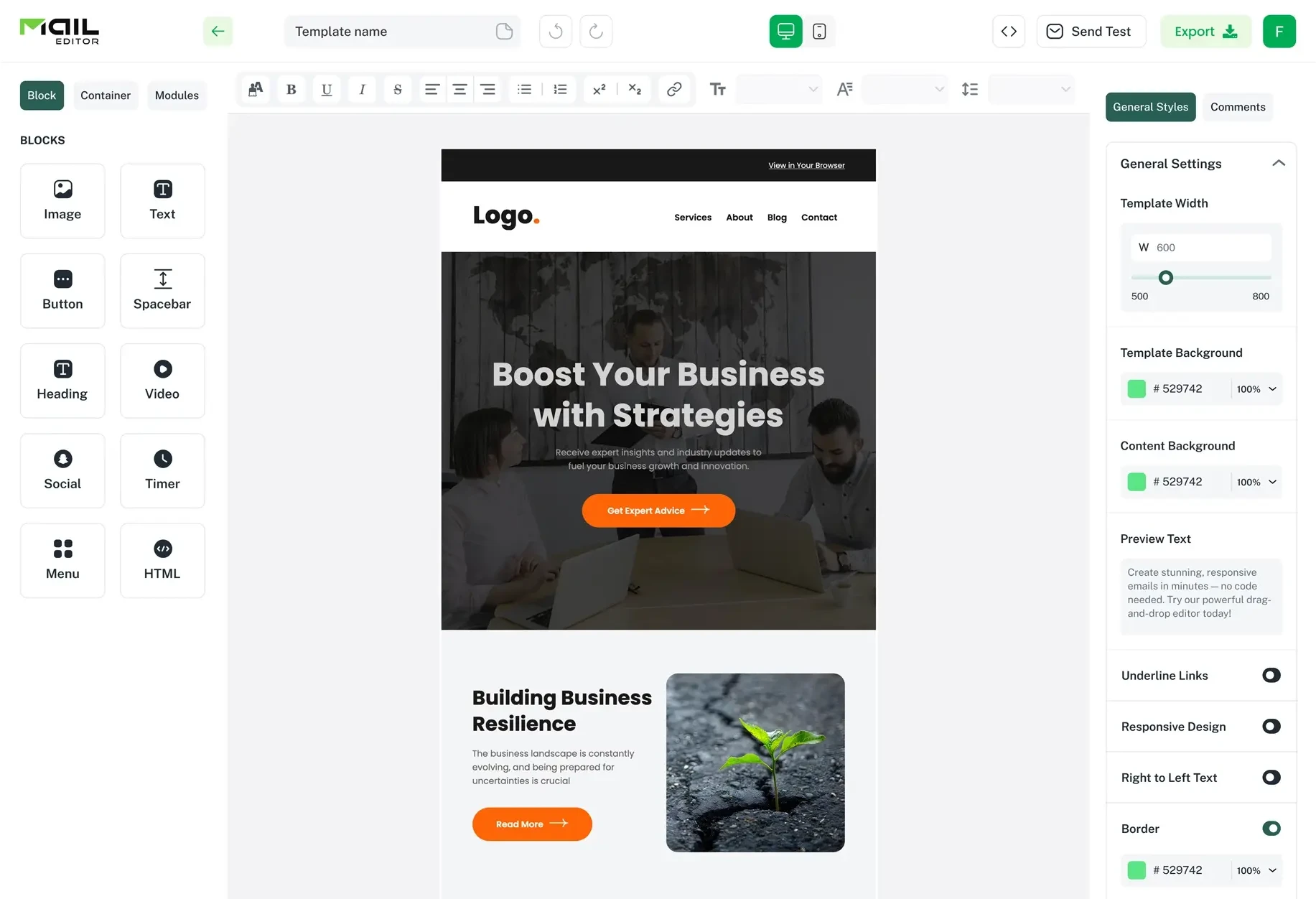
Email Design2 mins to read
Top Email Template Builders & HTML Email Editors for 2026
Compare the best email template builders and HTML editors to design professional, responsive campaigns without coding.
Email Design9 mins to read
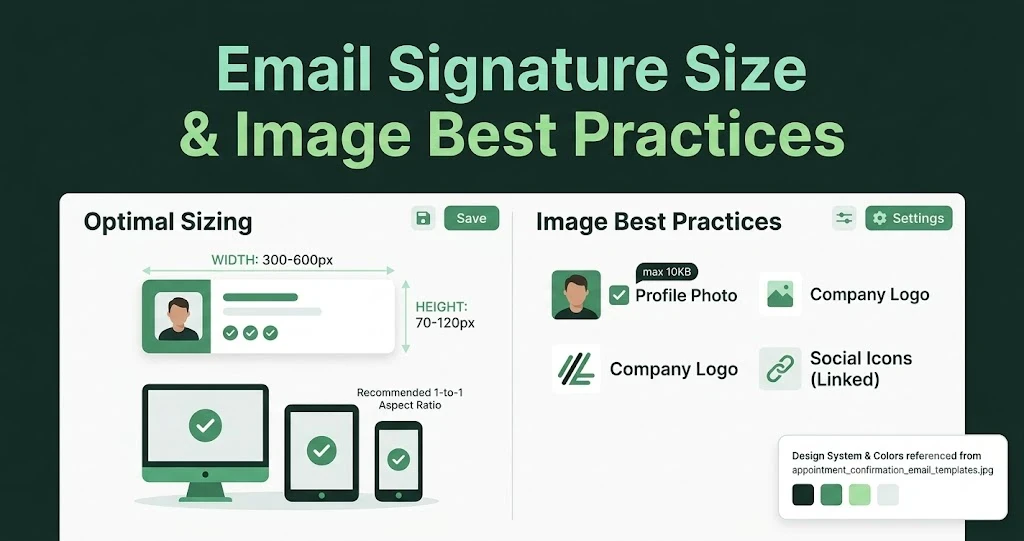
Email Signature Size and Image Best Practices
The ideal email signature is 320–600px wide and 90–200px high. Learn the best image sizes, formats, file limits, and mobile-friendly design tips.

Email Tips7 mins to read
Best Drag and Drop Email Editors in 2026
Discover the best drag and drop email editors in 2026. Compare top tools, features, templates, pricing, and automation to build stunning emails fast.
Marketing7 mins to read
4 Best Unlayer Alternatives to Design Emails
Looking for Unlayer alternatives? Explore the 4 best email design tools to create beautiful, responsive emails faster and easier.
Marketing6 mins to read
5 Beefree Alternatives to Upgrade Email Design Workflows
Looking for a better email design tool? Explore 5 Beefree alternatives that streamline workflows, improve collaboration, and elevate email campaigns.