Best Drag and Drop Email Editors in 2026
Discover the best drag and drop email editors in 2026. Compare top tools, features, templates, pricing, and automation to build stunning emails fast.

Shahin Alam
As I further my work with email design, one thing has become abundantly clear.
Today, speed and reliability matter more than bold visuals. Yes, colors and animations look good, but to win in this field of work, I need to prepare and send reliable emails on a daily.
I’ve lost count of how many times I’ve seen teams design the perfect template, only to find that it breaks on mobile devices. They would code and deal with raw HTML for countless hours hoping for the best results, but the final outcome would always break.
This is exactly what makes drag and drop email editors central to email workflows in 2026.
These editors are excellent at handling modern email designing and marketing tasks and help you design and prepare perfect email templates visually, all without having to code.
But there is a catch. Not all editors support the same type of email design workflow. Some are ideal for creating quick templates, but others focus more on design freedom and flexibility.
Then there are some editors, such as MailEditor, that let you reuse previous layouts, ensure modular updates, import existing HTML, and export clean, organized campaigns.
This guide isn’t just a random list of drag and drop email tools. It’s a strategic analysis and breakdown of what tool works, for which teams, and why certain editors excel under the pressures of real campaigns.
Highlights
- The best drag and drop editors make layouts stable, let you reuse sections from previous designs, and deliver clean exports. On the other hand, older tools look impressive at first, but create problems as work increases.
- Reusable HTML is a necessity in 2026. Nowadays, teams send multiple campaigns per month. Rebuilding layouts from scratch repeatedly wastes hours that should go toward testing and optimization. This is where modern tools shine with reusability.
- Email teams that run lifecycle campaigns, manage multiple brands, or edit imported HTML need tighter control over their work. Modern template editors can offer enough support for that level of work, but basic tools can’t.
- A properly structured and organized workflow beats flashy designs and features every time. If your layout breaks after exporting or when it is opened on a mobile device, visual polish won’t be enough to save the campaign.
- MailEditor stands out because it balances visual, drag and drop editing with structural discipline for layouts. You can make progress in your email design work fast without losing control of your HTML foundation.
What the Best Drag and Drop Email Editors Offer

As I mentioned above, the best drag and drop editors aren’t just limited to fancy visuals. It’s not about having fancy templates to choose from. Rather, these tools let you build emails that hold structure and work perfectly across different platforms.
Let’s first look at the foundations of the best drag and drop email editors. The ones that can truly be considered the best all have some core features and characteristics that support how email teams work.
Core Capabilities of Leading Drag and Drop Email Editors
When I look at an editor for a real campaign, I usually look for the following features.
Clean HTML export
The code should be ready for sending without manual fixes beforehand. In my view, teams shouldn’t rely on developers to fix minor spacing or alignment issues. In such cases, the tool is slowing you down.
Reusable content blocks
Sections like headers and footers should be modular, so that you can save and reuse them later on. Rebuilding common layouts every time you work on a campaign wastes hours every month, and leading editors help you avoid this inefficiency.
Responsive stability
Nowadays, over 50% emails are opened and read on mobile devices. This makes it crucial for email templates and structures to hold up across devices without problems. The best editor ensures your emails remain stable across all platforms.
HTML import capability
If you have existing templates already, you should be able to import and edit them visually. The best editors let you do this easily and streamline workflows, since starting from scratch every time is not realistic.
ESP compatibility
Leading editors let you export smoothly into major email service providers without breaking the layout and formatting. If an editor doesn’t offer this benefit, I quickly know to move away from it and find a better alternative.
Collaboration support
Marketing is not a one-man task. It needs shared access and version control between designers, copywriters, and managers. When a tool can accommodate this level of collaboration, you can trust it to be one of the best.
What No One Talks About, But Should
Most comparison articles skip the messy parts about email editors, yet these are some of the most important points you should look at when choosing a new tool. After all, this is usually where the real problems show up.
Rendering predictability
Previews can lie. An editor can render templates exactly how you want them to look in preview windows, but once you send them out, they behave very differently. This makes rendering predictability important, as it saves you from last-minute panic.
Long-term scalability
Another important factor to consider when choosing an email editor is its long-term scalability. An easy way to look at it is to think about what would happen if your email volume doubles. Can your editor keep up without slowing you down?
Template maintenance
When working on email campaigns, it’s natural for teams to update brand colors or font choices across different templates. A good editor should not make it feel like a manual audit project. It should make the process seamless, so that you can complete your work easily.
The following table contains a summary of some important features that you should expect in the best email editors, why it matters, and who needs it most.
| Features | Why It Matters in 2026 | Who Needs It Most |
| Clean HTML export | Reduces fixes needed after the design process | Teams that work on high-volume campaigns |
| Reusable blocks | Saves time across recurring campaigns | SaaS and ecommerce teams |
| Responsive stability | Protects engagement across devices | Mobile-heavy audiences |
| HTML import | Preserves legacy templates | Agencies and enterprise teams |
| Collaboration tools | Prevents workflow confusion | Multi-person marketing teams |
When you focus on these foundations, the conversation about the best email editors stops being about visual polish, and starts becoming about operational strength.
Best Drag and Drop Email Editors for Different Use Cases

As time and technology progresses, new trends may come and go, but workflows stay consistent.
I have seen teams choose tools simply because they were popular and hyped up. But when campaign volume increased and maintenance slowed things down, these tools were the first things to be replaced.
What does this mean, then? The best editor matches the team’s use case, not the trend. It perfectly handles how you build an email, how often you send campaigns, and how much control you need over the final copy.
I find that looking at it like a comparison makes things easier to understand. A small content team running one newsletter per month has very different needs than a SaaS company that sends automated sequences every week.
Below is a practical comparison before we look at each editor more closely.
Comparison Overview
| Editor | Best For | HTML Control | Reusability | Ideal Team Type |
| MailEditor | Reusable structured campaigns | High | Strong modular blocks | Growing and high-volume teams |
| Stripo | Design-heavy templates | Moderate | Good | Creative marketing teams |
| Unlayer | Embedded builder use | Moderate | Limited modular depth | SaaS and product teams |
| Beefree | Fast template creation | Basic to moderate | Moderate | Small to mid marketing teams |
| Chamaileon | Brand management | Moderate | Structured branding tools | Agencies and multi-brand teams |
1. MailEditor
In my experience, MailEditor works best for teams that need reusable HTML and consistent, predictable outputs.
Strengths
- Clean HTML export that does not require fixes every time before sending
- Ability to import existing HTML templates and edit visually, without coding
- Reusable blocks for headers, footers, and other recurring sections
- Stable structure across all major email platforms
- Practical layout control without making things difficult for the user
Limitations
- Not designed for flashy animations
I find that MailEditor works best for modern workflows because it treats email as a repeatable system. If you send frequent campaigns and maintain multiple templates for repeated use, you need a solid structure, and that is exactly what this editor offers.
2. Stripo
Strengths
- Large template library
- Strong design flexibility
- Built-in testing features with interactive element support
Weaknesses
- Workflows can sometimes need cleanup and fixes before exporting
- Can feel heavy for smaller teams with simple campaign needs
For me, Stripo is best suited for design-focused teams that prioritize creative freedom and visual experimentation.
3. Unlayer
Strengths
- Easy embedding into SaaS platforms
- Developer-friendly API
- Simple drag interface
Weaknesses
- Limited modular reuse capabilities
- Not ideal for complex systems
I find that Unlayer works best for product teams that want to embed an email builder inside their own software. For other teams, not so much.
4. Beefree
Strengths
- Quick template building
- Intuitive interface
- Good selection of templates to start with
Weaknesses
- HTML control is more limited
- Reusability features are basic and not deeply structured
After working with Beefree, I felt like it was best for smaller teams that focus on speed and simplicity rather than heavy structural requirements.
5. Chamaileon
Strengths
- Strong tools for brand management
- Permission-based collaboration
- Organized template libraries
Weaknesses
- Users need to face a steep learning curve to use advanced features
- Can feel process-heavy for small teams with simpler needs
To me, Chamaileon works best for agencies that manage multiple client brands with strict style guidelines.
When you compare these editors according to the workflow needs instead of fancy features you see on the surface, the differences become clear as day. The best tool is rarely the most popular one; it is the one that fits how your team builds and maintains email campaigns.
Strategic Use Cases Where the Right Editor Changes Results

The tool you choose can make or break your email workflow. When campaigns scale, templates multiply, and deadlines tighten, the wrong editor introduces friction that slows the team down.
Use Case 1. High-Volume Campaign Teams
Problem
Sending multiple campaigns per week often exposes gaps in template reuse. Rebuilding sections repeatedly wastes hours.
What Matters Most
Clean HTML, reusable blocks, and predictable rendering.
Recommended Editor Type
Editors with structured workflows and modular content support.
Why MailEditor Fits
MailEditor lets teams save and reuse content sections easily. Templates export reliably across ESPs, so frequent campaigns don’t become a maintenance headache.
Use Case 2. SaaS Lifecycle Marketing
Problem
Lifecycle campaigns involve repeated touchpoints. Updating a hero section in multiple templates manually is error-prone.
What Matters Most
Modular templates, version control, and clean code for automation.
Recommended Editor Type
Tools that support section-level reuse and safe HTML imports.
Why MailEditor Fits
Its reusable blocks and reliable export make lifecycle campaign updates fast and error-free.
Use Case 3. Agencies Managing Multiple Brands
Problem
Agencies often maintain dozens of brand-compliant templates. Keeping colors, typography, and layout consistent is time-intensive.
What Matters Most
Reusable systems, collaboration tools, and template duplication.
Recommended Editor Type
Editors that allow brand-level template libraries and user permissions.
Why MailEditor Fits
Teams can clone templates, apply consistent styles, and avoid repetitive setup while maintaining control over brand compliance.
Use Case 4. Teams Editing Imported HTML
Problem
Legacy templates or client-provided HTML often break when edited visually in basic editors.
What Matters Most
Visual editing without compromising code, section-level updates, and clean exports.
Recommended Editor Type
Editors supporting safe HTML import and modular edits.
Why MailEditor Fits
MailEditor preserves the structure of imported templates while allowing quick visual adjustments.
Summary Table
| Use Case | Priority | Best Editor Type | Recommended Tool |
| High-Volume Campaign Teams | Speed and template reuse | Modular, structured editor | MailEditor |
| SaaS Lifecycle Marketing | Consistency and automation | Reusable blocks, clean export | MailEditor |
| Agencies Managing Multiple Brands | Brand compliance and duplication | Collaboration-focused editor | MailEditor |
| Teams Editing Imported HTML | Safe visual edits | HTML import with modular control | MailEditor |
Across these scenarios, MailEditor repeatedly proves its value not by flashy features but by reducing friction, maintaining structure, and keeping teams productive.
Workflow Comparison and What Actually Slows Teams Down
Even the most visually appealing editor can create headaches if it doesn’t align with your workflow. I’ve seen teams spend hours fixing issues that could have been avoided with a structured approach.
Frequent problems include broken layouts, export inconsistencies, and the repetitive task of rebuilding templates. These issues are not always obvious until campaigns are live, and they often compound as volume grows.
Workflow Friction Comparison
| Issue | Template-First Editors | Code-Heavy Editors | MailEditor |
| Broken layouts | High | Moderate | Low |
| Export inconsistencies | Moderate | Low | Minimal |
| Rebuilding templates | High | Moderate | Low |
| Code cleanup effort | Moderate | High | Minimal |
Template-first editors can feel fast initially but often cause rework. Code-heavy options give control but demand expertise. MailEditor reduces friction by combining visual ease with structural reliability, letting teams focus on strategy rather than fixing errors.
What Makes MailEditor the Smartest Long-Term Choice

Choosing an editor isn’t about the flashiest features. It’s about reducing problems, maintaining control, and scaling without chaos. MailEditor is designed with long-term productivity in mind.
Clean HTML Control
- Exports fully structured code with minimal cleanup.
- Ensures campaigns render correctly across major ESPs.
- Reduces reliance on developers for minor fixes.
Modular Reuse
- Save headers, footers, and content sections for repeated use.
- Quickly replicate layouts for recurring campaigns.
- Maintains consistency across multiple templates.
Predictable Rendering
- Templates behave as expected in mobile and desktop clients.
- Minimizes surprises after export.
- Avoids last-minute layout fixes before sending.
Workflow Stability
- Supports multiple users with version control.
- Prevents accidental overwrites or layout corruption.
- Keeps campaign schedules on track.
Integration Flexibility
- Compatible with major ESPs for smooth deployment.
- Supports HTML import for legacy templates.
- Allows seamless integration into existing marketing workflows.
Small comparison snippets show the difference clearly.
- Flashy template editors may look appealing but often break on export.
- Code-heavy editors are reliable but slow and resource-intensive.
- MailEditor balances ease of use with structural discipline, making it the logical choice for teams planning to scale efficiently.
2026 Trends That Will Reshape Drag and Drop Email Editors
Marketing in 2026 is faster than ever. Campaigns move from planning to inboxes in hours, not days. Editors that can’t keep up with this speed create bottlenecks.
Reusability
Reusable design systems are no longer optional. Teams expect to update one module and see changes reflected across multiple templates automatically. Without this, consistency suffers and errors creep in.
Accessibility
Email accessibility demands are rising. Ensuring emails work for all audiences, including those using screen readers, is now a standard requirement. Editors must allow semantic, clean HTML that supports accessibility.
Cross-platform Compatibility
Cross-platform compatibility remains critical. Emails must render correctly on desktop, mobile, webmail clients, and even dark mode settings. Layout shifts cost engagement and credibility.
Smaller marketing teams are doing more with less. Each team member often handles design, copy, and deployment. Editors need to simplify workflows without sacrificing control.
When you connect these trends, the takeaway is clear. Flashy, template-first editors may impress visually but often fail under these pressures. Structured, stable editors like MailEditor handle real-world demands while maintaining speed, control, and predictability.
This makes them the smarter long-term choice for modern marketing teams.
Conclusion
Choosing the right drag and drop email editor is more than picking a trendy tool. It directly impacts workflow stability, team efficiency, and campaign reliability. Teams that ignore structural considerations often spend more time fixing issues than creating results.
Strategically, the decision should align with your type of work. High-volume campaigns, lifecycle automation, or multi-brand management each have distinct needs. Editors that shine in one scenario can slow progress in another if the focus doesn’t match your priorities.
For teams that need heavy automation and complex integrations, a code-focused or automation-friendly editor may work best. If the goal is a pure design sandbox for creative experimentation, some visual-first editors can serve that purpose.
However, for teams seeking reusable content, clean and reliable HTML, and predictable rendering across platforms, MailEditor stands out. Its modular approach, stable workflow, and balance between visual ease and structural control make it a leading long-term solution.
Ultimately, the best tool is the one that reduces friction, protects your templates, and keeps campaigns running smoothly. When these factors matter, MailEditor provides the most logical choice for teams that value efficiency and reliability without compromising quality.
Written by
A full-stack digital marketer and passionate blogger with more than seven years of hands-on experience helping brands grow, rank, and thrive online.
All postsPopular Blogs
Email Design2 mins to read
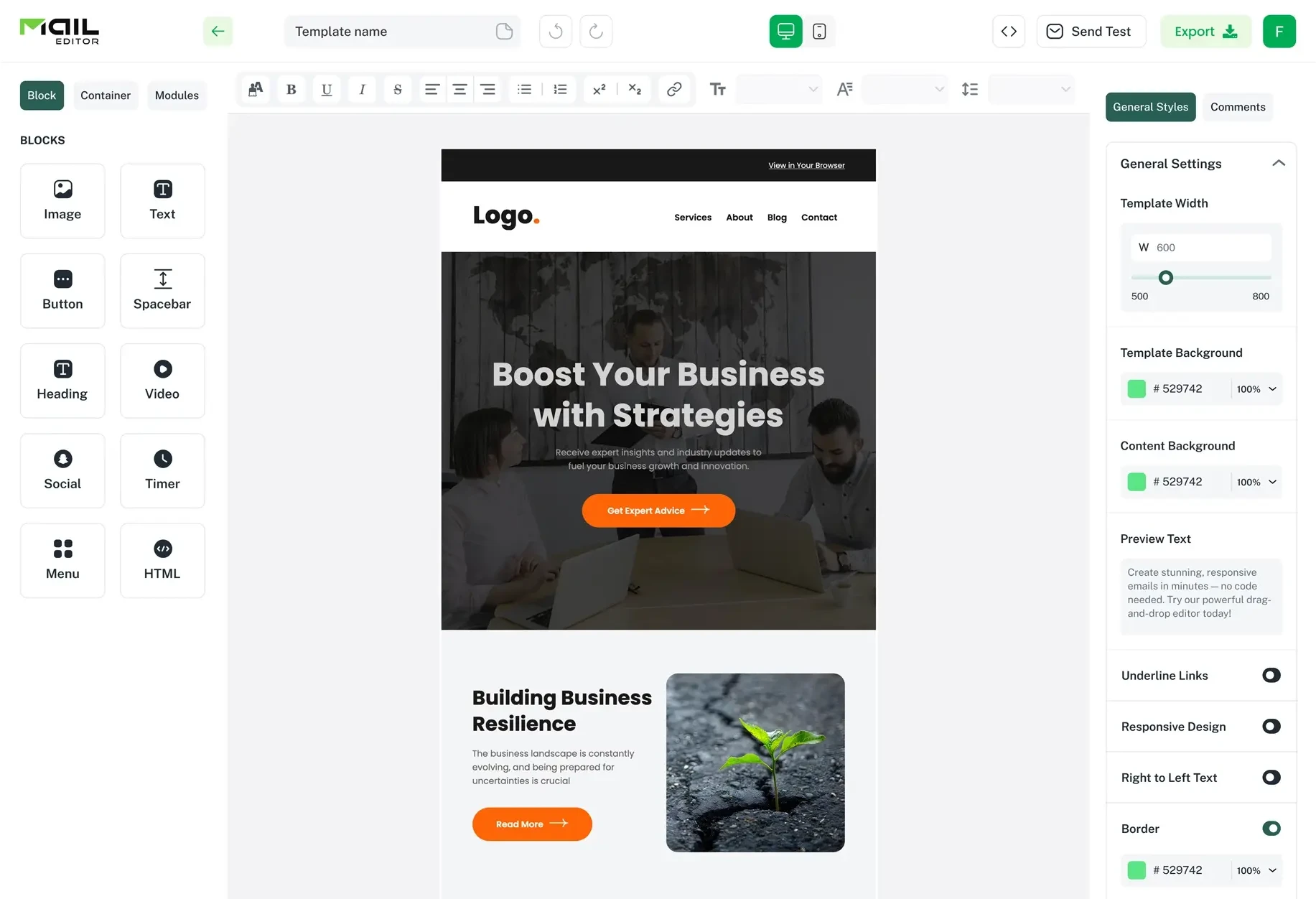
Top Email Template Builders & HTML Email Editors for 2026
Compare the best email template builders and HTML editors to design professional, responsive campaigns without coding.
Email Design9 mins to read
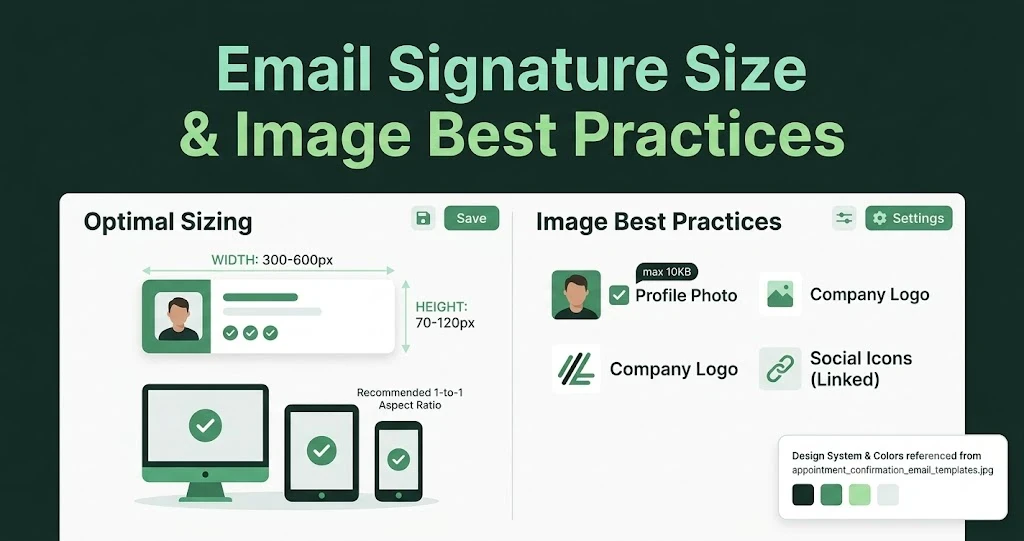
Email Signature Size and Image Best Practices
The ideal email signature is 320–600px wide and 90–200px high. Learn the best image sizes, formats, file limits, and mobile-friendly design tips.

Marketing7 mins to read
4 Best Unlayer Alternatives to Design Emails
Looking for Unlayer alternatives? Explore the 4 best email design tools to create beautiful, responsive emails faster and easier.

Marketing6 mins to read
5 Beefree Alternatives to Upgrade Email Design Workflows
Looking for a better email design tool? Explore 5 Beefree alternatives that streamline workflows, improve collaboration, and elevate email campaigns.
Email Design1 min to read
How to Create an HTML Email Template in Mailtrap
Follow this step‑by‑step guide to creating a responsive HTML email template in Mailtrap. Design, code, and customize your template with confidence.