How to Avoid the Promotions Tab in Gmail
Avoid Gmail Promotions tab by sending wanted, relevant emails, using clear sender identity, and building real engagement. Primary placement is never guaranteed.

Md. Yaikub Hossain Razon
To avoid Gmail Promotions tab placement, send emails that genuinely match Primary intent: wanted, personal, relationship-based messages rather than disguised promotions. You can improve your odds through subscriber engagement, clean formatting, consistent sender identity, and correct authentication, but no sender can guarantee that Gmail will place a campaign in Primary.
Google defines Promotions as the category for “deals, offers, and other promotional emails.” Gmail also lets individual users move messages between tabs, and Google says those actions help Gmail learn that user’s preferences.
For marketers, SaaS teams, and newsletter senders, the goal should therefore be accurate classification and strong engagement not tricking Gmail.
This guide explains what actually helps, which popular tactics are myths, and when staying in Promotions may be the better strategy.
What Is Gmail Promotions?
The Gmail Promotions tab is an inbox category that groups deals, offers, marketing campaigns, and other promotional messages separately from Primary email. A message appearing in Promotions has normally reached the recipient’s inbox; Gmail has categorized it rather than sending it to spam.
Gmail’s Default inbox can contain several categories:
- Primary
- Promotions
- Social
- Updates
- Forums
Google describes Primary as messages from people users know and messages that do not fit another category.
Promotions are specifically designed for deals, offers, and promotional emails.
This distinction matters.
A marketing email in Promotions has not necessarily suffered a deliverability failure.
It may simply have been categorized correctly.
Promotions vs Primary vs Spam
Primary, Promotions, and Spam represent different outcomes. Primary and Promotions are inbox categories, while Spam is Gmail’s filtering destination for messages considered unwanted or risky. Do not diagnose a Promotions problem using the same process as a spam-placement problem.
|
Placement |
What It Usually Means |
Main Concern |
|
Primary |
Personal or uncategorized inbox mail |
Visibility |
|
Promotions |
Deals, offers, marketing content |
Category placement |
|
Updates |
Confirmations, alerts, statements |
Message classification |
|
Spam |
Message considered unwanted or risky |
Deliverability |
|
Rejected |
Gmail did not accept the message |
Technical or reputation issue |
If your campaigns are landing in spam instead, use MailEditor’s guide to why emails land in spam.
That is a separate problem.
You should never try to solve spam placement by merely making an email look less promotional.
Why Do Emails Go to Promotions?
Emails go to Promotions when Gmail determines that they fit promotional intent. Google does not publish the complete Gmail tab-classification algorithm, so no trustworthy source can provide a guaranteed list of words, HTML elements, links, or images that automatically trigger Promotions.
The clearest confirmed signal is message purpose.
Google says Promotions includes:
- Deals
- Offers
- Other promotional emails
Gmail also adapts to individual user behavior.
When a Gmail user moves an email into another category, Google says this helps Gmail learn that user’s preferences.
Google’s Promotions documentation also says recommendations can depend on previous user engagement.
That means placement can differ between recipients.
One subscriber may see your message in Primary.
Another may see the same campaign in Promotions.
What Google Does Not Publish
Google does not publicly state rules such as:
- Three links trigger Promotions.
- One image is safe but two are not.
- The word “sale” guarantees Promotions.
- HTML always goes to Promotions.
- Plain text always reaches Primary.
Many marketers report patterns around formatting and promotional language.
Those observations can be useful for testing.
They should not be presented as official Gmail rules.
How to Avoid Gmail Promotions
You improve your chances of avoiding Gmail Promotions by making the email’s purpose, sender identity, and recipient relationship genuinely consistent with Primary-style communication. If the message is fundamentally a mass promotion, however, changing its appearance does not guarantee different categorization.
Use these nine steps.
1. Send Email People Expect
Send only to people who clearly asked to receive your email. Expected messages are more likely to generate healthy recipient behavior, while unwanted campaigns generate ignores, unsubscribes, and spam complaints that damage your broader sending reputation.
Google recommends sending subscription email only to users who want it.
It also warns against purchasing addresses or sending to people who did not sign up.
Build lists through:
- Newsletter signup forms
- Account registrations
- Product subscriptions
- Customer preferences
- Event registrations
- Explicit lead-magnet opt-ins
Do not treat list size as the goal.
A smaller engaged audience is more valuable than a large list that ignores you.
2. Separate Message Types
Keep promotional, transactional, and account-notification emails in separate streams. Mixing a marketing offer into a receipt or security notification changes the message’s purpose and can make classification less predictable.
Google specifically advises senders not to mix different message types.
Its example recommends separate identities for:
- Sales receipts
- Promotional messages
- Account notifications
Google also suggests using different sending infrastructure for different message types when appropriate.
For example:
This creates a clearer identity for each email stream.
A password-reset message should not contain a large promotional banner.
A receipt should not become a newsletter.
Let each message perform one job.
3. Match Design to Message Intent
Use a simple, conversational format when the message itself is genuinely conversational. Do not deliberately disguise a commercial campaign as personal correspondence simply to influence Gmail’s classifier.
For example, a founder update may naturally need:
- A short greeting
- Several paragraphs
- One relevant link
- A personal sign-off
A Black Friday sale may genuinely need:
- Product images
- Pricing
- Discount information
- Product links
- A clear CTA
Do not remove useful content only because someone claims images trigger Promotions.
Google itself supports rich images and product cards inside the Promotions experience.
The correct design follows the message.
Not the myth.
Reduce Unnecessary Clutter
Even when using HTML, remove elements that add no value.
Examples include:
- Repeated navigation menus
- Five CTAs for one action
- Excessive banners
- Duplicate links
- Decorative images with no purpose
- Bloated footer content
Simpler email often improves clarity regardless of Gmail tab placement.
Use MailEditor’s free email templates when you need a clean starting structure.
4. Keep Sender Identity Consistent
Use a recognizable and consistent From name, From address, and sending domain. Subscribers should immediately understand who sent the message, and Gmail’s own sender guidelines require clear, accurate sender information.
Good:
From: Maya at Acme
Also good for promotions:
From: Acme Deals
Avoid repeatedly changing between unrelated identities.
Google specifically warns against misleading display names.
It also says the display name should clearly identify the sender.
Do not use sender names such as:
URGENT UPDATE
LAST CHANCE
Sarah (2)
unless those words genuinely identify the sender.
5. Authenticate Your Domain
SPF, DKIM, and DMARC do not guarantee Primary placement, but they provide the authentication foundation Gmail expects from legitimate senders. Authentication helps Gmail verify your identity and reduces the risk of rejection or spam filtering.
This is an important distinction.
Authentication affects deliverability and trust.
It is not a magic Promotions-to-Primary switch.
As of 2026, Google requires all senders to personal Gmail accounts to use SPF or DKIM.
Senders delivering more than about 5,000 messages per day to Gmail accounts must use:
- SPF
- DKIM
- DMARC
Bulk promotional email must also support one-click unsubscribe.
Learn the complete setup in MailEditor’s SPF, DKIM, and DMARC guide.
Do not remove authentication or unsubscribe headers because someone claims they cause Promotions placement.
That trades real deliverability requirements for an unproven shortcut.
6. Improve Genuine Engagement
Create emails subscribers genuinely want to read, click, save, move, or reply to. Gmail’s Promotions documentation confirms that previous user engagement can affect how promotional emails are recommended, while category corrections help Gmail learn individual preferences.
Useful engagement comes from relevance.
Improve it through:
- Better segmentation
- Useful content
- Relevant offers
- Clear subject lines
- Predictable sending frequency
- Personalized recommendations
- Behavioral triggers
- Better onboarding
Do not manufacture engagement.
Avoid:
- Fake reply networks
- Artificial opens
- Click farms
- Misleading questions
- Incentivized spam-folder manipulation
The goal is a real subscriber relationship.
7. Ask Users to Move You
One of the clearest ways to influence future Gmail categorization is to ask interested subscribers to move your message from Promotions to Primary. Google confirms that moving emails between categories helps Gmail learn the recipient’s preferences.
You can explain this during onboarding.
For example:
If you want these emails in your main Gmail inbox, drag this message from Promotions to Primary and confirm Gmail’s prompt.
Do not repeat this request in every campaign.
The best places are:
-
Welcome email
-
Signup confirmation page
-
Newsletter onboarding page
-
Subscription success screen
The subscriber remains in control.
That is exactly how category personalization should work.
8. Use Honest Subject Lines
Write subject lines that accurately describe the email rather than trying to imitate a personal reply or urgent conversation. Google explicitly warns senders not to use “Re:” or “Fwd:” unless the email is genuinely a reply or forward.
Avoid deceptive subjects such as:
Re: our conversation
when there was no conversation.
Also avoid pretending a promotion is an account warning.
For example:
URGENT ACCOUNT NOTICE
should not lead to a shoe sale.
A strong subject line can still sell.
It just needs to tell the truth.
Examples:
20% off our annual plan this week
Your August product update
5 email templates you can reuse
Clarity beats deception.
9. Test Placement by Recipient
Test Gmail tab placement across several real accounts instead of sending one test to yourself. Gmail categorization can reflect individual preferences, so one inbox cannot reliably represent every subscriber’s result.
Create a small seed group.
For example:
|
Test Account |
Previous Engagement |
Placement |
|
Gmail A |
New subscriber |
Record result |
|
Gmail B |
Regular opener |
Record result |
|
Gmail C |
Previously moved sender |
Record result |
|
Gmail D |
Low engagement |
Record result |
|
Gmail E |
Frequent interaction |
Record result |
Send the exact production email.
Do not test a different stripped-down version.
That defeats the purpose.
Record:
- Primary
- Promotions
- Updates
- Spam
- Missing/rejected
Repeat over several campaigns.
Look for patterns rather than treating one send as proof.
MailEditor Placement Test Template
Use this simple diagnostic before changing your campaign.
|
Question |
Yes |
No |
|
Is this email mainly a deal or commercial offer? |
Promotions is normal |
Continue |
|
Was the message triggered by a user action? |
Transactional/Updates may fit |
Continue |
|
Does the recipient expect a personal reply? |
Primary may fit |
Continue |
|
Are you mixing promotion with transactional content? |
Separate the streams |
Good |
|
Is the sender identity consistent? |
Good |
Fix identity |
|
Do SPF, DKIM, and DMARC pass? |
Good |
Fix authentication |
|
Did the subscriber explicitly opt in? |
Good |
Do not send |
|
Can users easily unsubscribe? |
Good |
Fix immediately |
This framework separates three questions marketers often combine:
- What type of message is this?
- Is it technically deliverable?
- Where did Gmail categorize it?
Solve them separately.
Does HTML Cause Promotions?
HTML email does not automatically mean Promotions, and Google does not publish a rule stating that HTML campaigns must be categorized there. However, an elaborate ecommerce email naturally communicates promotional intent, so Gmail may correctly categorize it as a promotion.
Do not assume plain text is a universal workaround.
A plain-text email saying:
FLASH SALE!
Buy now:
[link]
50% OFF TODAY ONLY
is still promotional.
Meanwhile, a well-designed account notification may contain HTML and still serve a non-promotional purpose.
Intent matters.
Should You Remove Images?
Not automatically.
Remove unnecessary images for:
- Faster loading
- Better readability
- Accessibility
- Simpler design
Do not remove them solely because a blog claims one image triggers Gmail Promotions.
Google actively encourages rich imagery for promotional annotations.
Do Links Cause Promotions?
There is no official Gmail rule stating that a specific number of links automatically sends an email to Promotions. Use only the links the reader genuinely needs, but do not treat one-link or zero-link rules as guaranteed Gmail classification hacks.
A newsletter may legitimately need:
- One article link
- A preferences link
- An unsubscribe link
An ecommerce message may need multiple product links.
Removing a required unsubscribe link would be especially harmful.
Google requires qualifying bulk marketing messages to provide one-click unsubscribe plus a clearly visible unsubscribe link.
Keep required links.
Remove pointless ones.
Do Trigger Words Cause Promotions?
Google does not publish a list of words that automatically trigger Promotions. Promotional language naturally appears in promotional messages, so words such as “sale” or “discount” may correlate with Promotions because they describe the message’s real purpose—not because Gmail has published a simple forbidden-word list.
Do not rewrite clear copy into unnatural language.
Instead of:
We have a special numerical reduction in price.
write:
Save 20% through Friday.
If the email is a sale, call it a sale.
Trying to hide its purpose is not a durable strategy.
Does Spam Score Affect Promotions?
Spam filtering and Gmail tab classification are different systems. A clean spam score and strong authentication help your message reach the inbox, but they do not guarantee that Gmail will place a marketing message in Primary instead of Promotions.
This distinction prevents wasted optimization work.
A campaign can be:
-
Authenticated
-
Properly formatted
-
Sent to opted-in subscribers
-
Free from spam problems
and still belong in Promotions.
If spam filtering is the actual issue, use MailEditor’s email spam score guide.
Fix deliverability first.
Then evaluate tab placement.
What Tactics Should You Avoid?
Do not sacrifice sender compliance, accessibility, or subscriber trust to chase the Primary tab. Several popular tricks either lack reliable evidence or directly conflict with Gmail’s sender requirements.
Avoid these tactics:
Removing the unsubscribe link
Marketing email should provide an easy unsubscribe path.
Bulk senders may be required to support one-click unsubscribe.
Faking replies
Do not add Re: or Fwd: to make a campaign resemble a conversation.
Google explicitly warns against this.
Hiding promotional content
Google tells senders not to use HTML or CSS to hide content.
Buying email lists
Google advises against buying addresses and emailing people who did not subscribe.
Removing branding blindly
A logo is not automatically bad.
Subscriber recognition can be useful.
Using a personal-looking From name deceptively
The sender should clearly identify the person or organization sending the email.
Manipulating engagement
Artificial opens and replies are not a substitute for genuine subscriber interest.
Should You Avoid Promotions at All?
If your email is clearly promotional, landing in Promotions may be the correct outcome. Instead of weakening the campaign to imitate personal mail, consider optimizing how the message appears and performs inside the Promotions tab.
Google actively develops features for promotional senders.
Its Promotions tools can display:
- Product images
- Deal badges
- Discount codes
- Offer expiration dates
- Product cards
Google says promotional annotations can expose useful campaign information directly inside the inbox.
Most importantly, Google explicitly states:
Adding an annotation does not affect Gmail’s tab classifier.
That makes annotations useful when Promotions is where your email belongs.
Optimize the Tab Instead
For a genuine promotion:
- Use a recognizable sender name.
- Write a strong subject line.
- Make the offer immediately understandable.
- Use useful preview text.
- Segment by subscriber interest.
- Send at an appropriate time.
- Use Gmail promotional annotations where relevant.
- Measure clicks and conversions, not only tab placement.
MailEditor’s best time to send email campaigns guide can help you choose a starting schedule.
Primary or Promotions: Which Should You Target?
Target Primary when the message genuinely behaves like personal, conversational, or relationship-driven communication. Accept and optimize Promotions when the message is fundamentally a marketing offer, sale, ecommerce campaign, or promotional newsletter.
|
Email Type |
Most Natural Goal |
|
Personal reply |
Primary |
|
One-to-one customer conversation |
Primary |
|
Founder personal note |
Often Primary |
|
Password reset |
Updates / inbox |
|
Order confirmation |
Updates / inbox |
|
Account alert |
Updates / inbox |
|
Product sale |
Promotions |
|
Discount campaign |
Promotions |
|
Ecommerce newsletter |
Promotions |
|
Black Friday campaign |
Promotions |
|
Promotional product launch |
Promotions |
|
Personalized sales conversation |
Depends on actual intent |
How to Test Before Sending
Send the final production version to real Gmail accounts before launching the campaign. Check category placement, spam placement, authentication, rendering, links, and mobile behavior as separate test items.
Use this workflow:
-
Build the final email.
-
Confirm the sender name and address.
-
Verify SPF, DKIM, and DMARC.
-
Send to several Gmail test accounts.
-
Record the category for each account.
-
Check Gmail’s “Show original” authentication results.
-
Verify all links.
-
Test mobile rendering.
-
Check the unsubscribe flow.
-
Send the campaign only after technical issues are fixed.
MailEditor’s email testing across devices guide covers the rendering side of this workflow.
Gmail Promotions Checklist
Before sending, confirm:
-
Subscribers explicitly requested the email.
-
The message type is clear.
-
Transactional and promotional content are separated.
-
The From name clearly identifies the sender.
-
SPF passes.
-
DKIM passes.
-
DMARC passes.
-
The subject line accurately describes the message.
-
Required unsubscribe options remain present.
-
Unnecessary links and design clutter are removed.
-
No fake Re: or Fwd: wording is used.
-
The email does not hide content.
-
Several Gmail accounts have been tested.
-
Promotions placement is not being confused with spam.
-
Promotional campaigns are optimized for Promotions when appropriate.
Final Answer
You cannot reliably force Gmail to place every marketing email in Primary.
To improve your chances of avoiding Gmail Promotions:
-
Send only wanted email.
-
Separate transactional and promotional streams.
-
Match the design to the real message intent.
-
Keep sender identity consistent.
-
Authenticate with SPF, DKIM, and DMARC.
-
Build genuine subscriber engagement.
-
Ask interested Gmail users to move you to Primary.
-
Use honest subject lines.
-
Test placement across multiple Gmail accounts.
Most importantly, do not confuse Promotions with spam.
A legitimate promotional email may belong in Gmail’s Promotions tab.
When it does, optimize the campaign for that environment instead of removing useful design, links, unsubscribe features, or branding just to imitate personal mail.
Google itself provides rich promotional annotations because Promotions is a real marketing surface, not a deliverability failure.
For clean, reusable campaign design, build your email with the MailEditor HTML Email Builder and test the finished production version before sending.
Popular Blogs
Email Design2 mins to read
Top Email Template Builders & HTML Email Editors for 2026
Compare the best email template builders and HTML editors to design professional, responsive campaigns without coding.
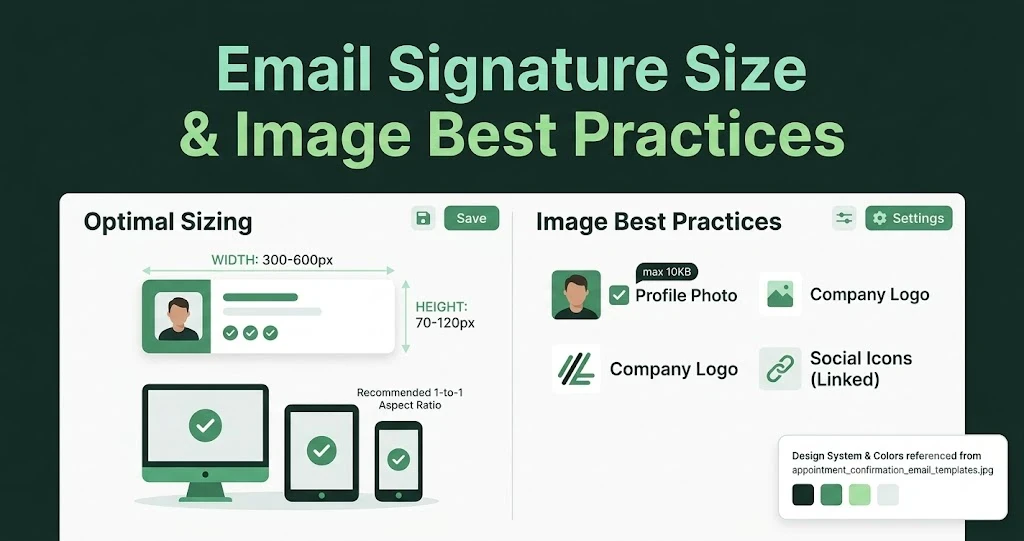
Email Design9 mins to read
Email Signature Size and Image Best Practices
The ideal email signature is 320–600px wide and 90–200px high. Learn the best image sizes, formats, file limits, and mobile-friendly design tips.

Email Tips7 mins to read
Best Drag and Drop Email Editors in 2026
Discover the best drag and drop email editors in 2026. Compare top tools, features, templates, pricing, and automation to build stunning emails fast.
Marketing7 mins to read
4 Best Unlayer Alternatives to Design Emails
Looking for Unlayer alternatives? Explore the 4 best email design tools to create beautiful, responsive emails faster and easier.
Marketing6 mins to read
5 Beefree Alternatives to Upgrade Email Design Workflows
Looking for a better email design tool? Explore 5 Beefree alternatives that streamline workflows, improve collaboration, and elevate email campaigns.