Why Your Emails Land in Spam (and How the Template Helps)
Emails land in spam from four causes: content, authentication, reputation, and formatting. See how your template affects each and the fixes that reach the inbox

Md. Yaikub Hossain Razon
Emails land in spam for four reasons: weak authentication, poor sender reputation, spam-triggering content, and a badly built template. Filters weigh all four on every message. Your email template controls two of them directly , content and formatting , which is why a clean, tested template is one of the fastest ways to reach the inbox.
Filters do not block emails at random. Each cause adds risk a spam filter can measure, and each has a fix. The fastest wins are usually the template and the authentication.
Why do emails go to spam?
Emails go to spam when a receiving filter scores their combined signals as risky. Gmail, Yahoo, and Outlook evaluate authentication, sender reputation, content, engagement, and technical formatting on every message, then place it in the inbox or the spam folder based on the total. No single factor decides it; the sum does.
Two of those factors live inside the email itself , the content and the template. The other two, authentication and reputation, live in your domain and sending history. You can fix the in-email factors immediately, which is why they are the first place to look when mail starts landing in spam.
Does your email template affect spam placement?
Yes. Your template directly affects spam placement, because filters penalize the exact design choices a weak template makes. Four template problems raise spam risk on their own.
- Image-only design. An email built as one large image trips the low text-to-image ratio rule. Keep embedded images under roughly 40 percent of the message body and use live HTML text for your main content.
- No plain-text version. Sending HTML with no matching plain-text part is a classic spam pattern. Always send a multipart message with both.
- Bloated or broken HTML. Hidden text, clashing background colors, and messy code resemble obfuscation. Clean, table-based HTML with inline CSS avoids the penalty.
- Oversized files. Emails over 102KB are clipped by Gmail, which hides content and looks suspicious. Keep the template lean.
A clean, tested template removes all four risks before you send. You can build a tested, inbox-ready template in MailEditor, keep the text-to-image balance right, and export clean HTML with a plain-text part to any sending platform.
How does authentication affect spam placement?
Authentication decides whether a receiver trusts your identity at all. SPF, DKIM, and DMARC prove an email genuinely comes from your domain, and since February 2024 Gmail and Yahoo require bulk senders , those sending 5,000 or more messages a day , to publish all three. Unauthenticated bulk mail is now rejected outright rather than merely filtered.
Authentication is a prerequisite, not a bonus. Without it, even a clean template lands in spam or bounces. Set it up once and it protects every send. For the full mechanics, read how SPF, DKIM, and DMARC work for email senders.
How do sender reputation and complaints affect it?
Sender reputation is your domain and IP's track record, and it strongly influences placement. Mailbox providers track how recipients react to your mail: opens, deletes, and especially spam complaints. A domain that generates complaints or hits spam traps loses reputation, and low reputation sends future mail to spam regardless of content.
The complaint rate is the number to watch. Gmail and Yahoo require bulk senders to keep spam complaints below 0.3 percent, and Google recommends staying under 0.1 percent. At 10,000 sends, only 30 "Report spam" clicks reaches the ceiling. Protect reputation by mailing only engaged, opted-in recipients, removing inactive addresses, and monitoring the rate in Google Postmaster Tools.
How do content and spam words affect it?
Content triggers content-based filter rules. Spam trigger words like "free money" and "act now", ALL CAPS subject lines, exclamation-mark pile-ups, and links to blocklisted domains all add points in filters such as SpamAssassin, which marks mail as spam at a score of 5.0 and higher.
Write plainly and vet every link. Cut hype phrasing, keep subject lines normal-case, and check that no URL in the email sits on a public blocklist. To see exactly how these rules are scored and how to test against them, read how to lower your email spam score.
How do you stop emails from going to spam?
Stop emails going to spam by fixing all four causes in priority order. The checklist below resolves the issues that filters weigh most heavily.
- Publish and align SPF, DKIM, and DMARC on your sending domain.
- Send only to engaged, opted-in recipients and remove bounces and inactives.
- Use a clean, tested template with balanced text and images and a plain-text part.
- Cut spam trigger words, ALL CAPS, and links to blocklisted domains.
- Keep the file under 102KB and add alt text to every image.
- Add a visible unsubscribe plus one-click List-Unsubscribe, and honor opt-outs fast.
- Monitor your complaint rate and reputation in Google Postmaster Tools.
How do you test whether an email will land in spam?
Test before you send by mailing the exact email to a deliverability tool that reports authentication, content, and formatting issues. Send your real template and copy to a tester such as mail-tester.com, then read the report: it shows your spam score, whether SPF, DKIM, and DMARC pass, and every content rule that fired.
Fix the highest-impact issues first, then re-test until the report is clean. Also send a live test to Gmail, Outlook, and a phone to confirm the template renders and lands in the primary inbox, not spam or the Promotions tab.
FAQ
Question: Why are my emails going to spam?
Answer: Emails go to spam from four causes: failing or missing SPF, DKIM, and DMARC; poor sender reputation from complaints or spam traps; spam-triggering content and links; and a weak template such as image-only design with no plain-text part. Filters weigh all four, so fixing the template and authentication first usually helps fastest.
Question: Does my email template cause spam placement?
Answer:Yes. A template built as one large image, with no plain-text version, bloated HTML, or a file over Gmail's 102KB limit, raises spam risk on its own. A clean, tested template with balanced text and images and a plain-text part removes those penalties before you send.
Question: How do I stop my emails from landing in the spam folder?
Answer:Authenticate with SPF, DKIM, and DMARC, mail only engaged opted-in recipients, use a clean tested template with a plain-text part, cut spam trigger words, keep the file under 102KB, and add a one-click unsubscribe. Then test with a deliverability tool before every campaign.
Question: What spam complaint rate is too high?
Answer:Gmail and Yahoo require bulk senders to keep spam complaints below 0.3 percent, and Google recommends under 0.1 percent. At 10,000 sends, 30 complaints reaches the 0.3 percent ceiling. Above it, mailbox providers route more of your mail to spam and reputation drops.
Question: How do I test if my email will go to spam before sending?
Answer: Send the exact email to a tester such as mail-tester.com to get a spam score, an authentication check, and the content rules that fired. Fix the issues, re-test, then send a live copy to Gmail and Outlook to confirm it reaches the inbox rather than spam.
The template is the fastest fix you control. Build a clean, tested email template in MailEditor , balanced text and images, valid HTML, and a plain-text part , so your content clears the filters and reaches the inbox.
Popular Blogs
Email Design2 mins to read
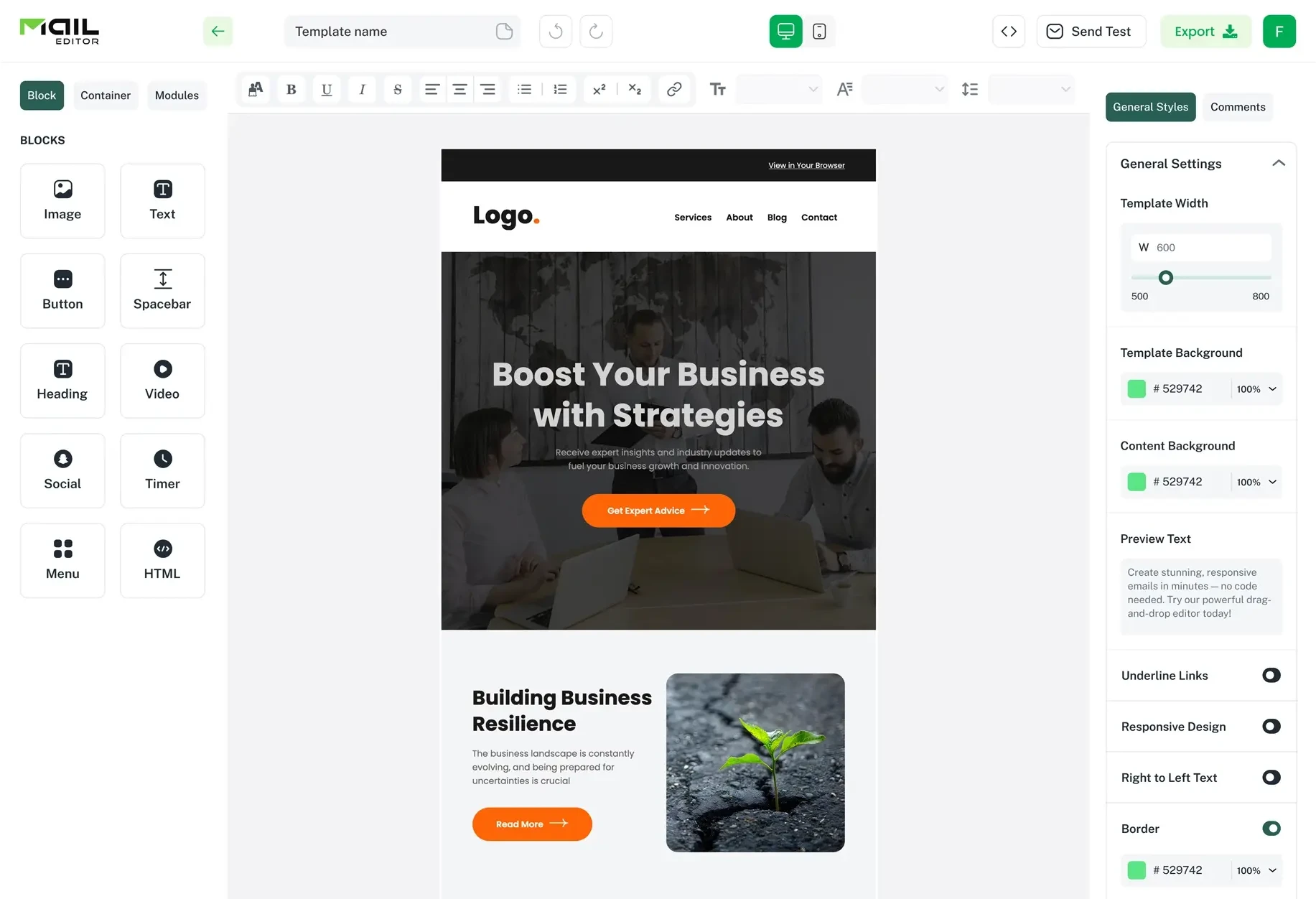
Top Email Template Builders & HTML Email Editors for 2026
Compare the best email template builders and HTML editors to design professional, responsive campaigns without coding.
Email Design9 mins to read
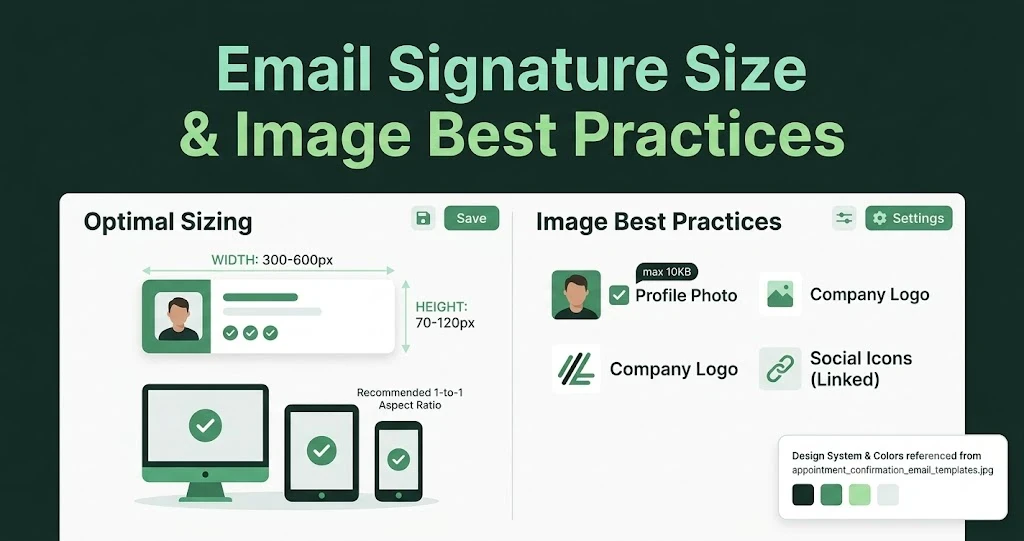
Email Signature Size and Image Best Practices
The ideal email signature is 320–600px wide and 90–200px high. Learn the best image sizes, formats, file limits, and mobile-friendly design tips.

Email Tips7 mins to read
Best Drag and Drop Email Editors in 2026
Discover the best drag and drop email editors in 2026. Compare top tools, features, templates, pricing, and automation to build stunning emails fast.

Marketing7 mins to read
4 Best Unlayer Alternatives to Design Emails
Looking for Unlayer alternatives? Explore the 4 best email design tools to create beautiful, responsive emails faster and easier.
Marketing6 mins to read
5 Beefree Alternatives to Upgrade Email Design Workflows
Looking for a better email design tool? Explore 5 Beefree alternatives that streamline workflows, improve collaboration, and elevate email campaigns.