How to Stop Emails Going to Junk in Outlook
top emails going to Outlook junk by fixing SPF, DKIM and DMARC, cleaning your list, reducing complaints, improving reputation, and testing before sending.

Md. Yaikub Hossain Razon
To stop emails going to junk in Outlook, authenticate your domain with SPF, DKIM and DMARC, send only to opted-in recipients, remove bad addresses, keep complaints low, use clean email HTML, include an unsubscribe option, and monitor your sender reputation.If your legitimate emails keep landing in Outlook’s Junk folder, changing a few words in the subject line usually will not solve the problem.
Outlook and Microsoft 365 evaluate several signals, including SPF, DKIM and DMARC authentication, sending reputation, complaint history, bulk-mail patterns, recipient behavior, and the message itself. Microsoft 365 also assigns bulk messages a Bulk Complaint Level, or BCL, and higher values indicate mail that is more likely to behave like unwanted bulk email.
The most effective fix is therefore to work through the problem in this order:
- Verify SPF, DKIM and DMARC.
- Check whether Outlook is accepting or rejecting the message.
- Improve your domain and IP reputation.
- Send only to people who actually requested your email.
- Remove invalid and consistently unengaged addresses.
- Make unsubscribing easy.
- Check the message HTML and links.
- Test the actual campaign before sending again.
If your email template itself has spam-related problems, MailEditor’s guide to lowering your email spam score covers authentication, risky HTML, images, links and other content-level issues in more detail.
Why Does Outlook Send Legitimate Emails to Junk?
An email can be legitimate and still look risky to a receiving system.
Outlook does not make its decision based on one word or one rule. Microsoft’s email-security systems evaluate authentication and reputation alongside other filtering signals. Microsoft 365 also uses BCL values for bulk email; higher BCL values indicate that a bulk sender is associated with more spam-like or unwanted behavior.
Common causes include:
- Missing or failing SPF
- Missing or failing DKIM
- Missing or misaligned DMARC
- Poor sending-domain reputation
- Poor sending-IP reputation
- High recipient complaint rates
- Sending to old or unrequested lists
- Sudden changes in sending volume
- Too many invalid recipients
- Bulk-mail characteristics
- Suspicious or broken links
- Problematic HTML
- A recipient previously marking your mail as junk
- The sender being on an individual recipient’s blocked list
Authentication alone does not guarantee inbox placement. A properly authenticated bulk sender can still be filtered when reputation and user feedback indicate that recipients do not want the mail. Microsoft explicitly distinguishes wanted bulk mail from bulk senders associated with greater complaint activity.
First: Is the Email in Junk, or Is Outlook Rejecting It?
These are different problems.
If the message reaches the Junk folder
Outlook accepted the email but classified it as unwanted or suspicious.
You need to investigate:
- Authentication
- Reputation
- Complaint history
- List quality
- Bulk classification
- Content and HTML
If the message bounces
Outlook did not successfully accept the email.
Read the non-delivery report or SMTP error before changing your template.
A permanent 5xx response normally indicates that something must be corrected before the same delivery can succeed. Temporary 4xx responses can indicate rate limiting or another condition that may be retried by the sending infrastructure.
Do not treat every Outlook delivery issue as a “spam words” problem.
MailEditor’s guide to hard bounces vs. soft bounces explains how to distinguish temporary and permanent delivery failures.
1. Fix SPF, DKIM and DMARC First
Email authentication should be the first technical check.
Microsoft describes SPF, DKIM and DMARC as complementary authentication mechanisms used to verify senders and protect domains against spoofing.
SPF
SPF tells receiving systems which servers are authorized to send mail for your domain.
For example, if your marketing platform sends campaigns on behalf of example.com, its sending infrastructure needs to be authorized appropriately in your domain's SPF configuration.
Microsoft warns that SPF by itself is not sufficient protection against spoofing.
DKIM
DKIM adds a cryptographic signature to the message.
The receiving server uses the public key published in DNS to validate that signature and check that signed parts of the email were not improperly altered after signing.
DMARC
DMARC builds on SPF and DKIM.
It checks alignment with the domain visible in the From address and tells receivers what policy the domain owner wants applied when authentication fails. It also provides a mechanism for receiving authentication reports.
If you need a beginner-friendly explanation, read SPF, DKIM and DMARC explained for email senders.
Outlook Requirements for High-Volume Senders
This is especially important if you send large volumes to Outlook.com, Hotmail, Live or MSN addresses.
Microsoft announced stronger requirements for domains sending more than 5,000 emails per day to Outlook consumer mailboxes. Those senders are expected to comply with SPF, DKIM and DMARC requirements. Microsoft states that SPF and DKIM must pass, while DMARC must be published with at least p=none and align with SPF or DKIM. Non-compliant mail can be routed to Junk and may be rejected.
So for a high-volume sender, “we have an SPF record” is not enough.
Check that:
- SPF actually passes.
- DKIM actually passes.
- DMARC exists.
- DMARC alignment is correct.
- Your visible From domain matches the authentication strategy.
- Every service sending on behalf of the domain is included correctly.
2. Check the Authentication Results on a Real Message
Do not rely only on what your DNS dashboard says.
Send an actual campaign message to an inbox you control and inspect its headers.
Look for results for:
- SPF
- DKIM
- DMARC
Ideally, the relevant checks should show pass.
Why test a real message?
Because a DNS record can exist while the message still fails authentication because:
- The wrong system sent it.
- DKIM signing was never enabled.
- An incorrect DKIM selector is being used.
- The visible From domain does not align.
- A third-party service is missing from SPF.
- Forwarding changed how SPF evaluates.
Test the exact sending system used for the campaign.
3. Protect Your Sender Reputation
Once authentication works, reputation becomes one of the most important factors.
Microsoft’s bulk-mail documentation states that bulk classification considers sending patterns, content and recipient-acquisition practices. Wanted bulk senders tend to generate fewer complaints, while unwanted senders generate more.
Your reputation can deteriorate when you:
- Send to people who never subscribed.
- Continue mailing invalid addresses.
- Generate high spam complaints.
- Suddenly increase sending volume.
- Send from compromised accounts.
- Use poor-quality acquired lists.
- Send irrelevant campaigns repeatedly.
Authentication proves who you are.
Reputation helps Outlook decide whether recipients are likely to want what you send.
You need both.
4. Use Microsoft SNDS and JMRP When Relevant
Large senders delivering to Microsoft consumer inboxes should be familiar with Microsoft's sender-support tools.
Microsoft's Smart Network Data Services, or SNDS, is designed to provide information about how Microsoft sees traffic from sending IP addresses. The Junk Mail Reporting Program, or JMRP, can provide feedback when participating Outlook.com users report a sender's messages as junk. Microsoft support guidance continues to recommend these tools for monitoring Outlook.com sending reputation and complaint activity.
These are especially useful when:
- Outlook-specific delivery suddenly declines.
- Authentication passes but Junk placement remains high.
- You operate dedicated sending IPs.
- You send substantial volume to Microsoft consumer domains.
- You need visibility into recipient complaints.
Do not expect a single “whitelist my IP” switch to solve a reputation problem. Microsoft's guidance indicates that Outlook.com delivery decisions rely on automated reputation systems rather than a simple public permanent-whitelisting process.
5. Stop Sending to People Who Did Not Ask for Your Emails
List quality has a direct relationship with sender reputation.
A purchased or scraped list may contain real addresses, but that does not mean those people want your messages.
Unwanted email creates:
- Spam complaints
- Low engagement
- Unsubscribes
- Hard bounces
- Reputation problems
Microsoft distinguishes good bulk senders partly by whether their messages are desired by subscribers and generate relatively few complaints.
Build lists through legitimate subscriber acquisition, such as:
- Newsletter signup forms
- Account registration
- Customer preferences
- Event registrations
- Lead magnets with clear consent
- Checkout opt-ins where legally appropriate
Do not treat the size of your list as the main goal.
A smaller list of people who want the email is more valuable than a large list that repeatedly reports you as spam.
6. Remove Hard Bounces and Invalid Addresses
Repeatedly sending to invalid recipients wastes volume and indicates weak list maintenance.
A hard bounce generally represents a permanent failure and should normally be suppressed once confirmed.
For example:
- The mailbox does not exist.
- The domain no longer exists.
- The recipient address is invalid.
- The receiving system permanently refuses delivery under the current conditions.
Your ESP should handle many of these suppressions automatically, but review its bounce reports instead of ignoring them.
For the exact workflow, see Hard Bounce vs. Soft Bounce: Keep Your List Clean.
7. Make Unsubscribing Easy
Trying to hide the unsubscribe link can backfire.
When someone no longer wants your campaign, you want them to unsubscribe—not click Outlook's Report junk button.
Microsoft's current guidance for customers sending mass email recommends including a way to unsubscribe from marketing messages and states that a one-click option provides a smoother process.
Your unsubscribe should be:
- Visible
- Easy to understand
- Functional
- Quickly honored
- Available without forcing unnecessary account login
Do not make recipients hunt through a footer for tiny gray text.
A clean unsubscribe is healthier for your list than an unwanted subscriber who repeatedly ignores or reports your messages.
8. Be Careful With Sending Frequency
More email does not automatically create more revenue.
If recipients feel overwhelmed, they can:
- Unsubscribe
- Stop engaging
- Delete your mail without reading
- Mark it as junk
The correct frequency depends on audience expectations and the type of messages you send.
For example, subscribers may welcome a daily transactional update but dislike a daily promotional newsletter.
MailEditor’s guide to how often you should email your list explains how to test frequency instead of choosing an arbitrary number.
9. Avoid Sudden, Unexplained Volume Spikes
Sending behavior is part of reputation.
A domain or IP that normally sends a modest volume and suddenly sends a very large campaign can appear unusual.
This is particularly relevant when:
- Moving to a new ESP
- Switching sending IPs
- Launching a new domain
- Reviving a dormant list
- Importing a very large customer database
Microsoft sender-support guidance notes that new sending IPs can encounter deliverability difficulties while they establish positive reputation and that gradual volume ramp-up can be appropriate.
Do not “warm up” a sender by blasting uninterested people.
The point is to build legitimate sending history with wanted email.
10. Use the Right Infrastructure for Bulk Email
A normal employee Microsoft 365 mailbox is not intended to function as a large-scale newsletter platform.
Microsoft states that using Microsoft 365 for bulk mail is not a supported use of the service beyond a best-effort basis and recommends dedicated bulk-email infrastructure for organizations that need mass mailing.
Microsoft also recommends considering a dedicated subdomain for bulk email rather than using the exact same identity as normal person-to-person company email.
For example:
Business correspondence:
[email protected]
Marketing:
[email protected]
Transactional:
[email protected]
Microsoft recommends authenticating these custom subdomains with SPF, DKIM and DMARC.
The exact domain architecture should be planned with your email provider or administrator, especially if you already have an established sending program.
11. Check the Email Content—but Do Not Obsess Over “Spam Words”
Content matters, but simplistic lists of forbidden words are misleading.
A legitimate company can use words such as “free,” “sale,” or “discount” without automatically going to Outlook Junk.
Problems are more likely when several suspicious signals appear together.
Review:
- Misleading subject lines
- Excessive punctuation
- Deceptive sender names
- Broken links
- Shortened or suspicious URLs
- Hidden text
- Messy HTML
- An email made almost entirely from one image
- Links to compromised or low-reputation domains
MailEditor’s guide to why emails land in spam explains why authentication, reputation, complaints, lists and content need to be considered together.
12. Use Clean HTML Instead of Copying a Webpage
Email HTML is different from website HTML.
Avoid sending:
- JavaScript
- Hidden elements intended to manipulate filters
- Unnecessary code generated by webpage builders
- Broken markup
- Excessively complicated layouts
- An entire campaign exported as one huge image
Use live text for:
- Headlines
- Body copy
- Prices
- Contact information
- CTA labels
Use images where images genuinely belong.
A clean email is also easier to troubleshoot when Outlook displays something incorrectly.
You can build or edit a responsive template in MailEditor’s drag-and-drop HTML email editor, then export the finished HTML to your sending platform.
13. Do Not Make the Entire Email One Image
Image-only campaigns create multiple problems.
If images are blocked, the recipient may see almost no meaningful content.
Image-heavy messages can also:
- Reduce accessibility
- Make mobile scaling harder
- Hide important information
- Make text impossible to select
- Create weak fallback behavior
Use a mixture of live HTML text and relevant images.
Add descriptive alt text to important images so the message remains understandable when those images do not load.
14. Check Every Link Before Sending
Your sender reputation is not the only reputation involved.
Your email may contain links to:
- Your website
- Product pages
- Tracking domains
- URL-shortening services
- Third-party booking tools
- Affiliate platforms
- CDN-hosted resources
A suspicious or compromised destination can create filtering problems even when your sending domain itself is legitimate.
Before sending:
- Open every URL.
- Use HTTPS.
- Remove unnecessary redirects.
- Avoid questionable URL shorteners.
- Make sure tracking domains are configured correctly.
- Confirm that landing pages have not been compromised.
Do not assume that a link is safe simply because it worked in the previous campaign.
15. Test the Exact Email You Will Send
Do not test a placeholder template and then add the real content immediately before launch.
Test after adding:
- Final subject line
- Final sender information
- Real images
- Tracking links
- Personalization
- Footer
- Unsubscribe link
- Final HTML
MailEditor’s email testing tool can send your HTML to inboxes you control so you can inspect the delivered result before launching the campaign.
Also run a spam-oriented test when deliverability is the concern. The MailEditor spam-score guide explains what a diagnostic spam test can—and cannot—tell you.
A clean spam-score report does not guarantee Outlook inbox placement because reputation and recipient feedback remain separate signals.
16. Ask a Recipient to Mark a Legitimate Message as “Not Junk”
This step is useful when the problem affects a particular recipient.
Microsoft allows Outlook users to move legitimate messages out of Junk and manage Safe Senders. Outlook's current settings also allow a sender address or domain to be added under Settings → Mail → Junk email → Safe senders and domains.
This may help mail from that sender for that recipient.
However, do not confuse this with fixing overall sender deliverability.
If hundreds of Outlook users receive your marketing emails in Junk, asking everyone to whitelist you is not the real solution. Fix authentication, reputation, list quality and sending practices first.
17. Check Whether the Recipient Accidentally Blocked You
Sometimes there is nothing wrong with your broader campaign.
A recipient may have:
- Blocked your address
- Blocked your domain
- Created a rule
- Previously marked your email as junk
Microsoft instructs Outlook users to review their Blocked senders list and add legitimate senders to Safe senders when mail is being sent to Junk by mistake.
If one customer reports the issue while everyone else receives your email normally, check recipient-level filtering before rebuilding your entire sending infrastructure.
Outlook Junk vs. Microsoft 365 Bulk Filtering
This distinction is important for B2B marketers.
Outlook.com consumer accounts and corporate Microsoft 365 organizations are not necessarily filtered under identical policies.
Microsoft 365 administrators can configure anti-spam policies, including thresholds related to Bulk Complaint Level. Microsoft currently defines BCL values from 0 to 9, with higher values representing bulk mail associated with more undesirable behavior.
That means the same marketing email can:
- Reach one Microsoft 365 organization normally.
- Enter Junk at another organization.
- Be quarantined under a stricter company policy.
- Reach an Outlook.com consumer inbox differently.
You cannot control each company's security policy.
Your job as the sender is to provide the strongest legitimate signals possible:
- Authentication
- Consent
- Good reputation
- Low complaints
- Clean lists
- Clear identity
- Functional unsubscribe
- Good-quality email
How to Diagnose an Outlook Junk Problem Step by Step
Use this sequence rather than making random changes.
Step 1: Determine the scope
Ask:
- Is it one recipient?
- One company?
- All Microsoft 365 recipients?
- Outlook.com and Hotmail?
- Every major mailbox provider?
If only Outlook is affected, prioritize Microsoft-specific reputation and filtering checks.
Step 2: Check whether delivery succeeds
If there is a bounce, read the SMTP response.
If the message reaches Junk, move on to filtering and reputation.
Step 3: Inspect authentication
Confirm:
- SPF: PASS
- DKIM: PASS
- DMARC: PASS/aligned as applicable
Correct authentication failures before testing subject-line variations.
Step 4: Review sending history
Look for:
- New domain
- New IP
- New ESP
- Large volume increase
- Large imported list
- Higher complaint rate
- Higher hard-bounce rate
A sudden change can explain a sudden deliverability problem.
Step 5: Review list quality
Suppress:
- Confirmed hard bounces
- Known complainers
- Unsubscribed recipients
- Obviously invalid addresses
Investigate long-term inactive recipients rather than endlessly mailing them.
Step 6: Review the campaign
Check:
- From name
- Subject line
- Links
- HTML
- Image usage
- Unsubscribe
- Tracking domains
Step 7: Test again
Send through the same ESP and sending domain used for the campaign.
A test from a different Gmail or personal Outlook account tells you very little about your actual marketing infrastructure.
Outlook Junk Troubleshooting Table
|
Problem |
Likely area to investigate |
First action |
|
All Outlook mail goes to Junk |
Authentication or reputation |
Check SPF, DKIM, DMARC and reputation |
|
Only one person sees Junk |
Recipient-level settings |
Check blocked/safe senders |
|
New domain goes to Junk |
Little sending history |
Build legitimate reputation gradually |
|
Delivery suddenly worsened |
Volume/reputation/configuration change |
Compare recent sending changes |
|
Messages bounce with 5xx code |
Delivery rejection |
Read and resolve the exact NDR |
|
Many invalid addresses bounce |
Poor list hygiene |
Suppress confirmed invalid addresses |
|
Newsletter is classified as bulk |
Bulk behavior/BCL |
Improve consent, relevance and complaint rate |
|
Authentication passes but Junk persists |
Reputation/recipient feedback |
Review complaints and Microsoft sender data |
|
Test template passes but campaign fails |
Final content/infrastructure |
Test exact delivered campaign |
|
One company rejects the campaign |
Recipient organization's security policy |
Ask its email admin to review the rejection |
What Not to Do
Do not buy a new domain every time deliverability drops
A new domain starts without your established positive reputation and does not fix poor list practices.
Do not send more email to “prove” you are legitimate
Increasing volume while you have a reputation problem can make the situation worse.
Do not remove the unsubscribe link
That encourages recipients to use the Junk button instead.
Do not ask users to whitelist you as your only strategy
Safe Senders can help individual recipients, but it does not repair your overall authentication or sender reputation.
Do not keep mailing hard bounces
Suppress addresses that have clearly failed permanently.
Do not send marketing campaigns from ordinary employee inboxes
Use infrastructure intended for legitimate bulk email when you are sending at marketing scale. Microsoft itself recommends dedicated bulk-email solutions rather than relying on Microsoft 365 mailboxes for mass mailing.
Do not assume SPF alone is enough
Microsoft explicitly states that SPF by itself does not provide sufficient domain protection against spoofing. Use SPF, DKIM and DMARC together.
Final Answer
To stop emails going to Junk in Outlook, start with the sender, not just the subject line.
Your priority should be:
- Make SPF, DKIM and DMARC pass.
- Meet Microsoft’s high-volume requirements when applicable.
- Send only wanted email.
- Keep complaints and invalid addresses low.
- Maintain stable domain and IP reputation.
- Provide an easy unsubscribe.
- Use clean, legitimate email HTML.
- Monitor Outlook-specific delivery problems.
- Test the exact campaign before sending.
If authentication already passes but your Outlook placement remains poor, investigate reputation, complaints, recipient acquisition and sending patterns next. Microsoft’s filtering systems evaluate wanted versus unwanted bulk behavior in addition to authentication.
For the email itself, use MailEditor to create a clean responsive HTML email, then review why emails land in spam and how to lower your email spam score before your next send.
Frequently Asked Questions
Question: Does SPF stop emails going to Outlook Junk?
Answer: SPF helps authenticate the sending infrastructure, but SPF alone does not guarantee inbox placement. Microsoft recommends using SPF together with DKIM and DMARC.
Question: Do I need DKIM for Outlook?
Answer: DKIM is an important part of modern email authentication. Microsoft’s high-volume Outlook sender requirements require DKIM to pass for affected senders.
Question: Do I need DMARC for Outlook?
Answer: DMARC is strongly recommended for legitimate domain authentication, and Microsoft requires DMARC for affected high-volume senders to Outlook consumer addresses. Microsoft's high-volume guidance requires at least a p=none policy with appropriate alignment.
Question: What is Outlook's 5,000-email rule?
Answer: Microsoft's high-volume sender requirements apply to domains sending more than 5,000 messages per day to Outlook consumer services. These senders must meet SPF, DKIM and DMARC requirements; non-compliant mail can be sent to Junk and may be rejected.
Question: How can I test whether Outlook will send my email to Junk?
Answer: Send the exact campaign through the real sending platform to Outlook accounts you control, inspect the authentication results and placement, and review spam diagnostics. Do not test from a different sending domain and assume the result applies to the campaign.
Popular Blogs
Email Design2 mins to read
Top Email Template Builders & HTML Email Editors for 2026
Compare the best email template builders and HTML editors to design professional, responsive campaigns without coding.
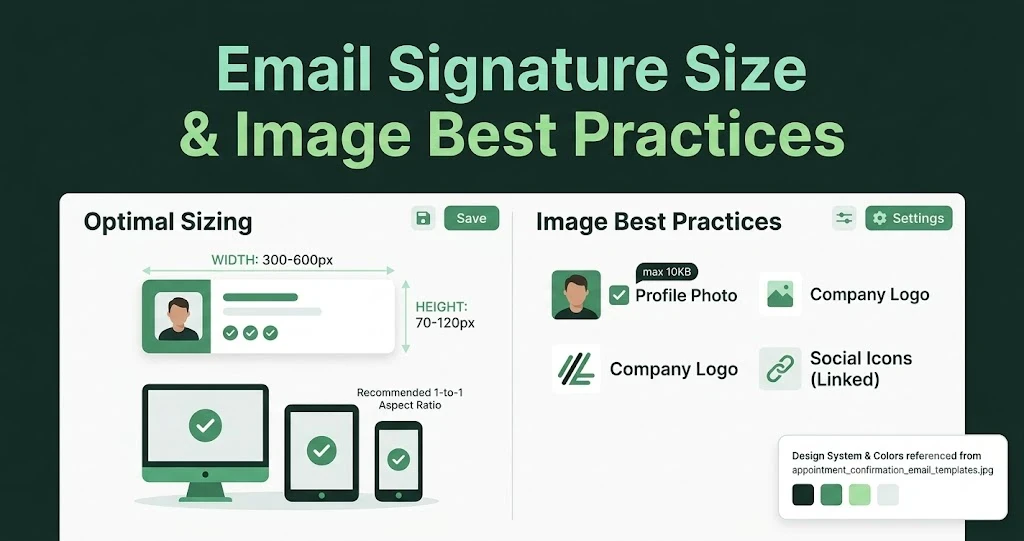
Email Design9 mins to read
Email Signature Size and Image Best Practices
The ideal email signature is 320–600px wide and 90–200px high. Learn the best image sizes, formats, file limits, and mobile-friendly design tips.

Email Tips7 mins to read
Best Drag and Drop Email Editors in 2026
Discover the best drag and drop email editors in 2026. Compare top tools, features, templates, pricing, and automation to build stunning emails fast.

Marketing7 mins to read
4 Best Unlayer Alternatives to Design Emails
Looking for Unlayer alternatives? Explore the 4 best email design tools to create beautiful, responsive emails faster and easier.

Marketing6 mins to read
5 Beefree Alternatives to Upgrade Email Design Workflows
Looking for a better email design tool? Explore 5 Beefree alternatives that streamline workflows, improve collaboration, and elevate email campaigns.