How Often Should You Email Your List?
Sending too much or too little? Find the perfect email marketing frequency for your business to maximize open rates & revenue without burning out subscribers.

Shahin Alam
You hit "send" on Tuesday. Is it too soon to email again on Thursday? Or if you wait until next week, will your subscribers forget you even exist?
It’s the Goldilocks dilemma of email marketing: send too much, and you’re a spammer; send too little, and you’re a ghost.
Finding that "just right" frequency is one of the toughest challenges for marketers in 2026.
In this guide, we’ll cut through the noise and help you calculate the perfect email cadence for your specific business.
You’ll learn how to read your audience's signals, avoid the common traps that tank open rates, and build a strategy that keeps subscribers clicking without burning them out.
The Importance of Email Frequency

Why does frequency matter so much? It’s not just about open rates; it’s about relationship management.
Think of your email list like a friendship. If a friend calls you five times a day just to talk about themselves, you stop picking up.
If they only call once a year, the connection fades. Email marketing operates on the same principle.
Getting the frequency right directly impacts three critical metrics:
- Deliverability: Internet Service Providers (ISPs) like Gmail and Outlook monitor engagement. If you bombard users and they stop opening your emails (or worse, mark them as spam), your sender reputation tanks. Eventually, you end up in the junk folder.
- Retention: The number one reason people unsubscribe is receiving too many emails. Conversely, sending too infrequently can lead to "emotional unsubscribes"—where people stay on your list but delete your emails without opening them because they no longer recognize your name.
- Revenue: There is a sweet spot where revenue is maximized. Send too few emails, and you leave money on the table. Send too many, and you exhaust your audience's purchasing power and patience.
Understanding Your Audience

Before you can set a schedule, you need to understand who is on the receiving end. Different demographics have vastly different tolerances for email volume.
B2B vs. B2C Expectations
The gap between Business-to-Business (B2B) and Business-to-Consumer (B2C) expectations is massive.
- B2B Audiences: These readers are busy professionals. They typically appreciate value-driven, educational content sent once a week or bi-weekly. They are looking for industry insights, not a daily flash sale.
- B2C Audiences: Consumers are often more tolerant of higher frequency, especially in retail. Fashion brands, for example, might successfully email 2-3 times a week (or even daily during holidays) because the visual nature of the product drives impulse buys.
The Lifecycle Stage
A new subscriber is different from a veteran.
- New Subscribers: They are in the "honeymoon phase." They just signed up, so their interest is at its peak. This is the time to send a Welcome Sequence with higher frequency (e.g., 3-4 emails in the first week) to establish value.
- Inactive Subscribers: If someone hasn't opened an email in 90 days, sending them more email won't fix it. You need a Re-engagement Campaign (perhaps once a month) rather than blasting them daily.
Factors Influencing Email Frequency

There is no universal magic number, but there are variables you can analyze to find your number.
1. The Nature of Your Content
Is your content news-based or evergreen?
- Newsletters/Media: If you run a daily news roundup (like The Morning Brew), your audience expects—and wants—an email every morning.
- SaaS/Service Providers: If you are selling software or consulting, you likely don't have enough "breaking news" to justify a daily email. Weekly or bi-weekly updates focused on tips and product usage are usually better.
2. Your Resources and Quality
This is the most practical constraint: Consistency is better than frequency.
If you commit to emailing three times a week, but the content is rushed, full of typos, and lacks value, you are hurting your brand. It is far better to send one amazing, high-value email every two weeks than three mediocre ones every week.
Pro-Tip: If you struggle to design professional emails quickly, you need a better tool. We recommend MailEditor. It’s an AI-powered email template builder that lets you easily edit custom HTML templates without coding. You can pick the pre-built HTML Email Modules, making it incredibly fast to produce high-quality emails consistently.
3. Seasonality
Your frequency shouldn't be static year-round.
- Black Friday/Cyber Monday: It is standard practice to ramp up volume significantly during November and December.
- Product Launches: During a launch week, you might email daily.
- Slow Seasons: It’s okay to dial it back during known lulls in your industry to avoid fatigue.
Finding the Right Balance

So, where do you start? Here are some industry benchmarks to use as a baseline before you start testing.
The "Safe" Bet: Weekly
For most businesses, once a week is the gold standard. It’s frequent enough to stay top-of-mind but infrequent enough to avoid being annoying. It also gives you enough time to create high-quality content.
The "High Volume" Strategy: 2-3 Times Per Week
This works best for e-commerce brands with a large inventory of products or content-heavy blogs. If you choose this route, ensure you are segmenting. Do not send every email to every person.
The "Slow Burn": Monthly
This is risky in 2026. Inboxes are crowded. If you only show up once every 30 days, subscribers may forget who you are. If you must do monthly, make sure that single email is packed with immense value (e.g., a comprehensive monthly digest).
Asking Your Subscribers
Why guess when you can ask?
- Preference Centers: When people sign up (or at the bottom of your emails), give them the option to choose: "Weekly," "Monthly," or "Daily Updates."
- The "Snooze" Button: Instead of letting people unsubscribe, offer them the option to "Pause emails for 30 days."
Testing and Optimization Strategies

You can't improve what you don't measure. You need to run tests to see how your specific audience reacts to changes in cadence.
The A/B Frequency Test
Don't change your frequency for your whole list at once. Run a split test:
- Group A (Control): Receives 1 email per week.
- Group B (Test): Receives 2 emails per week.
Run this for at least 4-6 weeks. Why? Because open rates might spike initially due to novelty, but you need to see if burnout sets in after a month.
Metrics to Watch
When increasing frequency, don’t just look at revenue. Watch the negative signals:
- Unsubscribe Rate: If this spikes above 0.5% per email, pull back.
- Click-Through Rate (CTR): It is normal for the open rate per email to drop slightly as frequency increases, but your total clicks per month should go up. If total clicks go down, you are over-mailing.
- Complaint Rate: If spam complaints rise, you are in dangerous territory.
Examples of Successful Email Cadences

Let’s look at how different business models handle this.
The E-commerce Giant (Fashion Brand)
1. Frequency: 3-4 times per week.
2. Strategy: They use heavy segmentation.
- Tuesday: New Arrivals (Sent to everyone).
- Thursday: "You forgot this" cart recovery (Sent only to cart abandoners).
- Saturday: Weekend Sale (Sent to highly engaged users).
- Sunday: Educational/Style Guide (Sent to those who bought recently).
The B2B Consultant
- Frequency: Weekly (Tuesday mornings).
- Strategy: Consistency is key. The email is a "Teardown Tuesday" newsletter that analyzes a marketing trend. Because it is predictable and high-value, open rates remain over 40%.
The SaaS Company
- Frequency: Bi-weekly product updates + Trigger-based emails.
- Strategy: They don't send many "broadcast" newsletters. Instead, they rely on behavioral triggers. If a user logs in and visits the pricing page, they get an email. If they haven't logged in for a week, they get a "tips" email. This makes the frequency feel personal rather than spammy.
Common Mistakes to Avoid

Even seasoned pros fall into these traps.
1. The "Panic Send"
Revenue is down for the month, so you decide to blast the list three days in a row to make up the numbers.
Why it fails: This reeks of desperation and trains your audience to only buy on discount. It creates a spike in unsubscribes that hurts long-term growth.
2. Ignoring Mobile Optimization
If you increase frequency, your emails must be easy to consume. If you send frequent, broken emails that don't load on mobile, you are actively annoying your customers.
The Fix: Use a tool like MailEditor to ensure your templates are responsive. Their "Export Anywhere" feature ensures your HTML looks great whether the user is on an iPhone or a desktop, and whether you use MailChimp, HubSpot, or Salesforce.
3. Treating Everyone the Same
Sending the same daily email to a VIP customer (who buys everything) and a dormant lead (who hasn't clicked in a year) is a recipe for disaster.
The Fix: Use engagement tiers.
VIPs: Can handle higher frequency.
Actives: Standard frequency.
At-Risk: Lower frequency, higher value.
4. "Ghosting" After the Welcome
Many businesses have a great 5-email welcome sequence, and then... silence for three months.
Why it fails: The transition from "automated sequence" to "broadcast list" needs to be seamless. Don't let new leads fall into a black hole.
Final Thoughts
Ultimately, the question "How often should I email?" is the wrong question. The real question is: "How often can I provide value?"
If you have something valuable to say every day, your audience will listen every day. If you only have something valuable to say once a month, email once a month.
The key to long-term success in 2026 is consistency over intensity. Start with a manageable schedule (like once a week), track your engagement metrics religiously, and scale up only when your audience signals they are hungry for more.
And remember, the technical side shouldn't hold you back. If creating emails feels like a chore, you’ll never stick to a schedule.
Tools like MailEditor remove the friction of design and coding, letting you focus on what really matters: the message.
Ready to fix your email cadence?
- Audit your current open rates.
- Commit to a consistent weekly schedule.
- Use a template builder to speed up production.
- Ask your audience what they want.
Your list is waiting. Go hit send.
Written by
A full-stack digital marketer and passionate blogger with more than seven years of hands-on experience helping brands grow, rank, and thrive online.
All postsPopular Blogs
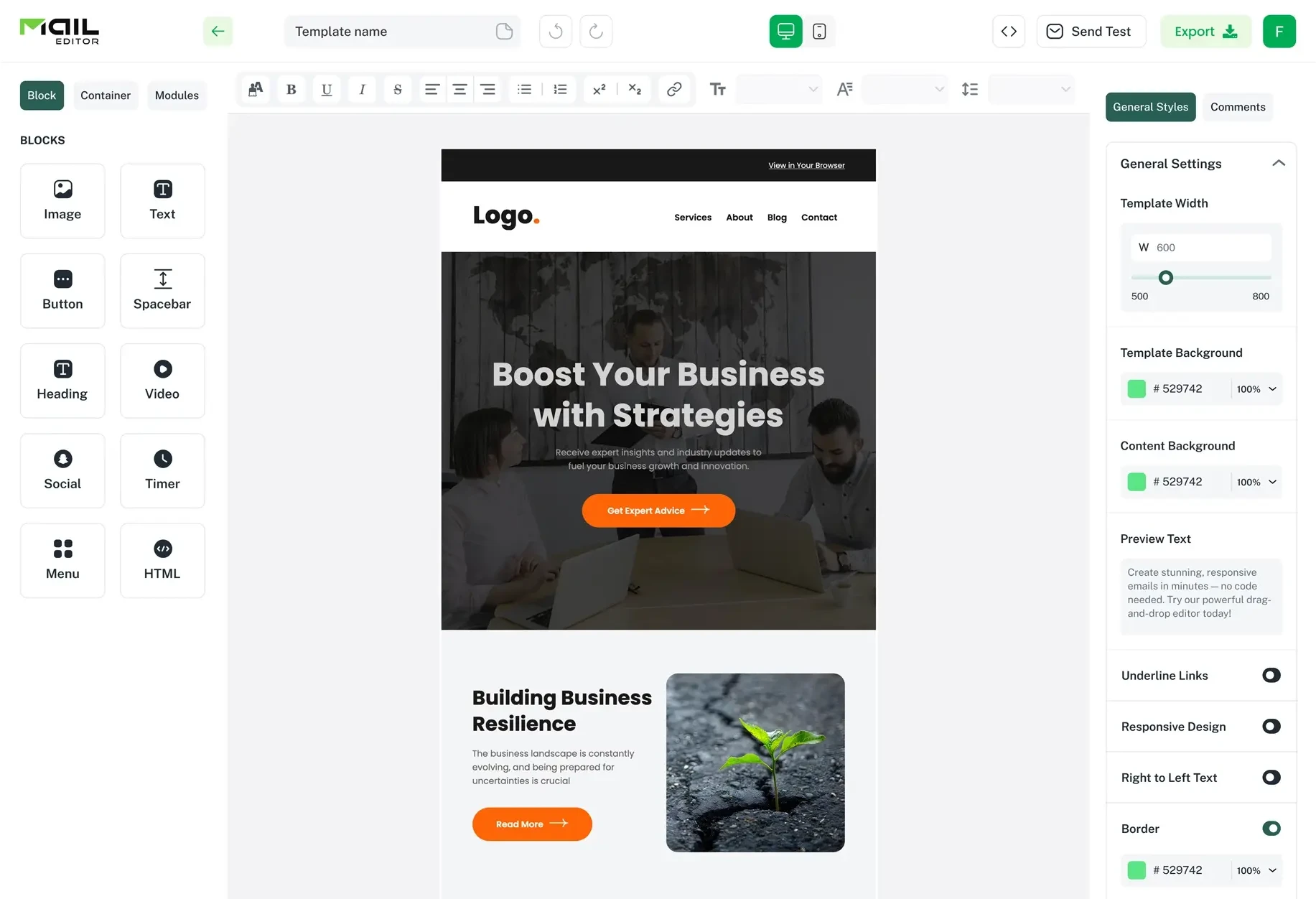
Email Design2 mins to read
Top Email Template Builders & HTML Email Editors for 2026
Compare the best email template builders and HTML editors to design professional, responsive campaigns without coding.
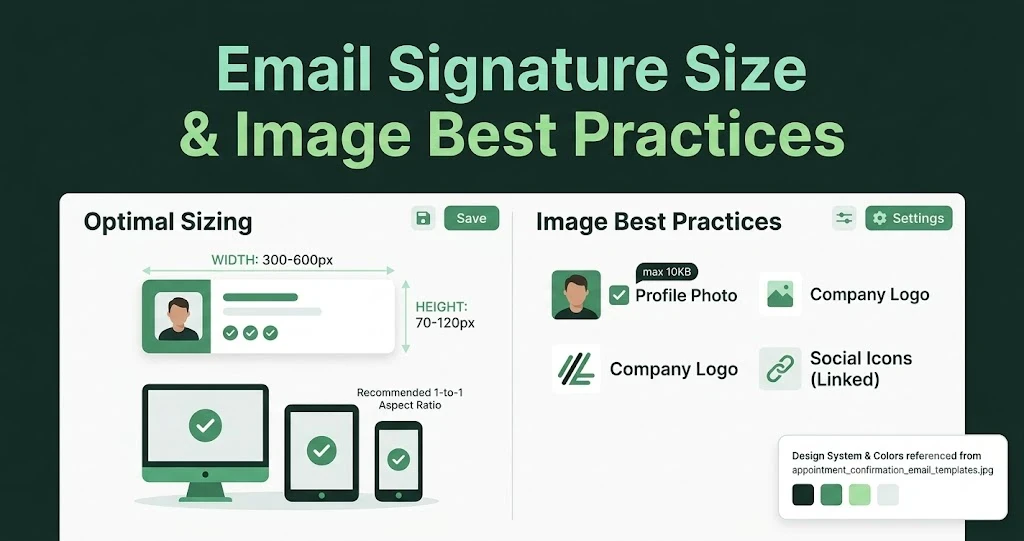
Email Design9 mins to read
Email Signature Size and Image Best Practices
The ideal email signature is 320–600px wide and 90–200px high. Learn the best image sizes, formats, file limits, and mobile-friendly design tips.
Email Tips7 mins to read
Best Drag and Drop Email Editors in 2026
Discover the best drag and drop email editors in 2026. Compare top tools, features, templates, pricing, and automation to build stunning emails fast.
Marketing7 mins to read
4 Best Unlayer Alternatives to Design Emails
Looking for Unlayer alternatives? Explore the 4 best email design tools to create beautiful, responsive emails faster and easier.
Marketing6 mins to read
5 Beefree Alternatives to Upgrade Email Design Workflows
Looking for a better email design tool? Explore 5 Beefree alternatives that streamline workflows, improve collaboration, and elevate email campaigns.