What Is Modular Email Design? A Practical Guide
Modular email design uses reusable blocks to build consistent campaigns faster. Explore how modules work, what to include, and how to create a scalable email design system.

Md. Yaikub Hossain Razon
Modular email design is a method of building emails from reusable sections instead of creating every campaign as one complete layout. Teams create approved modules such as headers, hero sections, product cards, CTAs, testimonials, and footers, then combine those blocks in different ways for each campaign.
This approach fits modern email production. Litmus surveyed 500 marketing professionals for its 2026 State of Email report and found that 78% of teams now produce and deploy an email within three days or less.
For this guide, we reviewed current modular email workflows and applied the concepts to MailEditor’s reusable module system. You will learn what modules are, how they differ from templates, which blocks to create first, how to organize a module library, and how to test modular campaigns.
What Is Modular Email Design?
Modular email design is an approach where complete emails are assembled from reusable, pre-designed sections. Instead of rebuilding familiar elements for every campaign, teams select approved modules and arrange them according to the message they need to send.
Think of an email as a collection of building blocks.
A promotional campaign might use:
Header → Hero → Product Grid → Testimonial → CTA → Footer
A newsletter might use:
Header → Intro → Article Card → Article Card → CTA → Footer
A product announcement might use:
Header → Product Hero → Feature Block → Benefits → CTA → Footer
The campaigns are different.
However, many underlying components remain reusable.
That is the core principle of modular email production.
What Is an Email Module?
An email module is a reusable section with its own layout, content fields, styling, and responsive behavior. It can be added to different campaigns while preserving an approved design structure.
Some modules contain only a few elements.
Examples include:
-
CTA block
-
Divider
-
Social media row
-
Spacer
-
Promo code section
Other modules contain several connected elements.
A product module might include:
-
Product image
-
Product name
-
Description
-
Price
-
CTA button
A hero module could contain:
-
Background
-
Headline
-
Supporting text
-
Product image
-
CTA
The structure stays familiar while campaign-specific content changes.
How Modular Email Design Works
Modular email design separates reusable structure from campaign-specific content. The module controls the layout and styles, while marketers update elements such as headlines, images, links, prices, products, or offers.
A typical workflow looks like this:
-
Identify repeating email sections.
-
Design the core modules.
-
Apply brand styles.
-
Define editable content areas.
-
Set responsive behavior.
-
Test each module.
-
Save modules in a library.
-
Choose modules for a campaign.
-
Arrange them in the required order.
-
Replace the campaign content.
-
Preview the complete email.
-
Test before sending.
MailEditor supports this workflow through reusable modules and Saved Blocks.
You can explore the MailEditor Module Builder to see how reusable sections can be combined into complete emails.
Modules vs Templates
An email module and an email template are related, but they are not the same thing.
A module is one reusable section.
A template provides a larger or complete email structure.
|
Email Module |
Email Template |
|
One reusable section |
Complete email structure |
|
Used across many campaigns |
Usually starts one campaign type |
|
Easy to mix and match |
Provides an overall layout |
|
Supports flexible assembly |
Supports repeatable campaigns |
|
Example: product card |
Example: weekly newsletter |
|
Example: hero section |
Example: welcome email |
|
Example: CTA block |
Example: promotional email |
Most teams can benefit from using both.
For example, you might create a weekly newsletter template containing reusable:
-
Article cards
-
Event modules
-
Sponsor sections
-
CTA blocks
-
Footer modules
The template provides the overall framework.
The modules provide flexibility inside that framework.
For a deeper look at repeatable complete email structures, read how to create reusable email templates.
Why Use Modular Email Design?
Modular email design helps teams reuse proven structures instead of treating every campaign as a separate design project. The main benefits include faster production, stronger brand consistency, simpler collaboration, easier experimentation, and more predictable responsive behavior.
Faster Email Production
Email teams often repeat the same basic sections.
Examples include:
-
Header
-
Hero
-
Product grid
-
CTA
-
Footer
Rebuilding those components every time adds unnecessary production work.
With modular email design, teams can focus more on:
-
Campaign message
-
Offer
-
Imagery
-
Personalization
-
Audience
-
Testing
instead of recreating familiar layouts.
Litmus reported in its 2026 State of Email research that 78% of surveyed teams now produce and deploy an email within three days or less.
Reusable email components can help support these shorter production cycles.
Better Brand Consistency
Modules can preserve approved:
-
Fonts
-
Colors
-
Buttons
-
Spacing
-
Borders
-
Image ratios
-
Background styles
-
Content hierarchy
That helps different campaigns feel connected to the same brand.
Jude Wasfi, Associate Creative Director at Superside, summarized the idea well:
“Consistency is not boring, it is recognition.”
When the same CTA style, spacing system, typography, and recurring components appear across campaigns, the email channel becomes more visually consistent.
Easier Collaboration
A modular system gives designers, marketers, developers, and copywriters a shared structure.
Designers can establish the module.
Developers can validate its technical behavior.
Marketers can update approved fields.
Copywriters can work within predictable content areas.
This gives each role a clearer part of the production workflow.
Easier Testing
An established module already has known behavior.
You still need to test every completed campaign.
However, using familiar modules gives the team a more predictable technical starting point.
Easier Experimentation
Modules also make testing individual campaign elements easier.
You could compare:
-
Two hero modules
-
Two CTA layouts
-
Two product cards
-
Two testimonial formats
-
Two promotional banners
If one variation performs well for your audience, it can become a reusable option for later campaigns.
Common Email Modules
A modular email system should begin with sections that appear repeatedly.
You do not need hundreds of modules.
A small library of useful components is often more practical.
Five Types of Email Modules
A useful way to organize modules is into five groups.
|
Module Type |
Purpose |
Examples |
|
Foundation |
Email structure |
Header, navigation, footer |
|
Message |
Main communication |
Hero, intro, announcement |
|
Content |
Detailed information |
Product card, article card |
|
Trust |
Credibility |
Testimonial, review, statistics |
|
Action |
Reader next step |
CTA, offer, registration |
Foundation Modules
Foundation modules support the main email structure.
Examples include:
-
Header
-
Logo row
-
Navigation
-
Preheader
-
Footer
-
Social links
These modules often appear across many campaign types.
Message Modules
Message modules communicate the main campaign idea.
Examples include:
-
Hero
-
Introduction
-
Announcement
-
Promotional banner
-
Centered text section
Their message changes often, while the basic layout can remain reusable.
Content Modules
Content modules carry detailed information.
Examples include:
-
Product card
-
Product grid
-
Article card
-
Image-and-text section
-
Feature block
-
Event details
-
Pricing section
Larger libraries may contain several variants of each component.
Trust Modules
Trust modules provide supporting proof or context.
Examples include:
-
Customer testimonial
-
Review
-
Brand logos
-
Statistics
-
Awards
-
Short case study
These sections can support product, service, and ecommerce campaigns.
Action Modules
Action modules encourage the reader to take the next step.
Examples include:
-
Primary CTA
-
Secondary CTA
-
Discount section
-
Event registration
-
Download CTA
-
Promotional banner
Keep CTA styles consistent across the module library.
How Do You Build a Module Library?
Build a module library by reviewing existing campaigns, identifying repeated sections, creating flexible components, and defining how each one should be used. Start small, test the modules in real campaigns, and expand the library only when a repeated production need appears.
Step 1: Audit Existing Emails
Review recent campaigns.
Look for patterns.
You may discover that dozens of campaigns rely on only a few recurring layouts.
Record repeated:
-
Headers
-
Heroes
-
Product sections
-
Content cards
-
CTAs
-
Footers
These become your first module candidates.
Step 2: Define Brand Rules
Set a common foundation.
Define:
-
Font families
-
Heading sizes
-
Body text
-
Brand colors
-
CTA colors
-
Border styles
-
Spacing
-
Backgrounds
The modules can have different layouts while still feeling related.
Step 3: Build Core Modules
Start with the most useful components.
A practical first library could include:
-
Header
-
Hero
-
Text block
-
Image-and-text section
-
Product or article card
-
Primary CTA
-
Promotional banner
-
Footer
Do not create more modules just to make the library look larger.
Add them when campaign needs justify them.
Step 4: Define Editable Fields
Decide which parts marketers can change.
A hero module may allow:
-
Headline
-
Supporting text
-
Image
-
CTA label
-
CTA link
The underlying layout can remain consistent.
Step 5: Create Variants
Variants make modules more flexible.
For example, an image-and-text module could offer:
-
Image left
-
Image right
-
Centered image
-
Compact
-
Featured
A hero might have:
-
Product
-
Editorial
-
Promotional
-
Minimal
Avoid creating separate modules for very small visual differences.
Step 6: Name Modules Clearly
Clear naming becomes important as the library grows.
Good examples include:
-
Hero — Product
-
Hero — Editorial
-
CTA — Primary
-
CTA — Centered
-
Product Card — Single
-
Product Grid — 3 Column
-
Footer — Standard
Avoid names such as:
-
Module 4
-
New Hero Final
-
Section Copy 2
-
Final Block Latest
Anyone on the team should understand the module name.
Step 7: Document Each Module
A simple module guide can record:
-
Module name
-
Intended use
-
Editable fields
-
Available variants
-
Recommended image size
-
Copy length
-
Mobile behavior
Documentation becomes especially useful for larger teams.
How Should Modules Be Designed?
Reusable modules should be flexible enough for real campaign content without losing their structure. Test them with different headline lengths, images, CTA labels, and screen sizes before making them standard components.
Allow Realistic Copy Lengths
Do not test only perfect short copy.
Try:
-
Long headline
-
Short headline
-
Longer product name
-
Two-line supporting copy
-
Longer CTA text
This helps reveal where the component needs limits.
Plan Responsive Behavior
Each module should have predictable mobile behavior.
For example:
Desktop
Image | Text | CTA
Mobile
Image
Text
CTA
Define the stacking order before saving the module.
Keep Hierarchy Clear
A module should have one clear purpose.
A product card may follow:
-
Product image
-
Product name
-
Description
-
Price
-
CTA
A hero may follow:
-
Headline
-
Supporting message
-
CTA
Keep Modules Independent
Avoid designing modules that only work beside one specific section.
Independent components provide more flexibility.
Build Accessibility Into Modules
Include sensible defaults for:
-
Text size
-
Color contrast
-
Alt text
-
Link clarity
-
CTA visibility
-
Reading order
Good defaults improve every campaign that reuses the component.
Modular Design and Email Clients
Email modules still need to work across different inbox environments.
HTML email does not behave exactly like a normal website.
Can I Email currently tracks support for 308 HTML and CSS features across clients including Apple Mail, Gmail, Outlook, Yahoo Mail, Proton Mail, and others.
Its scoreboard also shows large differences in support between email clients.
For example, current support scores include:
-
Apple Mail on macOS: 288/308
-
Gmail desktop webmail: 154/308
-
Outlook.com: 173/308
-
Outlook on Windows: 59/307
That makes reusable, tested structures useful.
A module with known behavior provides a stronger production foundation than introducing a completely new layout in every campaign.
Testing is still necessary.
Modular design simply makes the starting point more predictable.
What Is an Email Design System?
An email design system is the broader framework that controls reusable components, brand rules, variants, and production standards. Modular email design provides the building blocks, while the design system explains how those blocks should look and behave.
A complete email design system may contain:
-
Module library
-
Typography rules
-
Color system
-
Spacing system
-
Button styles
-
Component variants
-
Naming conventions
-
Image guidelines
-
Usage rules
-
Accessibility standards
-
QA process
The relationship is simple:
Module = reusable component
Template = assembled email structure
Design system = rules governing the whole system
A small team can use modular email design without creating a large formal design system.
As campaign volume and team size increase, documentation becomes more valuable.
Modular Email Design in MailEditor
MailEditor supports modular production through its visual editor, Module Builder, reusable Saved Blocks, and branded components.
A practical MailEditor workflow looks like:
Choose modules → arrange sections → customize content → apply branding → preview → test → export
The MailEditor Module Builder provides reusable sections such as:
-
Headers
-
Footers
-
Promotional blocks
-
Newsletter sections
-
Pricing sections
-
Other campaign components
Teams can also save custom sections and reuse them across future campaigns.
If you already have an HTML email, the MailEditor HTML email builder can also support a reuse-focused workflow by letting you work visually with existing email assets.
How Should Modular Emails Be Tested?
Test individual modules before adding them to your standard library, then test the complete assembled email before every campaign. Module testing confirms the building block works properly, while full-email testing checks how several modules behave together.
Test modules with:
-
Desktop layouts
-
Mobile layouts
-
Gmail
-
Outlook
-
Apple Mail
-
Dark mode
-
Different image sizes
-
Longer text
-
Shorter text
-
Different CTA labels
Also test unusual content.
For example:
-
Long product name
-
Two-line CTA
-
Tall image
-
Missing optional image
-
Long headline
-
Short description
This reveals how flexible the module really is.
For the full campaign QA process, read how to test email templates across devices.
When Should You Use Modular Design?
Modular email design works especially well when teams create recurring campaigns that share visual or structural patterns. It is useful for newsletters, ecommerce promotions, lifecycle campaigns, events, product announcements, educational emails, and customer communications.
Good use cases include:
-
Weekly newsletters
-
Product promotions
-
Welcome emails
-
Onboarding sequences
-
Event invitations
-
Product launches
-
Seasonal campaigns
-
Customer updates
-
Educational series
-
Post-purchase emails
Even one-off campaigns can use modules.
However, the benefits increase when the same components serve many emails.
Modular vs One-Off Email Design
Both approaches can create effective campaigns.
The difference is the production model.
|
Modular Design |
One-Off Design |
|
Reuses components |
Creates campaign-specific layouts |
|
Uses a shared library |
Uses individual design files |
|
Faster recurring assembly |
Greater freedom for one unique campaign |
|
Encourages consistent patterns |
Allows highly custom structures |
|
Components improve over time |
Each design stands independently |
|
Strong for ongoing programs |
Useful for special creative projects |
Teams do not need to choose only one method.
A modular foundation can support most recurring campaigns.
Unique campaigns can still introduce custom sections when needed.
Practical Modular Email Example
Imagine an ecommerce brand sends three different campaigns.
Campaign 1: Product Launch
Modules:
Header → Hero → Product Feature → Benefits → CTA → Footer
Campaign 2: Weekend Sale
Modules:
Header → Promo Banner → Product Grid → CTA → Footer
Campaign 3: Newsletter
Modules:
Header → Editorial Hero → Article Cards → CTA → Footer
The emails look different.
However, they may share:
-
Header
-
Fonts
-
Button styles
-
Product blocks
-
Spacing
-
CTA patterns
-
Footer
The brand does not need one rigid template for every email.
It needs compatible reusable parts.
That is modular email design in practice.
How Do You Maintain a Module Library?
Review the library periodically.
Ask:
-
Which modules are used often?
-
Which modules are rarely used?
-
Are duplicate modules appearing?
-
Do the styles still match the brand?
-
Does mobile stacking still work?
-
Are image rules clear?
-
Are CTA styles consistent?
-
Are names easy to understand?
-
Are old modules still needed?
Remove unnecessary duplication.
A smaller collection of flexible components is often easier to use than a large collection of nearly identical blocks.
Final Answer
Modular email design is a system for creating emails from reusable, compatible sections instead of treating every campaign as one completely new layout.
A practical workflow is:
-
Review existing campaigns.
-
Find recurring sections.
-
Define brand rules.
-
Build useful modules.
-
Define editable fields.
-
Create sensible variants.
-
Test responsive behavior.
-
Save modules in a shared library.
-
Assemble campaigns from those modules.
-
Improve the library as new needs appear.
The goal is not to make every campaign identical.
It is to create reliable building blocks that give teams both consistency and flexibility.
Start with a small library.
Build a header, hero, content block, CTA, and footer.
Use them in real campaigns.
Then expand the module system when your production workflow shows a clear need.
For a visual modular workflow, explore the MailEditor Module Builder and start creating reusable email components.
Frequently Asked Questions
Question: What is modular email design?
Answer: Modular email design is a method of creating emails from reusable sections such as headers, heroes, product cards, CTAs, banners, and footers. Teams combine these approved components in different arrangements rather than building every campaign as a completely new layout.
Question: What is an email module?
Answer: An email module is a reusable section with its own layout, styling, editable content, and responsive behavior. It can be simple, such as a CTA, or more detailed, such as a product card containing an image, description, price, and button.
Question: What is the difference between modules and templates?
Answer: A module is one reusable section of an email, while a template provides a larger or complete campaign structure. Teams can combine multiple modules inside one template, giving campaigns both repeatable structure and flexibility.
Question: What modules should I create first?
Answer: Start with sections your team already uses frequently. A practical first library includes a header, hero, text section, image-and-text block, product or article card, CTA, promotional banner, and footer. Expand the library only when recurring campaign needs justify new components.
Question: Does modular email design work on mobile?
Answer: Yes. Each module should have defined responsive behavior covering column stacking, image scaling, text wrapping, spacing, and button placement. Test individual modules and the complete assembled campaign on desktop and mobile before sending.
Question: Is modular email design the same as an email design system?
Answer: No. Modular email design describes the reusable-component method. An email design system is broader and can include modules, typography, colors, spacing, component variants, naming conventions, accessibility rules, governance, and testing standards.
Question: Can I use modular design for newsletters?
Answer: Yes. Newsletters are a strong use case because recurring sections can become reusable modules. A newsletter might combine a header, editorial hero, article cards, event sections, sponsor blocks, CTA modules, and footer while changing the actual stories each week.
Question: Can MailEditor build modular emails?
Answer: Yes. MailEditor provides a Module Builder, reusable Saved Blocks, branded components, responsive layouts, and visual editing. Teams can assemble emails from pre-built sections or save their own custom modules for future campaigns.
Popular Blogs
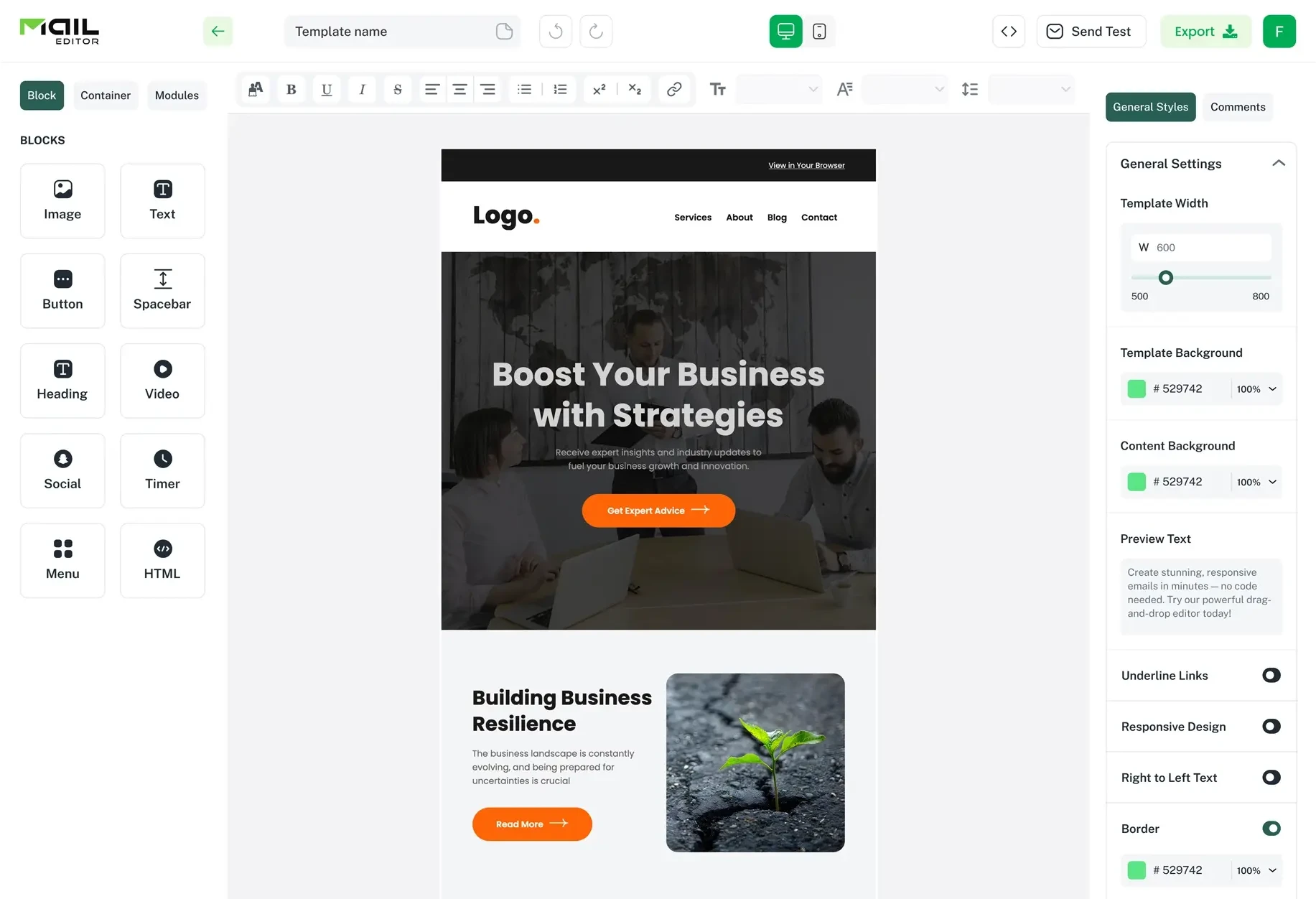
Email Design2 mins to read
Top Email Template Builders & HTML Email Editors for 2026
Compare the best email template builders and HTML editors to design professional, responsive campaigns without coding.

Email Tips7 mins to read
Best Drag and Drop Email Editors in 2026
Discover the best drag and drop email editors in 2026. Compare top tools, features, templates, pricing, and automation to build stunning emails fast.
Email Design9 mins to read
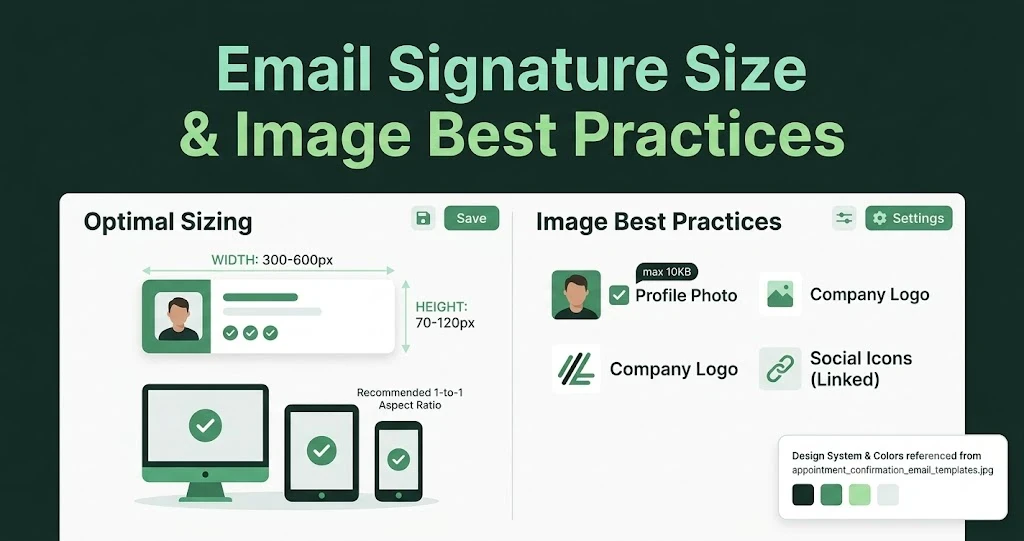
Email Signature Size and Image Best Practices
The ideal email signature is 320–600px wide and 90–200px high. Learn the best image sizes, formats, file limits, and mobile-friendly design tips.

Marketing7 mins to read
4 Best Unlayer Alternatives to Design Emails
Looking for Unlayer alternatives? Explore the 4 best email design tools to create beautiful, responsive emails faster and easier.

Marketing6 mins to read
5 Beefree Alternatives to Upgrade Email Design Workflows
Looking for a better email design tool? Explore 5 Beefree alternatives that streamline workflows, improve collaboration, and elevate email campaigns.