How to Pick a Template for Your Campaign Goal?
Choose an email template by campaign goal by matching the layout, content depth, and CTA to the action you want readers to take. Find your best-fit design.

Md. Yaikub Hossain Razon
To choose an email template by campaign goal, start with the action you want the reader to take. Then select a layout whose hierarchy, content depth, imagery, and CTA naturally support that action. A newsletter, promotion, onboarding email, event invitation, and transactional message should not use the same content structure.
MailEditor organizes templates around real campaign uses, including newsletters, promotions, ecommerce, onboarding, transactional messages, events, retention, and customer communication. Litmus also found in its 2026 State of Email research that 78% of surveyed teams produce and deploy an email within three days or less, making a clear starting structure increasingly useful.
This guide is for marketers, founders, designers, and email teams. It gives you a practical framework for matching campaign objectives to template types before you begin customizing.
What Should You Choose First?
Choose the campaign goal before choosing the email template. Your goal determines what information deserves priority, how much content the email needs, which layout fits best, and what CTA should receive the strongest visual emphasis.
A useful starting sentence is:
This email is for [audience], and I want them to [primary action].
For example:
This email is for existing customers, and I want them to explore our new collection.
Or:
This email is for new users, and I want them to complete their first setup step.
Those two campaigns need different templates.
The first may need strong product imagery.
The second may need clear instructions and one next-step CTA.
Start with the action.
Then choose the design.
Define the Campaign Goal
An email campaign goal is the main result or reader action the message is designed to support. Defining it first helps you select a template whose content hierarchy naturally guides readers toward that outcome.
Common campaign goals include:
-
Educate subscribers
-
Share company updates
-
Promote an offer
-
Introduce a product
-
Welcome a subscriber
-
Onboard a customer
-
Confirm a transaction
-
Announce an event
-
Drive registrations
-
Re-engage subscribers
-
Request feedback
-
Encourage referrals
-
Share account information
-
Support retention
Avoid beginning with:
Which template looks best?
Instead ask:
Which structure makes this message easiest to understand and act on?
That shift is important.
A beautiful design can support several goals, but its content structure still needs to match the campaign.
Match Goals to Templates
The fastest way to choose an email template by campaign goal is to match the desired reader action to the template’s structure. The table below provides a practical starting point for common campaigns.
|
Campaign Goal |
Template Type |
Recommended Structure |
Primary CTA |
|
Educate or inform |
Newsletter |
Intro → stories → resources → CTA |
Read more |
|
Drive a purchase |
Promotional |
Offer → product → benefits → CTA |
Shop now |
|
Introduce a product |
Product launch |
Hero → value → features → CTA |
Explore product |
|
Welcome a subscriber |
Welcome |
Greeting → value → next step |
Get started |
|
Guide setup |
Onboarding |
Progress → steps → help → CTA |
Complete setup |
|
Confirm an action |
Transactional |
Status → details → next step |
View details |
|
Drive attendance |
Event |
Event value → details → agenda → CTA |
Register |
|
Re-engage users |
Win-back |
Reminder → value → incentive → CTA |
Come back |
|
Collect feedback |
Survey |
Short request → context → CTA |
Take survey |
|
Retain customers |
Lifecycle |
Value → helpful content → next step |
Continue |
This Campaign Goal Match Matrix is a practical MailEditor framework for evaluating template structure.
It is not a rigid rule.
Use it as a starting point, then adjust the template for your audience and content.
Newsletter Campaigns
Choose a newsletter template when the main goal is to inform, educate, curate, or drive readers toward several pieces of content. The layout should make multiple stories easy to scan without making every section compete for equal attention.
A useful newsletter structure is:
Header → Intro → Featured Story → Secondary Stories → CTA → Footer
Look for room for:
-
Featured content
-
Article cards
-
Section headings
-
Short summaries
-
Resource links
-
Secondary CTAs
-
Consistent recurring sections
The main story should usually receive the strongest visual treatment.
Secondary content can use smaller cards.
Best Layout Style
A newsletter often works well with:
-
One main column
-
Repeating content cards
-
Clear section breaks
-
Moderate content density
-
Strong typography
If the newsletter includes many items, use hierarchy instead of making everything equally large.
Best CTA Style
Newsletter CTAs may include:
-
Read the article
-
Explore the guide
-
View all updates
-
See the full story
-
Browse resources
The goal is usually content discovery rather than one immediate purchase.
Promotional Campaigns
Choose a promotional email template when the campaign goal is to highlight an offer, product selection, discount, bundle, or other purchase-focused message. The template should make the offer and primary action obvious early in the email.
A common structure is:
Promo Bar → Hero → Offer → Products → CTA → Supporting Proof → Footer
Look for:
-
Clear offer area
-
Strong hero
-
Product blocks
-
Price or discount fields
-
CTA buttons
-
Supporting details
-
Optional urgency section
Keep the main campaign offer visually dominant.
A promotional email does not need every possible product category.
The layout should support the current campaign.
Best Layout Style
Promotional templates often work well with:
-
Strong visual hero
-
Low-to-medium content density
-
Product cards
-
Repeated but consistent CTAs
-
Clear visual sections
MailEditor provides dedicated template categories for promotional and other goal-specific campaigns.
Best CTA Style
Useful promotional CTAs include:
-
Shop the collection
-
View the offer
-
Explore products
-
Shop new arrivals
-
See the collection
Keep the CTA aligned with the landing-page destination.
Product Launch Campaigns
Choose a product launch template when you need to introduce something new and explain why it matters before asking readers to explore it. The design should combine attention, product context, benefits, and one clear next step.
A practical structure is:
Hero → Product Value → Key Benefits → Feature Highlights → CTA → Proof → Footer
A product launch template should have space for:
-
Product image
-
Product name
-
Short value proposition
-
Main benefits
-
Key features
-
Supporting proof
-
Primary CTA
Avoid turning the email into a complete product manual.
The email should create enough understanding to support the next action.
Best Layout Style
Use:
-
Strong hero visual
-
Clear benefit hierarchy
-
Medium content density
-
Modular feature blocks
-
One dominant CTA
Best CTA Style
Examples:
-
Explore the product
-
See what’s new
-
View features
-
Discover the update
-
Try the new experience
Welcome and Onboarding
Choose a welcome or onboarding template when the campaign goal is to help a new subscriber, customer, or user understand what happens next. The best layout usually prioritizes clarity, reassurance, and one useful first action.
A welcome email might use:
Welcome → Brand Value → Main Benefit → Next Step → Resources → Footer
An onboarding email may use:
Progress → Step 1 → Step 2 → Help → CTA → Footer
The difference matters.
A welcome email introduces the relationship.
An onboarding email helps the recipient make progress.
Welcome Template Features
Look for:
-
Friendly headline
-
Short brand introduction
-
Key benefit
-
Helpful resources
-
Primary CTA
Onboarding Template Features
Look for:
-
Steps
-
Progress cues
-
Setup instructions
-
Feature guidance
-
Support links
-
One next-step CTA
Best CTA Style
Welcome:
-
Explore your account
-
Start exploring
-
See what’s available
Onboarding:
-
Complete setup
-
Add your first project
-
Continue onboarding
-
Finish your profile
The CTA should represent the next useful action, not every possible action.
Transactional Emails
Choose a transactional email template when the primary goal is to confirm an action or communicate essential account, order, payment, booking, or security information. The template should prioritize important details over promotional content.
Examples include:
-
Order confirmation
-
Shipping notification
-
Receipt
-
Booking confirmation
-
Password reset
-
Account verification
-
Payment notification
-
Invoice
-
Security alert
A practical structure is:
Status → Key Details → Supporting Information → Relevant Action → Support → Footer
Best Layout Style
Transactional layouts should be:
-
Detail-first
-
Easy to scan
-
Structured
-
Focused
-
Mobile friendly
Important information should not require the reader to search through decorative sections.
For an order confirmation, show:
-
Order number
-
Products
-
Price
-
Shipping details
-
Status
-
Support information
Best CTA Style
Examples:
-
View order
-
Track shipment
-
View booking
-
Verify account
-
Reset password
-
View invoice
The CTA should match the transaction.
Event Campaigns
Choose an event email template when the main goal is registration, attendance, or event engagement. The layout should answer the reader’s practical questions quickly: what the event is, why it matters, when it happens, and how to register.
A useful structure is:
Event Hero → Value → Date and Time → Speakers or Agenda → CTA → Details → Footer
Look for space for:
-
Event name
-
Date
-
Time
-
Location
-
Speaker information
-
Key benefits
-
Agenda
-
Registration CTA
Best Layout Style
Event templates often need:
-
Clear information hierarchy
-
Strong registration CTA
-
Medium content density
-
Easy-to-find date and time
-
Speaker or agenda blocks
Best CTA Style
Examples:
-
Reserve your seat
-
Register now
-
Save your spot
-
View the agenda
-
Join the webinar
Do not make readers search for the registration action.
Re-Engagement Campaigns
Choose a re-engagement template when the campaign goal is to reconnect with subscribers or customers who have become less active. These emails usually benefit from a focused message, clear value, and one simple action.
A useful structure is:
Headline → Reminder of Value → Relevant Offer or Benefit → CTA → Preferences → Footer
Possible goals include:
-
Return to account
-
Browse new products
-
Update preferences
-
Restart activity
-
Renew membership
-
Continue setup
Best Layout Style
Consider:
-
Shorter message
-
Strong headline
-
Clear value statement
-
One primary CTA
-
Optional incentive
The template should make re-entry easy.
Best CTA Style
Examples:
-
See what’s new
-
Return to your account
-
Continue where you left off
-
Update preferences
-
Explore new arrivals
Survey and Feedback
Choose a survey or feedback template when the goal is to collect an opinion, rating, review, or response. The email should keep the request simple and make participation feel straightforward.
A useful structure is:
Question → Why Feedback Matters → Time Expectation → CTA → Thank You → Footer
Useful campaign types include:
-
Customer survey
-
Product feedback
-
Event feedback
-
Review request
-
NPS-style survey
-
Support follow-up
Best Layout Style
Feedback emails usually work best with:
-
Short copy
-
One clear request
-
Minimal distractions
-
Simple rating or CTA
-
Clear context
Best CTA Style
Examples:
-
Share feedback
-
Take the survey
-
Rate your experience
-
Leave a review
-
Tell us what you think
Choose the Right Layout
Once the campaign type is clear, match the layout to the amount and type of information readers need. Layout should support the goal rather than add visual complexity without a purpose.
Single-Column Layout
Best for:
-
Welcome emails
-
Transactional messages
-
Simple promotions
-
Surveys
-
Personal updates
It creates a direct reading path.
Card-Based Layout
Best for:
-
Newsletters
-
Product collections
-
Content digests
-
Resource roundups
Cards help separate multiple items.
Product-Grid Layout
Best for:
-
Ecommerce
-
New arrivals
-
Product recommendations
-
Seasonal promotions
Use it when several products deserve similar attention.
Image-and-Text Layout
Best for:
-
Product launches
-
Feature announcements
-
Educational campaigns
-
Benefits sections
It balances explanation with visuals.
Detail-First Layout
Best for:
-
Orders
-
Bookings
-
Payments
-
Account notifications
Important information appears before optional supporting content.
Match Content Density
The amount of content in a template should match the complexity of the campaign goal. Choosing a layout with too many or too few content areas can make customization harder than necessary.
Use this quick guide:
|
Campaign |
Content Density |
|
Survey |
Low |
|
Welcome |
Low |
|
Re-engagement |
Low |
|
Promotion |
Low to medium |
|
Product launch |
Medium |
|
Onboarding |
Medium |
|
Event |
Medium |
|
Newsletter |
Medium to high |
|
Transactional |
Depends on required details |
For example, a one-question survey does not need six content cards.
A weekly industry newsletter may need them.
Choose the structure that naturally fits the message.
Choose the Right CTA
The campaign goal and primary CTA should describe the same action. If the goal is event registration, the strongest button should not direct readers to a general homepage.
Match them directly.
|
Goal |
CTA Example |
|
Purchase |
Shop now |
|
Read |
Read the guide |
|
Register |
Reserve your seat |
|
Onboard |
Complete setup |
|
Confirm |
Verify account |
|
Track |
Track order |
|
Give feedback |
Take the survey |
|
Re-engage |
See what’s new |
|
Explore |
View product |
A simple test is:
If someone sees only the CTA, will they understand the next step?
If yes, the CTA is likely clear.
Check Mobile Fit
Your chosen template should still support the campaign goal when viewed on a smaller screen. Column stacking, image scaling, text wrapping, and button placement can change the order in which readers experience the message.
Google documents support for CSS media queries in Gmail, including screen width, orientation, and resolution. Can I Email also tracks support for 308 HTML and CSS email features, with notable differences across major email clients.
Before finalizing a template, check:
-
Does the main message remain near the top?
-
Does the CTA remain easy to find?
-
Do columns stack logically?
-
Are product cards readable?
-
Are dates and prices visible?
-
Are buttons easy to tap?
-
Does the footer remain clear?
Do not select a desktop layout without considering its mobile reading order.
For deeper QA, use MailEditor’s guide on how to test email templates across devices.
Campaign Goal Decision Tree
Use this quick decision tree when you are unsure which template to choose.
If the goal is to educate
Choose:
Newsletter or content template
Look for:
-
Article cards
-
Clear typography
-
Content hierarchy
-
Resource CTAs
If the goal is to sell
Choose:
Promotional or ecommerce template
Look for:
-
Offer section
-
Product imagery
-
Product blocks
-
Strong CTA
If the goal is to introduce something
Choose:
Product launch or announcement template
Look for:
-
Hero
-
Value proposition
-
Benefits
-
Feature sections
If the goal is to welcome
Choose:
Welcome template
Look for:
-
Friendly introduction
-
Brand context
-
Main benefit
-
One first action
If the goal is to guide setup
Choose:
Onboarding template
Look for:
-
Steps
-
Progress
-
Help links
-
Clear next action
If the goal is to confirm
Choose:
Transactional template
Look for:
-
Status
-
Key details
-
Relevant action
-
Support information
If the goal is attendance
Choose:
Event template
Look for:
-
Date
-
Time
-
Location
-
Speakers
-
Registration CTA
If the goal is to reconnect
Choose:
Re-engagement template
Look for:
-
Value reminder
-
Concise message
-
Simple CTA
If the goal is feedback
Choose:
Survey or review template
Look for:
-
Short question
-
Context
-
One response action
This approach lets you narrow a large template library based on function before considering visual style.
Goal First vs Design First
Choosing by goal produces a different decision process than choosing by appearance alone.
|
Goal-First Selection |
Design-First Selection |
|
Starts with desired action |
Starts with appearance |
|
Matches structure to content |
Adapts content to existing layout |
|
Prioritizes useful sections |
Prioritizes visual preference |
|
CTA follows objective |
CTA may be selected later |
|
Content density is intentional |
Content density depends on template |
|
Easier to compare relevant layouts |
Larger number of layouts to review |
Visual style still matters.
But it works best as the second filter.
A practical selection sequence is:
Goal → Template Type → Layout → Content Needs → Brand Style
That order keeps the campaign objective at the center.
A Five-Question Template Test
Before choosing a template, answer these five questions.
1. Does it support one main goal?
The template should give your primary message and CTA enough emphasis.
2. Does it fit the content?
Check whether the template has the right number and type of sections.
3. Does it fit the audience?
A customer receipt and an editorial newsletter need different reading experiences.
4. Does it adapt to mobile?
Check how the layout stacks and whether the key action remains visible.
5. Can you customize it easily?
You should be able to replace branding, content, imagery, and links without rebuilding the entire structure.
If all five answers are yes, the template is a strong candidate.
Choose Templates in MailEditor
MailEditor lets you browse goal-specific HTML email templates and customize the selected layout visually. The current library includes templates for newsletters, promotions, ecommerce, onboarding, transactional messages, events, customer journeys, and other campaign needs.
A practical workflow is:
-
Define your campaign goal.
-
Open the MailEditor email template library.
-
Choose the relevant template category.
-
Compare structures within that category.
-
Select the layout that fits your content.
-
Replace sample branding.
-
Add your campaign copy.
-
Replace images.
-
Update the primary CTA.
-
Preview mobile and desktop.
-
Send a test.
-
Export the completed email.
If you prefer to build or adapt the layout yourself, use the MailEditor HTML email builder.
The key is to narrow the template options by campaign goal before spending time customizing.
What Should You Test?
Test the finished campaign after you replace the sample content. Real headlines, images, product names, dates, prices, links, and CTAs can change how the selected layout behaves.
Review:
-
Headline
-
Content hierarchy
-
CTA
-
Destination links
-
Image dimensions
-
Alt text
-
Mobile stacking
-
Desktop layout
-
Personalization
-
Footer
-
Unsubscribe information
-
Dark-mode readability
MailEditor’s email pre-send checklist begins by confirming the campaign goal and audience before moving through links, CTAs, images, layout, accessibility, and testing.
This makes a useful final check:
Does the completed email still support the goal that made you choose this template?
If yes, the design and objective are still aligned.
Final Answer
To choose an email template by campaign goal, define the reader action first and select the template structure that makes that action easiest to understand and complete.
Use this quick match:
-
Educate or inform → Newsletter template
-
Drive purchases → Promotional template
-
Introduce a product → Product launch template
-
Welcome subscribers → Welcome template
-
Guide users → Onboarding template
-
Confirm actions → Transactional template
-
Drive attendance → Event template
-
Reconnect users → Re-engagement template
-
Collect opinions → Survey template
-
Support retention → Lifecycle template
Then check:
-
Layout
-
Content density
-
CTA
-
Mobile behavior
-
Branding flexibility
-
Email-client compatibility
The most visually attractive template is not automatically the best choice.
The best starting template is the one whose structure already fits what the campaign needs the reader to understand and do.
Browse the MailEditor email template library, choose the category that matches your campaign goal, and customize the layout for your audience, brand, and message.
Frequently Asked Questions
Question: How do I choose an email template by campaign goal?
Answer: Start by defining the one main action you want the reader to take. Then choose a template whose layout supports that action. Match newsletters to content discovery, promotions to purchases, onboarding emails to setup actions, transactional emails to essential details, and event templates to registrations.
Question: What template should I use for a newsletter?
Answer: Choose a newsletter template with clear content hierarchy, a featured story, repeatable content cards, readable typography, and room for several links. The layout should make multiple stories easy to scan while giving the most important content stronger visual priority.
Question: What template works best for promotions?
Answer: Choose a promotional template with a strong offer area, clear hero section, product or benefit blocks, and a prominent primary CTA. The layout should guide readers quickly from the offer to the action without requiring them to search through unrelated content.
Question: What template should I use for onboarding?
Answer: Choose an onboarding template that presents the next steps clearly. Look for sections for progress, instructions, benefits, support resources, and one primary action. The layout should help a new user make progress rather than introduce every feature at the same time.
Question: What template should I use for transactional email?
Answer: Choose a transactional template that prioritizes essential information such as order details, account status, payment information, booking details, or security actions. Use a detail-first layout with clear hierarchy, relevant support information, and a CTA that directly matches the transaction.
Question: Should I choose an email template based on design?
Answer: Design should be a filter, but campaign goal should come first. First choose the template type and structure that support the desired reader action. Then compare suitable options based on branding, imagery, typography, spacing, and other visual preferences.
Question: Can the same template work for different campaign goals?
Answer: Yes, especially when the template uses flexible content blocks. However, the hierarchy should still change with the goal. A product grid may be useful in both a newsletter and promotion, but the main message, CTA priority, and supporting sections may need different treatment.
Question: Can MailEditor help me choose a campaign template?
Answer: Yes. MailEditor provides templates for newsletters, promotions, ecommerce, onboarding, transactional messages, events, retention, and other campaign types. Start with the category that matches your goal, then compare layouts and customize the selected template visually for your brand and content.
Popular Blogs
Email Design2 mins to read
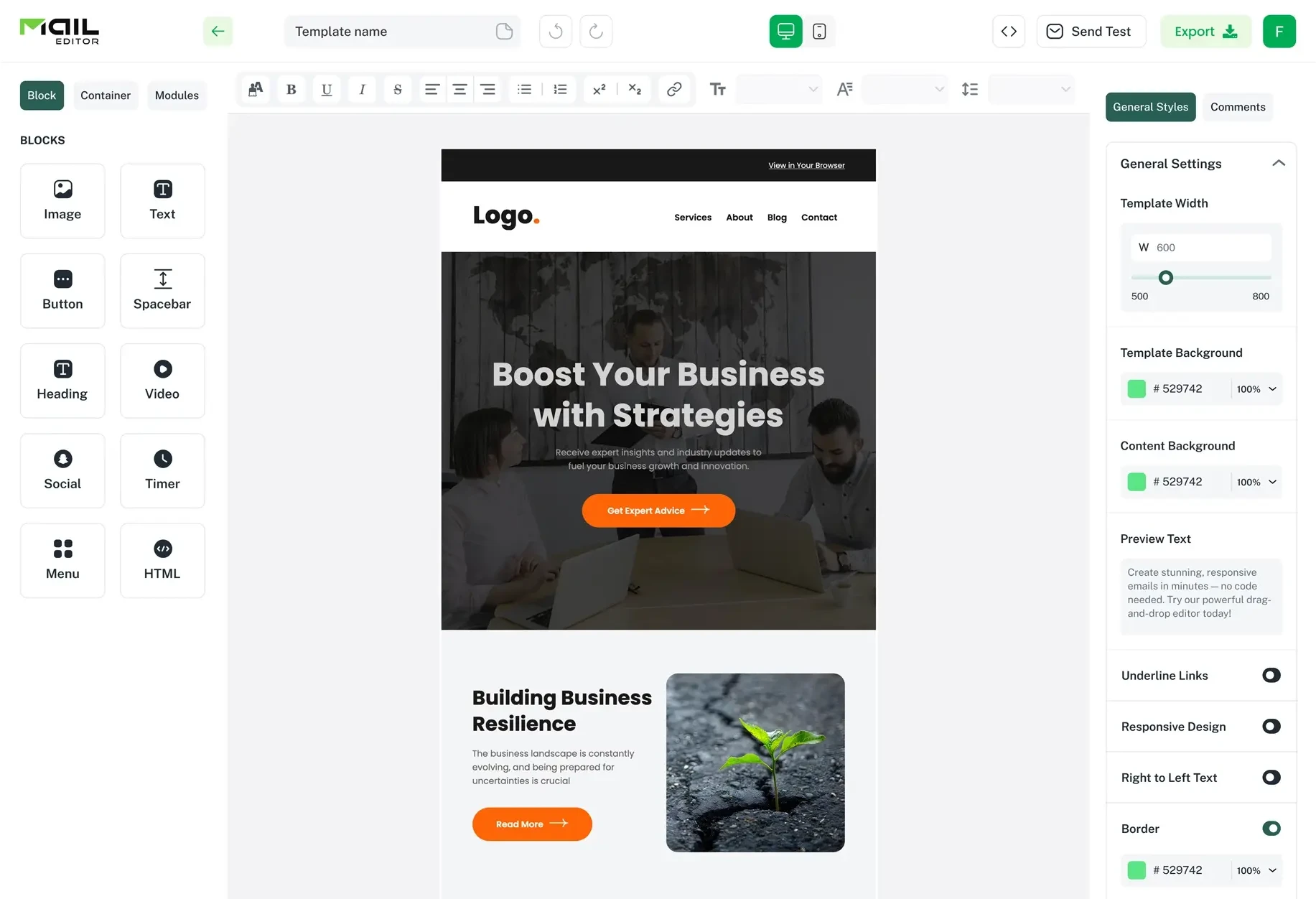
Top Email Template Builders & HTML Email Editors for 2026
Compare the best email template builders and HTML editors to design professional, responsive campaigns without coding.

Email Tips7 mins to read
Best Drag and Drop Email Editors in 2026
Discover the best drag and drop email editors in 2026. Compare top tools, features, templates, pricing, and automation to build stunning emails fast.
Email Design9 mins to read
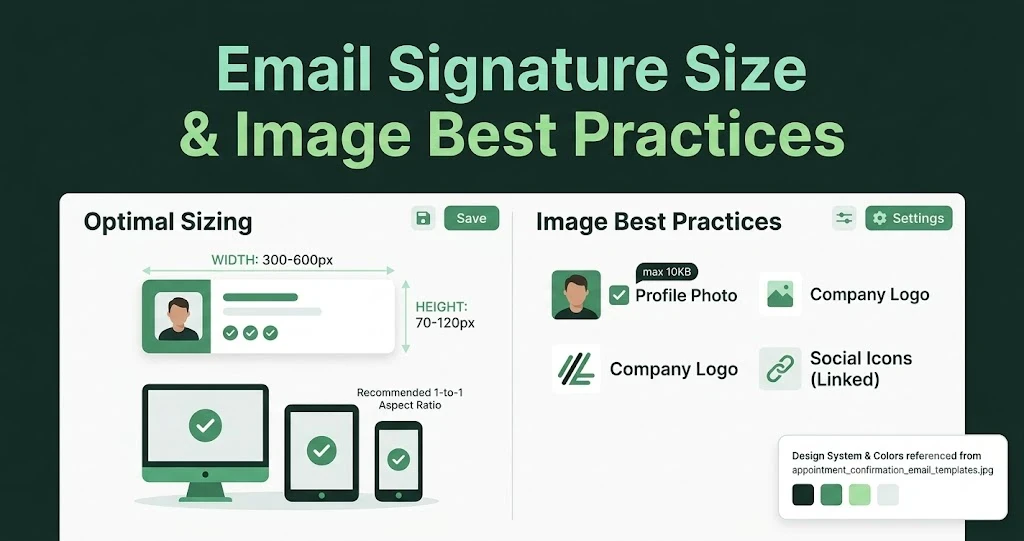
Email Signature Size and Image Best Practices
The ideal email signature is 320–600px wide and 90–200px high. Learn the best image sizes, formats, file limits, and mobile-friendly design tips.
Marketing7 mins to read
4 Best Unlayer Alternatives to Design Emails
Looking for Unlayer alternatives? Explore the 4 best email design tools to create beautiful, responsive emails faster and easier.
Marketing6 mins to read
5 Beefree Alternatives to Upgrade Email Design Workflows
Looking for a better email design tool? Explore 5 Beefree alternatives that streamline workflows, improve collaboration, and elevate email campaigns.