How to Create Editable AI Email Templates
AI email templates are editable when AI creates structured blocks you can refine, brand, test, and reuse. Follow a practical workflow from prompt to export.

Md. Yaikub Hossain Razon
AI email templates become truly useful when AI creates a structured draft that you can edit after generation. The best workflow is to define the campaign goal, give AI clear brand and content instructions, generate the layout, then refine the copy, images, modules, links, responsive behavior, and reusable sections.
AI is becoming part of everyday email production. Litmus reports that nearly 70% of email marketers expect up to half of their email operations to be AI-driven by the end of 2026. Its 2026 State of Email research also found that 78% of surveyed teams produce and deploy emails within three days or less.
This practical guide is for marketers, designers, founders, and email teams. You will learn how to move from a simple AI prompt to an editable, branded, responsive email template that is ready for review, reuse, testing, and export.
What Are AI Email Templates?
AI email templates are email layouts created or drafted with artificial intelligence from instructions about your campaign, audience, content, brand, and desired style. A useful AI template includes editable sections rather than producing only a finished visual that is difficult to adapt.
An AI email template may contain:
-
Header
-
Logo
-
Hero section
-
Headline
-
Supporting copy
-
Images
-
Product cards
-
Feature blocks
-
CTA buttons
-
Testimonials
-
Footer
The AI can create the first structure.
You then refine it for the actual campaign.
For example, you could provide this instruction:
Create a product launch email for a skincare brand. Use a warm tone, one hero section, three benefits, one product feature, and a clear Shop the Collection CTA.
The result should give you a structured starting point.
The next step is editing.
What Makes Them Editable?
An editable AI email template is built from sections and elements that can still be changed after generation. You should be able to rewrite copy, replace images, change colors, move sections, update buttons, modify spacing, and adjust the structure without generating the entire email again.
Editable elements may include:
-
Headline text
-
Body copy
-
Button labels
-
Button URLs
-
Images
-
Backgrounds
-
Colors
-
Typography
-
Padding
-
Alignment
-
Columns
-
Content blocks
-
Footer details
MailEditor’s AI Template Generator creates AI output as a normal MailEditor template. Individual blocks can be edited, modules can be added, and sections can be saved for reuse.
That distinction matters.
AI should help create the first draft.
Your editor should give you control over the finished campaign.
Editable vs Fixed AI Output
AI-generated email output can take different forms.
|
Feature |
Editable AI Template |
Fixed Visual Output |
|
Headline |
Editable text |
Part of final visual |
|
Body copy |
Editable |
Limited editing |
|
Images |
Replaceable |
Often combined |
|
CTA |
Editable button |
May be visual only |
|
Colors |
Adjustable |
Limited |
|
Sections |
Movable |
Fixed structure |
|
Responsive layout |
Can be refined |
Depends on output |
|
Links |
Editable |
Limited |
|
Reusable blocks |
Supported |
Usually separate recreation |
|
HTML export |
Possible |
Depends on tool |
For campaign production, editable structured output provides greater flexibility.
You can adapt the same AI draft without starting over.
Plan Before You Generate
Before generating AI email templates, define the campaign goal, audience, offer, primary CTA, and required sections. AI produces more useful drafts when the brief explains what the email needs to accomplish rather than asking only for an attractive design.
Write down:
-
Campaign goal
-
Target audience
-
Main message
-
Offer
-
CTA
-
Tone
-
Required sections
-
Brand direction
For example:
Campaign goal: Launch a new product
Audience: Existing customers
Offer: Early access
CTA: Explore the collection
Tone: Premium but friendly
Sections: Hero, benefits, product block, CTA, footer
Now AI has a real brief.
Compare that with:
Make me a nice marketing email.
The second prompt gives far less direction.
Specific prompts usually create a stronger starting structure.
Create a Strong AI Prompt
A strong AI email prompt explains the campaign goal, audience, brand, tone, required sections, key message, and CTA. The prompt does not need to be long, but it should contain enough context to guide both the content and layout.
Use this practical formula:
Campaign type + Audience + Goal + Main message + Sections + Tone + CTA + Brand direction
For example:
Create a welcome email for new fitness app users. Keep the tone motivating and friendly. Include a welcome hero, three benefits, a short setup section, one Get Started CTA, and a simple footer. Use clean spacing and energetic brand styling.
This prompt tells AI:
-
What to create
-
Who will receive it
-
What the email should accomplish
-
Which sections to include
-
How the message should sound
-
Which action matters most
That makes the output easier to refine.
AI Email Prompt Template
Use this reusable prompt structure:
Create a [campaign type] email for [audience].
Goal:
[Main campaign goal]
Main message:
[Key message or offer]
Include:
- [Section 1]
- [Section 2]
- [Section 3]
- [Section 4]
Tone:
[Brand tone]
Primary CTA:
[CTA label and destination purpose]
Visual direction:
[Colors, style, imagery, spacing, or brand guidance]
Keep the layout responsive and make every section editable.
You can reuse this structure for:
-
Newsletters
-
Promotions
-
Welcome emails
-
Product launches
-
Events
-
Onboarding
-
Transactional emails
-
Re-engagement
-
Customer updates
The campaign details change.
The prompt framework stays useful.
Generate the First Draft
Once your brief is clear, generate the first AI email template and treat it as a structured draft. Review the overall hierarchy first rather than immediately adjusting small details.
Ask:
-
Is the most important message near the top?
-
Does the CTA match the campaign goal?
-
Are the sections in a logical order?
-
Is anything important missing?
-
Is any section unnecessary?
-
Does the design fit the audience?
MailEditor’s AI Email Template Generator can turn a campaign description into a complete template containing layout, copy, and design. The generated result remains editable in the MailEditor workspace.
A useful first review focuses on structure.
Fine visual adjustments can come later.
Edit the AI Copy
Review every AI-generated headline, paragraph, CTA, offer, date, product detail, and claim before using the template. AI can create useful starting copy, but the final message should reflect your actual campaign, brand voice, facts, and audience.
Start with:
-
Headline
-
Supporting copy
-
Offer
-
Product details
-
Dates
-
CTA
-
Footer text
Rewrite the Headline
The first headline may be structurally useful but still need your brand voice.
AI draft:
Upgrade Your Everyday Routine
Edited version:
Meet Your New 5-Minute Morning Routine
The second version is more specific.
Check Every Claim
Confirm:
-
Prices
-
Discount percentages
-
Dates
-
Product names
-
Features
-
Shipping offers
-
Event details
-
Statistics
Do not publish a claim simply because AI included it.
Replace generated placeholders with verified information.
Refine the Tone
Ask whether the email sounds like your brand.
Check:
-
Formality
-
Vocabulary
-
Sentence length
-
Energy
-
Humor
-
Product terminology
You can also use AI to create alternatives, then select and refine the strongest version.
Apply Your Brand
Brand the AI email template after its core structure and message are clear. Apply your logo, colors, typography, button styles, imagery, spacing, and other visual rules so the draft feels consistent with your existing communication.
Update:
-
Logo
-
Primary color
-
Secondary color
-
Background colors
-
Heading styles
-
Body text
-
Button styling
-
Links
-
Image treatment
-
Footer
MailEditor’s AI generator can use a brand kit containing elements such as logos, colors, and typography. Its current generator applies brand information to the generated design while keeping the result editable.
You can review MailEditor’s broader design controls on the MailEditor features page.
Keep Brand Roles Consistent
Do not use every brand color equally.
Assign clear roles.
For example:
Primary color: Main CTA
Secondary color: Section accents
Neutral: Backgrounds
Dark text: Main content
This creates consistency across future AI-generated campaigns.
Edit Images and Visuals
Replace generated or placeholder images with visuals that support the actual campaign. The image should strengthen the surrounding message rather than exist only because the AI created an image section.
Review:
-
Hero image
-
Product images
-
Article thumbnails
-
Icons
-
Backgrounds
-
Social images
-
Brand graphics
Ask:
Does this image communicate something useful?
If yes, keep or replace it.
If not, remove the block.
Keep Important Copy Editable
Avoid putting essential campaign information only inside an image.
Whenever practical, keep:
-
Headlines
-
Offers
-
Dates
-
Product names
-
CTA text
as live email text.
That makes future editing easier.
It also preserves important information when images are unavailable.
Adjust the Email Layout
AI-generated layouts should be treated as flexible structures, not fixed arrangements. Move, remove, duplicate, or add sections when the campaign needs a different reading order.
For example, AI might generate:
Hero → Products → Benefits → CTA → Review → Footer
Your campaign may work better as:
Hero → Benefits → Products → Review → CTA → Footer
Change it.
You can also add:
-
Promo banner
-
Testimonial
-
Product card
-
Article block
-
Divider
-
Secondary CTA
-
Social section
MailEditor provides reusable email modules alongside AI generation, so generated designs can be refined with additional building blocks.
The goal is not to preserve the AI’s first layout.
The goal is to create the right email.
Edit CTAs and Links
Every CTA in an AI email template should be reviewed for wording, visual priority, and destination. The main button should clearly represent the campaign goal and point to the correct landing page.
Check:
-
Button label
-
Destination URL
-
Button hierarchy
-
Button color
-
Alignment
-
Supporting links
Examples of clear CTAs include:
-
Shop the collection
-
Reserve your seat
-
Explore the product
-
Read the guide
-
Complete setup
-
View your order
-
Start free trial
If the campaign has several CTAs, choose one primary action.
Secondary actions can receive less visual emphasis.
Verify Every URL
AI-generated templates may contain placeholders during drafting.
Replace them with real destinations.
Check:
-
Header logo
-
Main CTA
-
Product images
-
Product titles
-
Text links
-
Social links
-
Footer links
Test them before export.
Make the Template Responsive
Responsive AI email templates should maintain clear hierarchy, readable text, useful image scaling, and accessible CTA placement across desktop and mobile layouts. Review responsive behavior after adding your real copy and images because those changes can affect wrapping and stacking.
Check:
-
Column stacking
-
Image width
-
Heading wrapping
-
Text size
-
Button width
-
Button placement
-
Spacing
-
Footer layout
-
Reading order
Google documents support for CSS media queries in Gmail, including screen width and orientation queries.
Email-client behavior can still differ.
That makes final preview and testing important.
Add Personalization Carefully
Personalization can be added after the template structure and content are stable. Use the merge-tag or personalization syntax required by the email service provider that will send the campaign.
Examples may include:
Hi {{first_name}},
or:
Your order {{order_number}} is ready.
The exact syntax depends on your platform.
Check:
-
First name
-
Company
-
Product
-
Account data
-
Order details
-
Location
-
Dynamic URLs
Also define fallback behavior when the personalization value is unavailable.
For example:
Instead of relying entirely on:
Hi {{first_name}},
your ESP may allow a fallback such as:
Hi there,
Test dynamic content before sending.
Save Reusable Sections
Once an AI-generated section works well, save it for future campaigns instead of generating a similar block again. Reusable blocks turn a successful AI draft into part of your ongoing email production system.
Useful sections to save include:
-
Header
-
Hero
-
Product card
-
Testimonial
-
CTA
-
Event block
-
Article card
-
Promo banner
-
Footer
For example, imagine AI generates a strong product-feature block.
You refine:
-
Spacing
-
Image ratio
-
Typography
-
Button styling
-
Mobile behavior
Once the component is approved, save it.
The next campaign can reuse the same structure with different content.
For a deeper workflow, read how to create reusable email templates.
AI Draft vs Reusable Template
A generated email becomes more valuable when its best parts can be reused.
|
AI Draft |
Reusable Email Template |
|
Created for one brief |
Designed for repeat use |
|
Initial generated copy |
Editable campaign fields |
|
First layout |
Approved structure |
|
Draft branding |
Consistent brand rules |
|
New blocks |
Tested reusable modules |
|
First responsive pass |
Reviewed responsive behavior |
|
One campaign |
Multiple future campaigns |
The process is:
Generate → Edit → Test → Approve → Reuse
That turns AI from a one-time drafting tool into part of a repeatable workflow.
Review AI-Generated Content
Human review should remain part of the AI email workflow before any generated template is sent. Review protects accuracy, brand consistency, accessibility, context, and campaign quality while still letting AI accelerate the first draft.
Litmus reported in 2026 that AI is increasingly part of email workflows, but its guidance still emphasizes human judgment before deployment.
Jeanne Jennings, founder and chief strategist at Email Optimization Shop, describes AI as helping marketers work “more productively, more efficiently.”
That is a useful way to approach AI email creation.
Use AI to speed up:
-
First drafts
-
Layout ideas
-
Section structure
-
CTA options
-
Content variations
Keep people responsible for:
-
Strategy
-
Facts
-
Brand voice
-
Approval
-
Accessibility
-
Final QA
OpenAI’s 2026 guidance similarly recommends keeping a human in the loop and checking important facts against trusted sources.
Review Accessibility
An editable AI email template should be reviewed for accessibility after generation. AI can create a useful design draft, but your final review should confirm readable text, suitable contrast, clear hierarchy, alt text, meaningful links, and logical content order.
Check:
-
Font size
-
Text contrast
-
Button contrast
-
Headings
-
Alt text
-
Link labels
-
Reading order
-
Live text
WCAG 2.2 specifies a minimum 4.5:1 contrast ratio for normal text and 3:1 for qualifying large text at Level AA.
Do not assume AI automatically applied every accessibility requirement.
Treat accessibility as part of template QA.
The Editable AI Template Framework
Use this framework whenever you create AI email templates.
|
Stage |
Main Task |
Output |
|
1. Brief |
Define goal and audience |
Clear campaign direction |
|
2. Prompt |
Describe content and style |
Detailed AI instruction |
|
3. Generate |
Create first draft |
Structured AI template |
|
4. Review |
Check layout and message |
Approved direction |
|
5. Edit |
Refine copy and sections |
Campaign-ready content |
|
6. Brand |
Apply visual identity |
On-brand template |
|
7. Responsive |
Check desktop and mobile |
Flexible layout |
|
8. Personalize |
Add variables |
Dynamic content |
|
9. Reuse |
Save useful modules |
Reusable components |
|
10. Test |
Validate final email |
Export-ready template |
This framework is a practical MailEditor workflow created for this guide.
The goal is simple:
AI starts the template. Your editing process finishes it.
Test the Finished Template
Test the edited AI template after real content, images, links, and personalization have been added. The generated draft is only the starting point; the completed campaign is what recipients will actually experience.
Review:
-
Subject line
-
Preheader
-
Headline
-
Body copy
-
Images
-
Alt text
-
CTA buttons
-
URLs
-
Personalization
-
Desktop layout
-
Mobile layout
-
Footer
-
Unsubscribe information
Send a Test
Send the completed template to inboxes your team controls.
Do not rely only on the editor preview.
Review the delivered email.
For a broader QA workflow, follow MailEditor’s guide on how to test email templates across devices.
Create AI Templates in MailEditor
MailEditor combines AI template generation with visual editing, reusable modules, brand controls, responsive layouts, and HTML export. The AI-generated output remains a regular editable template, so marketers can refine individual sections instead of accepting the first generation unchanged.
A practical MailEditor workflow is:
-
Open the AI template generator.
-
Enter the campaign prompt.
-
Select or apply your brand kit.
-
Generate the template.
-
Review the layout.
-
Edit headlines and copy.
-
Replace images.
-
Change modules.
-
Update CTA buttons.
-
Verify links.
-
Preview responsive behavior.
-
Save useful sections.
-
Send a test.
-
Export the finished HTML.
MailEditor’s AI workflow supports generated:
-
Headlines
-
Body copy
-
CTA copy
-
Hero sections
-
Product blocks
-
Layout structure
-
Brand styling
The output can then be changed inside the same visual editing environment.
Start with the MailEditor AI Email Template Generator.
If you prefer to start from an existing design, browse the MailEditor email template library.
AI-Generated vs Pre-Built Templates
Both workflows can provide useful starting points.
|
AI-Generated Template |
Pre-Built Template |
|
Starts from your prompt |
Starts from an existing design |
|
Structure follows the brief |
Structure already exists |
|
AI drafts copy |
Sample copy is replaced |
|
Can follow brand input |
Branding is applied during editing |
|
Useful for custom ideas |
Useful for quick visual selection |
|
Editable after generation |
Editable after selection |
You do not need to choose only one approach.
For example:
AI-first workflow:
Prompt → Generate → Edit → Test → Export
Template-first workflow:
Choose design → Customize → Test → Export
Use the workflow that fits the campaign.
Final Answer
To create editable AI email templates, use AI for the first structured draft and keep the rest of the workflow editable.
Follow this process:
-
Define the campaign goal.
-
Identify the audience.
-
Set the main CTA.
-
Prepare brand guidance.
-
Write a detailed AI prompt.
-
Generate the template.
-
Review the section order.
-
Rewrite AI-generated copy.
-
Replace campaign images.
-
Apply your branding.
-
Add or remove modules.
-
Verify every CTA and link.
-
Review responsive behavior.
-
Add personalization.
-
Save reusable sections.
-
Check accessibility.
-
Send a test.
-
Export the completed HTML.
The key difference between an AI draft and a useful AI email template is editability.
You should remain able to change the message, design, structure, links, branding, and responsive behavior after generation.
MailEditor’s AI Email Template Generator follows this workflow by generating a structured template that opens in the visual editor for further customization.
Frequently Asked Questions
Question: What are AI email templates?
Answer: AI email templates are email layouts generated or assisted by artificial intelligence using information about your campaign, audience, message, tone, and visual direction. A useful AI template contains editable sections so you can refine the copy, images, colors, buttons, links, layout, and branding before sending.
Question: Can AI email templates be edited?
Answer: Yes, when the AI tool generates the template as editable blocks or HTML rather than only producing a fixed visual. You should be able to rewrite text, replace images, change colors, update buttons, rearrange sections, modify links, and refine responsive behavior after generation.
Question: How do I create an AI email template?
Answer: Define the campaign goal and audience, write a prompt describing the message, tone, brand, sections, and CTA, then generate the first draft. Review the structure, edit the copy and visuals, apply your branding, verify responsive behavior, test the email, and export the completed template.
Question: What should I include in an AI email prompt?
Answer: Include the campaign type, audience, goal, main message, offer, required sections, brand direction, tone, and primary CTA. Clear prompts give the AI enough context to create a more relevant structure while still leaving you room to customize the generated email afterward.
Question: Should I edit AI-generated email copy?
Answer: Yes. Review every headline, paragraph, product detail, price, date, claim, CTA, and link before sending. AI provides a useful first draft, while human review ensures the final message reflects your actual campaign facts, brand voice, audience, and desired action.
Question: Can AI email templates be responsive?
Answer: Yes. AI-generated templates can use responsive HTML structures when the generator supports them. You should still preview the finished email on desktop and mobile after adding real copy and images because content changes can affect text wrapping, columns, spacing, images, and CTA placement.
Question: Can I reuse an AI email template?
Answer: Yes. Once you refine and test an AI-generated template, you can save the full design or reusable sections for future campaigns when your editor supports reuse. Headers, heroes, product cards, CTAs, testimonials, and footers are especially useful components to save.
Question: Can MailEditor create editable AI email templates?
Answer: Yes. MailEditor generates complete email templates from campaign prompts and lets you edit the resulting template inside its visual editor. You can change individual blocks, refine generated copy, apply branding, add modules, save reusable sections, review responsive behavior, and export the finished HTML.
Popular Blogs
Email Design2 mins to read
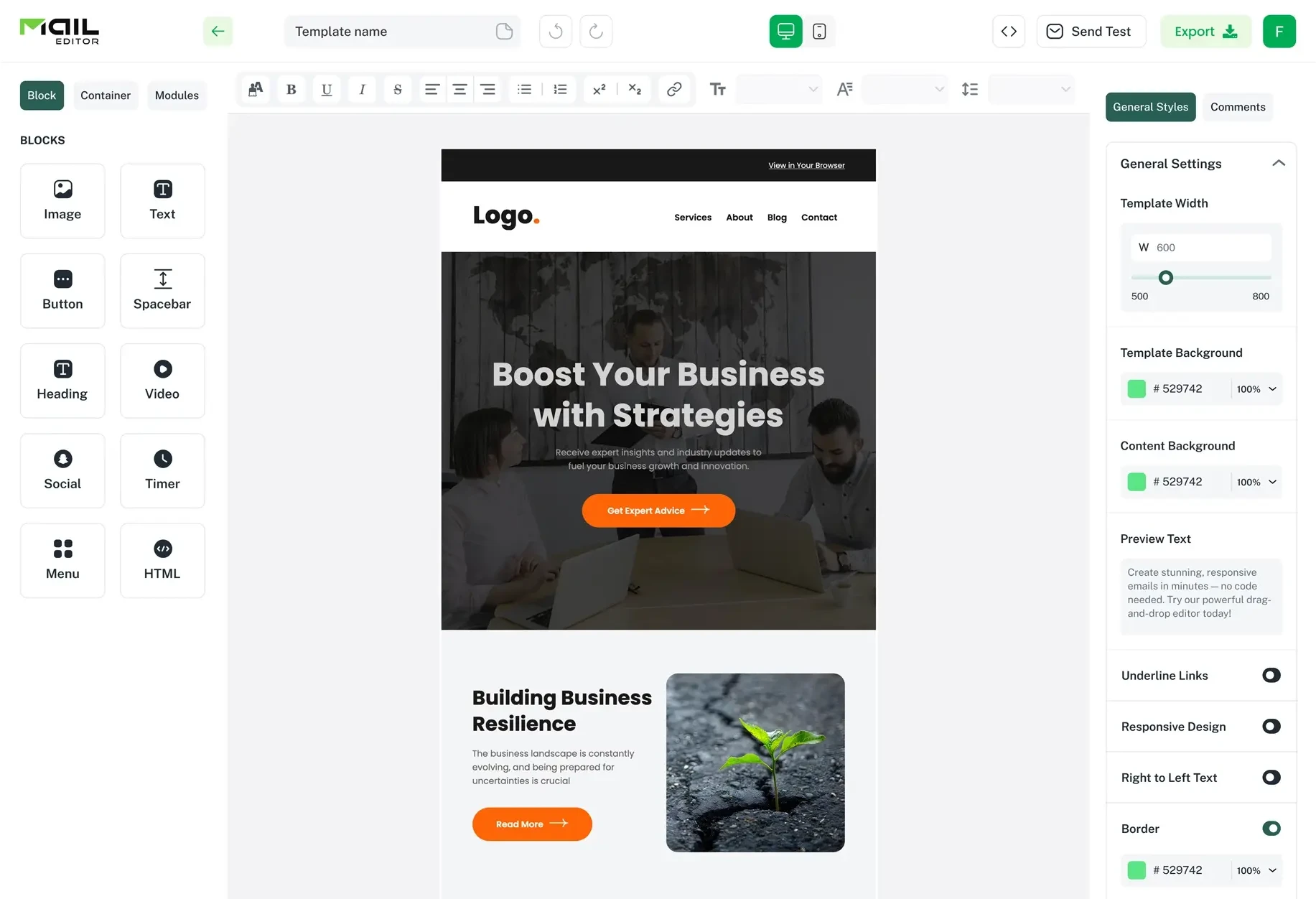
Top Email Template Builders & HTML Email Editors for 2026
Compare the best email template builders and HTML editors to design professional, responsive campaigns without coding.

Email Tips7 mins to read
Best Drag and Drop Email Editors in 2026
Discover the best drag and drop email editors in 2026. Compare top tools, features, templates, pricing, and automation to build stunning emails fast.
Email Design9 mins to read
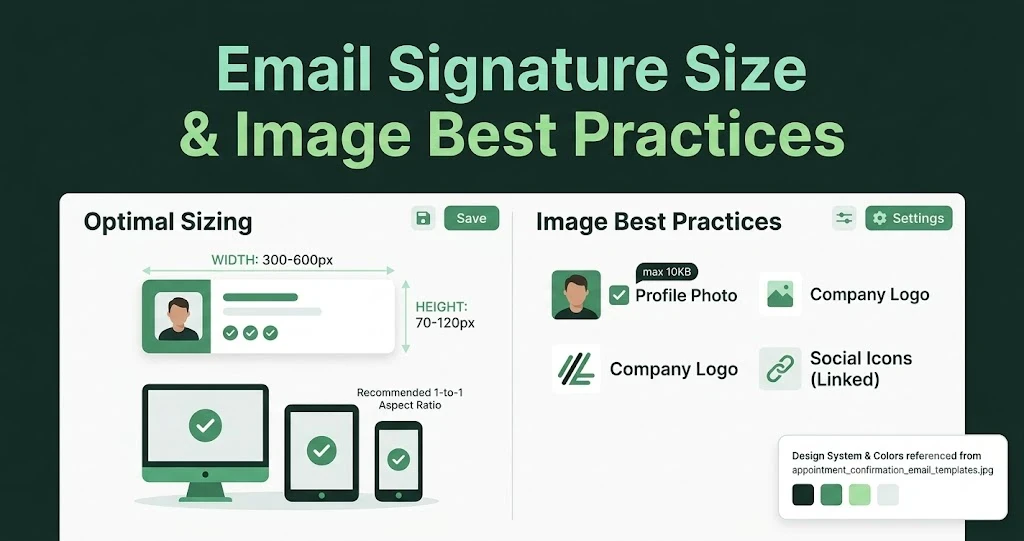
Email Signature Size and Image Best Practices
The ideal email signature is 320–600px wide and 90–200px high. Learn the best image sizes, formats, file limits, and mobile-friendly design tips.
Marketing7 mins to read
4 Best Unlayer Alternatives to Design Emails
Looking for Unlayer alternatives? Explore the 4 best email design tools to create beautiful, responsive emails faster and easier.
Marketing6 mins to read
5 Beefree Alternatives to Upgrade Email Design Workflows
Looking for a better email design tool? Explore 5 Beefree alternatives that streamline workflows, improve collaboration, and elevate email campaigns.