9 Best Email Templates for SaaS Products
SaaS email templates for onboarding, activation, product updates, upsells, and re-engagement, with timing, structure, and examples.

Shahin Alam
SaaS email templates work best when they follow a clear lifecycle, from signup and onboarding to activation, retention, product updates, upsells, and re-engagement. Without that structure, SaaS teams often send emails at random times, users miss the next step, and trial users drop off before they see the product’s real value.
Most SaaS companies do not fail because they send too few emails. They fail because their emails are not connected to one user journey.
Here are the common reasons SaaS email campaigns fail:
- Emails are sent at random times, with no lifecycle plan
- The layout and branding across campaigns are inconsistent
- Developers get stuck fixing HTML for minor edits
- Trial reminders arrive too late for users to take action
- There is no clear path from signup to upgrade
This guide covers nine SaaS email templates that support the full customer lifecycle. Each template has a clear purpose, from onboarding and activation to retention and re-engagement, so your emails work together with the best email templates for a structured SaaS growth system.
The 9 Best Email Templates for SaaS Product Lifecycle Success

SaaS teams should use SaaS email templates as part of a connected lifecycle, not as one-off messages. For best results, you should treat them as part of a wider, more connected lifecycle. When you send out emails, make sure that each template has a purpose and guides users from signup to expansion.
But what is this lifecycle? Let’s break it down into three key stages to help explain it better.
Acquisition
The first stage is Acquisition. Here, you introduce your SaaS product to the client, confirm signup, and encourage them to take the first actions. The templates at this stage include the following.
- Welcome Email
- Free Trial Confirmation
- Trial Reminder.
Activation
At the Activation stage, emails help users experience the value of the SaaS product, learn about its features, and start making progress. Here, the templates include the following.
- Onboarding Step Guide
- Feature Education Email
- Milestone Celebration
Retention and Expansion
The third and final stage involves user Retention and Expansion. It focuses on keeping the users engaged, alerting them about new features, and encouraging them to make upgrades to their SaaS product or sign up for renewals. Templates at this stage are as follows.
- Product Update
- Upgrade or Upsell Email
- Re-engagement
The following table summarizes the templates for easier viewing and understanding.
SaaS Email Lifecycle Templates
| Stage | Templates | Purpose |
| Acquisition | 1. Welcome Email 2. Free Trial Confirmation 3. Trial Reminder |
Introduce product, confirm signup, encourage first actions |
| Activation | 1. Onboarding Step Guide 2. Feature Education Email 3. Milestone Celebration |
Help users experience value, learn features, celebrate progress |
| Retention & Expansion | 1. Product Update 2. Upgrade / Upsell Email 3. Re-engagement |
Keep users engaged, announce updates, drive upgrades and return |
When used in the perfect sequence, the templates work together to create an organized and structured system that moves users forward, ensuring growth.
The following section breaks down each template so that you know the best approach for each and ensure the growth results you seek for your SaaS product.
1. Welcome Email

When to Send
Immediately after signup. It helps you create a first impression that sets the tone for the entire user journey.
Strategic Goal
Set expectations early on, introduce your product’s unique value, and drive the first meaningful action. Having such clarity at an early stage prevents confusion and boosts activation.
Structure Table
| Section | What to Include |
| Subject Line | Clear next step |
| Opening | Reinforce value |
| Body | One clear action |
| CTA | “Start Setup” |
Sample Copy
“Welcome to [Product]! Let’s get you started in three quick steps. Click below to begin your setup and see the value immediately.”
Optimization Tips
- Keep it short
- Include only one CTA
- Avoid overwhelming users with too many features
2. Free Trial Confirmation

When to Send
Right after the user activates their trial. Good timing helps to reinforce commitment.
Strategic Goal
Confirm the trial, show the urgency, and clarify duration. This makes users feel like they are on a path to immediate value.
Structure Table
| Section | What to Include |
| Subject Line | Confirm trial start date |
| Opening | Reassure users that they are set up |
| Body | Highlight the first key action |
| CTA | “Start Exploring Features” |
Sample Copy
“Your 14-day trial starts today! Explore [Product] and see how it solves [pain point]. Don’t wait and start your first project now.”
Optimization Tips
- Emphasize trial length clearly
- Use subtle urgency cues
- Keep action steps simple
3. Trial Reminder Email

When to Send
Day 3 and Day 7 of the trial period. Early reminders touch up on engagement without being annoying for users.
Strategic Goal
Encourage users to take action before the trial ends. Focus on the value of the SaaS product instead of fear of missing out.
Structure Table
| Section | What to Include |
| Subject Line | Friendly reminder |
| Opening | Restate benefit |
| Body | Clear action that users can take in one step |
| CTA | “Complete Your Setup” |
Sample Copy
“Your trial is halfway through. Have you explored [key feature]? Take a minute to finish setup and experience the full value.”
Common Mistakes
- Sending generic messages without specifying the importance and value
- Overloading with features that can overwhelm and confuse users
- Using scare tactics instead of focusing on the benefits
4. Onboarding Step Guide

When to Send
Over the first week after the user signs up. This helps to keep users moving forward.
Strategic Goal
Guide users step by step, helping them achieve meaningful actions quickly.
Onboarding Milestones
| Day | Action | Outcome |
| 1 | Complete profile setup | Personalized experience |
| 2 | Explore key feature | Early activation |
| 3 | Complete first project | Confidence and habit |
Sample Copy
“Day 1. Set up your profile. Day 2. Try your first feature. Day 3. Finish your first project and see results immediately.”
Optimization Tips
- Keep the checklist format clear
- Avoid overloading users with features
- Celebrate each small completion for a positive feeling
5. Feature Education Email

When to Send
Shortly after a user interacts with a specific product feature.
Strategic Goal
Educate users about valuable features that they haven’t explored yet. You can also personalize the email to increase adoption.
Structure Table
| Trigger | Feature Highlight | CTA |
| Viewed Dashboard | Advanced Reporting | “Learn More” |
| Opened Project Tab | Collaboration Tools | “Try It Now” |
| Ignored Settings | Custom Notifications | “Set It Up” |
Sample Copy
“Notice you haven’t tried our collaboration tools yet? They make project work seamless. Click below to explore.”
Optimization Tips
- Segment by behavior
- Link only the features that are relevant
- Keep the copy brief and actionable, and not unnecessarily lengthy
6. Milestone Celebration Email

When to Send
After users complete important actions, like finishing a project or achieving certain milestones.
Strategic Goal
Use gamification to boost engagement and encourage users to continue using the SaaS product.
Sample Copy
“Congratulations! You’ve completed your first project. Keep the momentum going and explore advanced features next.”
Why This Works
- Encourages positive reinforcement to repeat behavior
- Short and cheerful messages boost your user’s satisfaction
- Clear CTA encourages users to take the next step
Optimization Tips
- Celebrate achievements genuinely
- Avoid excessive notifications
- Include one clear next step
7. Product Update Email

When to Send
When launching a new feature or improving the existing functionality of your SaaS product.
Strategic Goal
Focus on outcomes instead of dumping loads of features. This shows users the benefit of using your product, and not just the technical detail that many don’t care about.
Before vs After Table
| Before | After |
| “We released X feature” | “Now you can accomplish Y faster” |
| Technical detail only | Outcome-focused explanation |
Sample Copy
“Your workflow just got faster. With the new [Feature], you can complete tasks in half the time.”
Optimization Tips
- Avoid overwhelming with technical jargon
- Highlight the real benefits of your product
- Keep the subject line focused on the outcome
8. Upgrade or Upsell Email

When to Send
After the user shows consistent engagement or nears the limits of your product’s features.
Strategic Goal
Show clear value of premium tiers and handle objections preemptively.
Structure Table
| Pain Point | Premium Feature | Outcome |
| Storage limits | Advanced Storage | Continue seamless work |
| Collaboration slow | Team Dashboard | Improve efficiency |
| Reporting weak | Advanced Analytics | Data-driven decisions |
Sample Copy
“You’ve been using [Product] effectively. Upgrade to unlock faster reporting and team tools that save hours every week.”
Optimization Tips
- Stack the product’s value visually
- Highlight the tangible gains of upgrading
- Keep the CTA short and simple
9. Re-engagement Email

When to Send
After the user shows periods of inactivity, typically around 30 to 60 days.
Strategic Goal
Re-engagement email templates help bring inactive SaaS users back by reminding them of product value and giving them a clear reason to return.
Quick 3-Step Reactivation Sequence
- Friendly reminder of missed benefits
- Incentive or tip to return
- Simple action to re-engage with your product
Sample Copy
“We noticed you haven’t logged in for a while. Come back and see the new updates we built just for you.”
Optimization Tips
- Personalize based on the user’s past activity
- Offer small incentives to resume using your SaaS product
- Keep the steps to return clear and easy
Why Great Email Templates Alone Don’t Fix SaaS Growth

Fancy designs alone are not enough for results. I’ve seen teams send beautiful templates time and again, but still struggle with growth. What most teams fail to realize is that design is not the answer to their problems. It is how they use emails.
Timing
Sending emails at random times is more common than most teams admit. If you send out a welcome email on day one, follow it up with a random discount push before the trial ends, and then go completely silent, then it just confuses users. As a result, engagement drops.
Weak Onboarding
A weak onboarding flow is another factor that stops new SaaS users from reaching activation. New users excitedly sign up for SaaS products, but then they see disconnected follow-up emails that don’t lay out a clear path for the next step. This causes the product to lose momentum before it even starts.
Inconsistent Designs
Design inconsistency adds to the problem. If your emails have different layouts, tones, and calls to action every time, it feels like multiple companies are speaking at once. There is no fixed identity that the user can see and identify, which confuses them.
Technical Issues
Then there is the technical side. If developers have to edit HTML for even the smallest of changes, it creates delays. Templates break when pasted in new copies, marketing waits, and campaign launches get pushed back.
The following table gives a quick glance at these problems.
Here’s a concise summary table you can place at the end of that section. It captures the four problem points, their effect, and why they matter:
| Problem | What It Causes | Why It Matters |
| Timing | Confused users, low engagement | Random sends reduce impact of emails |
| Weak Onboarding | Users don’t take next steps, stalled activation | Momentum is lost early in lifecycle |
| Inconsistent Designs | Confused messaging, mixed branding | Users don’t recognize product identity |
| Technical Issues | Broken templates, delayed launches | Slows campaigns and wastes team time |
This just goes to show you that templates alone aren’t enough. You also need a proper structure and a system. This is where tools like MailEditor play a part by quietly solving these operational gaps.
How SaaS Product Teams Can Build and Reuse The Best Email Templates
It is one thing to create great email templates for SaaS products, but sending them to users consistently is another thing entirely. Many teams waste hours on rebuilding layouts, waiting for developers to fix codes, or address formatting issues created by small edits.
This slow cycle stops momentum and delays campaigns from going live.
The solution? Treat email as a structured system. I always suggest using reusable modules, so that every email you send out is aligned with the last. This keeps headers, footers, body content, and CTAs consistent, and reassures users about your brand and product.
By using editors that let you seamlessly reuse blocks from previous emails, you can ensure that the formatting remains uniform. Teams can focus on strategy without waiting for devs to fix HTML, resulting in fast editing and clean exports without delays.
This is where tools like MailEditor shine. It has a drag-and-drop interface and modular setup that lets you design and build email templates visually, with zero coding.
The reusable template library is vast, and every template can be adjusted, copied, and exported easily.
The following table shows how MailEditor improves workflows for email teams.
| Manual Process | With MailEditor |
| Edit raw HTML | HTML + Visual editing |
| Rebuild layouts | Reusable blocks |
| Formatting errors | Consistent structure |
| Slow turnaround | Faster deployment |
By adopting this work process, teams transform email from a time-consuming chore into a predictable, repeatable system.
MailEditor turns strategy into execution, allowing SaaS teams to send templates reliably while focusing on growth instead of repetitive work.
In other words, MailEditor makes every email a part of the cohesive lifecycle that I mentioned earlier, rather than a disconnected experiment. It ensures reusability, consistency, and speed, which sets the foundation for your SaaS product’s success.
Putting It All Together as a SaaS Email System
Templates are only effective when they work together. Sending a welcome email without a follow-up, or an upsell email without prior engagement, wastes opportunity.
The key is lifecycle sequencing. Each message should guide the user to the next meaningful action.
Consistency builds trust. Users notice when design, tone, and structure feel familiar across emails.
This not only reinforces your brand but also makes each email easier to digest and act upon. Random campaigns, no matter how clever, rarely produce predictable results.
SaaS Email Lifecycle Flow
| Stage | Template/Action | Goal |
| Signup | Welcome Email | Introduce value and first steps |
| Trial Start | Trial Confirmation Email | Confirm setup and trial duration |
| Onboarding | Step Guide & Feature Education Emails | Help users experience product value |
| Milestones | Milestone Celebration Email | Reinforce engagement and progress |
| Product Updates | Product Update Emails | Keep users informed about improvements |
| Upsell/Expansion | Upgrade Emails | Encourage upgrade or premium adoption |
| Inactivity | Re-engagement Emails | Bring users back to active usage |
When executed in this sequence, emails become a coordinated system rather than isolated messages. Each step supports the next, turning scattered campaigns into a predictable growth engine.
Key Takeaways On Email Templates for SaaS Products
- Templates work best when they are part of a full SaaS product lifecycle, guiding users from one step to the next. If emails are sent at random with no cohesion, they simply won’t work.
- Timing is extremely important and matters more than many teams might think. If you send a trial reminder sent on day two, it performs very differently than one sent on day ten. Small delays can lead to teams losing potential conversions.
- Structure is more important than a creative, clever copy. If your campaign has clear progression, one focused action, and logical sequencing, it will outperform flashy designs almost every time.
- Reusable templates save serious time. When your template’s blocks, layouts, and sections are modular, teams can export clean emails faster and maintain consistency across campaigns, without rebuilding emails from scratch every time.
- Tools play a huge part in execution. A practical email editor like MailEditor helps teams turn strategy into repeatable campaigns without relying on constant HTML fixes or developer constraints.
Closing Thoughts
Sending emails without a system is like pouring water into a leaky bucket. You might see some results very early on, but most of the effort drains away quickly afterwards.
The answer, then, lies in mapping emails in a complete lifecycle framework.
This mindset ensures every message has a purpose, moves users forward, and supports measurable growth for SaaS products.
Structure beats randomness, well-sequenced templates create trust and drive user engagement, and reduce churn.
Users know what to expect, and your team can focus on optimizing outcomes rather than scrambling to patch disconnected campaigns.
Execution turns strategy into results. Without a repeatable system, even the best templates can fail. That’s why tools like MailEditor are invaluable.
Its drag-and-drop editor, modular templates, and reusable library allow teams to implement and scale winning campaigns.
By combining structured templates with efficient execution, you’re not just sending emails. You’re building a predictable growth engine for your SaaS product.
Start turning your email strategy into a system that drives real results with MailEditor today.
Frequently Asked Questions
What are the best email templates for SaaS product companies?
The most effective templates follow the user lifecycle structure, including welcome, trial confirmation, onboarding steps, feature education, milestone celebration, product updates, upgrade prompts, and re-engagement emails. Each should have one clear purpose.
How many emails should a SaaS onboarding sequence include?
A typical onboarding sequence ranges from 3 to 6 emails. The goal is to gradually guide users to experience value without overwhelming them. Each email should build on the previous step.
When should you send trial reminder emails?
Timing is crucial. Early reminders around day 3, mid-trial around day 7, and a final notice a day or two before the trial ends usually yield the best conversions. Framing value over fear works best.
How do you reduce churn using email?
Focus on engagement and clarity. Triggered emails like feature tips, milestone celebrations, and personalized updates keep users active and reinforce product value. Consistency and relevance are key.
What tool is best for creating SaaS email templates?
A drag-and-drop, modular tool like MailEditor is ideal. It allows teams to build, reuse, and export templates quickly without touching HTML, ensuring consistency and speed.
Can non-developers create professional SaaS emails?
Yes. With visual editors and reusable blocks, marketing teams can design polished emails independently, maintain brand consistency, and deploy campaigns without developer support.
Written by
A full-stack digital marketer and passionate blogger with more than seven years of hands-on experience helping brands grow, rank, and thrive online.
All postsPopular Blogs
Email Design2 mins to read
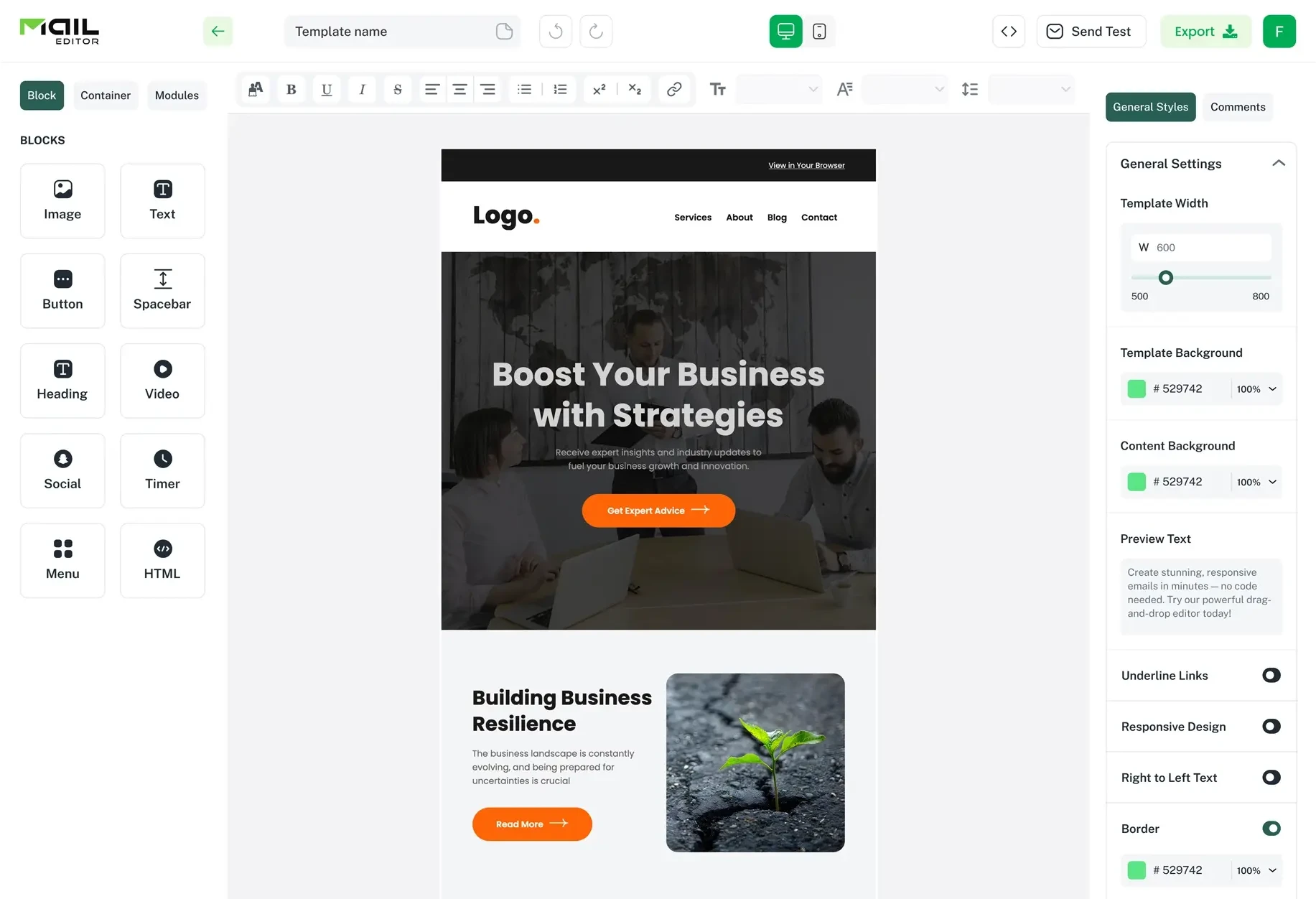
Top Email Template Builders & HTML Email Editors for 2026
Compare the best email template builders and HTML editors to design professional, responsive campaigns without coding.
Email Design9 mins to read
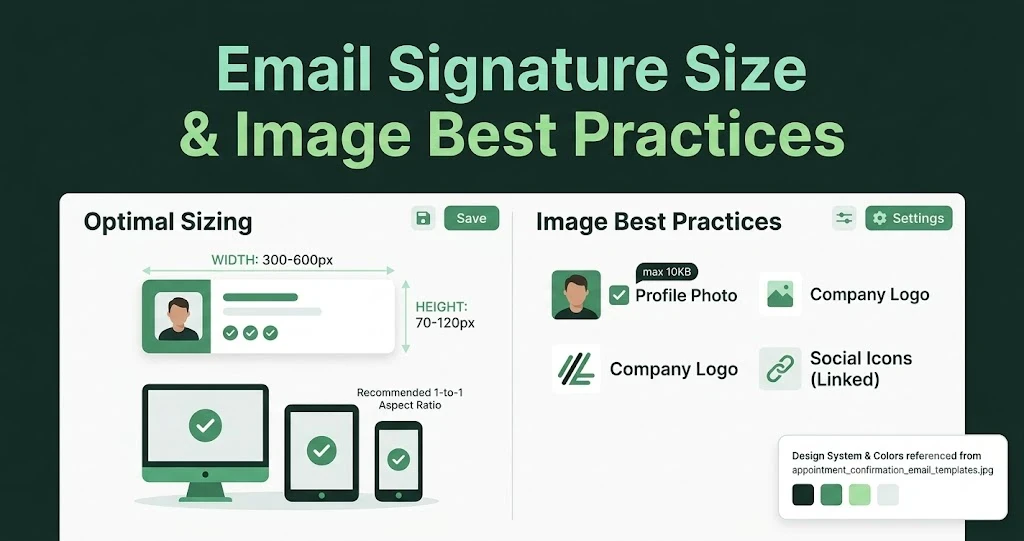
Email Signature Size and Image Best Practices
The ideal email signature is 320–600px wide and 90–200px high. Learn the best image sizes, formats, file limits, and mobile-friendly design tips.
Email Tips7 mins to read
Best Drag and Drop Email Editors in 2026
Discover the best drag and drop email editors in 2026. Compare top tools, features, templates, pricing, and automation to build stunning emails fast.
Marketing7 mins to read
4 Best Unlayer Alternatives to Design Emails
Looking for Unlayer alternatives? Explore the 4 best email design tools to create beautiful, responsive emails faster and easier.
Marketing6 mins to read
5 Beefree Alternatives to Upgrade Email Design Workflows
Looking for a better email design tool? Explore 5 Beefree alternatives that streamline workflows, improve collaboration, and elevate email campaigns.