AI HTML Email Template Builder: 9 Features That Matter
AI HTML email builder helps create editable, responsive emails with brand styling, email-safe HTML, and ESP export. Explore the 9 features that matter most.

Md. Yaikub Hossain Razon
AI HTML email builders turn a campaign brief into a structured email that you can edit, brand, review, and export as HTML. The best tools generate more than copy: they create sections, visual hierarchy, calls to action, responsive structure, and an editable design that still gives marketers control over the final campaign.
This guide explains the nine features that matter most when evaluating an AI email builder, from editable output and email-safe HTML to brand controls, reusable modules, revision workflows, and ESP portability. It is written for marketers, ecommerce teams, SaaS companies, agencies, and anyone choosing an AI-assisted email production workflow. MailEditor is used as a practical example because its current workflow combines AI generation with visual editing, templates, modules, and HTML export.
Why this matters now
Litmus surveyed 500 marketing professionals for its State of Email 2026 report and found that 78% now produce and deploy an email in three days or less.
Litmus also reports that nearly 70% of email marketers expect up to half of their email work to be AI-driven by the end of 2026. That makes workflow quality, editability, and human review more important than simply generating a fast first draft.
Key Takeaways
Contents
What Is an AI HTML Email Builder?
An AI HTML email builder is a tool that turns natural-language instructions into a structured email design that can be edited and exported as HTML. A capable builder can help create the headline, body copy, sections, buttons, visual hierarchy, branding, and responsive layout while keeping the finished template editable.
The important word is builder. A basic AI writing tool may suggest subject lines or campaign copy. An AI HTML email builder should understand how the content works inside an actual email layout.
For example, you might enter:
Create a product launch email for a skincare brand targeting existing customers. Use a premium tone, one hero section, three product benefits, one product block, and one Shop the Collection CTA.
A useful builder should turn that instruction into an email structure, not a plain paragraph. You should then be able to rewrite the headline, replace an image, move a section, change the CTA, adjust spacing, or apply your brand without rebuilding the entire email.
For a complete editing workflow, see How to Create Editable AI Email Templates.
AI Writer vs AI Builder
An AI email writer mainly creates text, while an AI HTML email builder creates the structure around that text. The builder is more useful when your task includes layout, responsive behavior, visual editing, reusable sections, branding, and HTML export rather than copy alone.
9 AI HTML Email Builder Features
The best way to evaluate an AI HTML email builder is to look at what happens after you enter the prompt. A strong workflow should move from generation to editing, review, reuse, and export without forcing you to start over at each stage.
01 Complete Email Generation
A useful AI HTML email builder should generate a complete first draft, not only paragraphs of copy. The output should match the campaign goal and may include a hero, supporting copy, product blocks, feature sections, buttons, social proof, and footer content.
A product launch needs a different structure from a monthly newsletter. A welcome email may need a short introduction, key benefits, and one clear next step. A promotion may need products, pricing, urgency, and a stronger CTA hierarchy.
MailEditor’s AI email template generator is designed to turn a campaign description into an editable email starting point with layout, copy, buttons, and brand styling.
Evaluation question: Does the AI create an email, or does it only write email copy?
02 Fully Editable Output
AI-generated email output should remain editable at the element and section level. You should be able to change text, images, buttons, links, colors, spacing, alignment, columns, backgrounds, typography, and section order without regenerating the entire design.
Editability matters because campaign details change. Prices, dates, product images, legal copy, CTA wording, and approvals can all require revisions. A visual editor makes those changes easier than rebuilding email HTML manually.
MailEditor keeps AI-generated output inside an editable workflow and also provides an AI email template builder path for campaign-focused generation.
Evaluation question: Can you change individual elements, or must you regenerate the whole email?
03 Email-Safe HTML Export
The finished code should be intended for email, not simply copied from a web-page layout. Email clients support HTML and CSS differently, so a strong builder should preserve important styling, links, image URLs, responsive behavior, and layout structure when you export.
Google documents supported CSS and media-query behavior for Gmail, which is one reason email-specific code matters. See the Gmail CSS guide for current support details.
Code portability matters too. Your workflow is more flexible when the finished HTML can move into the sending platform your team already uses.
Evaluation question: Can you use the finished HTML outside the AI builder?
04 Responsive Email Structure
An AI-generated email should remain readable and usable on smaller screens. Responsive behavior affects column stacking, image width, button size, spacing, text wrapping, alignment, and reading order.
You should still review the design after adding real content. Longer headlines, translated copy, product names, and personalization can change the layout even when the starting template is responsive.
After editing, follow a practical workflow to test email templates across devices.
Evaluation question: Does the template remain readable when both the screen size and content change?
05 Brand Controls
Brand information should influence the first generated version instead of becoming a manual cleanup step every time. Useful controls can include your logo, colors, typography, button style, tone, and visual direction.
A stronger workflow looks like set brand → generate → refine rather than generate → rebuild brand → edit. The goal is not to remove human design choices. It is to give the AI better starting information.
Evaluation question: Does branding shape the first draft, or must you restyle the whole email afterward?
06 Detailed Prompt Control
A strong AI email builder should understand layout instructions as well as copy instructions. Useful prompt details include the campaign goal, audience, offer, tone, required sections, CTA, content length, visual direction, and product information.
Compare these prompts:
Create a product launch email.
Create a premium skincare launch email for existing customers. Include one hero, three benefits, one product section, one testimonial, and one Shop Now CTA.
The second prompt gives the AI more useful constraints and reduces guesswork.
Evaluation question: Can the AI understand structure, audience, tone, and CTA requirements in one brief?
07 Reusable Modules and Sections
The value of an AI-generated email should continue after one campaign. Strong headers, heroes, product rows, testimonials, CTAs, and footers should be reusable when your workflow supports saved modules or templates.
Reusable content gives teams a useful balance. AI can create new starting points, while approved modules preserve brand consistency and proven patterns.
MailEditor also provides a broader HTML email template library for campaigns where starting from an existing design is faster than generating a new structure.
Evaluation question: Can a useful AI-generated block become reusable content?
08 Revision and Recovery Control
AI creation usually involves iteration, so the workflow should make experimentation safe. You may want a new headline, a different section order, another visual direction, or a revised prompt without losing the parts that already work.
Look for undo, draft recovery, duplication, version history, or another clear way to preserve useful work. The exact feature name can vary by platform.
Evaluation question: Can you explore a new direction without losing a strong previous draft?
09 ESP Portability
Your builder creates the email, while your email service provider usually sends it. A useful AI HTML email builder should fit the sending platform your team already uses through HTML export, direct integrations, or a compatible handoff workflow.
This is especially important for agencies and multi-brand teams because different clients may use different email platforms.
MailEditor supports multiple sending workflows through its email platform integrations.
Evaluation question: Can you move the generated email into the platform where campaigns are actually sent?
How Should You Review AI-Generated HTML?
Review AI-generated email HTML as a production draft, not as a finished campaign. Check factual accuracy, links, layout, responsive behavior, accessibility, personalization, and the delivered inbox result after your real content has been added.
A practical review sequence is:
- Verify product names, prices, dates, offers, statistics, and claims.
- Check every CTA label and destination URL.
- Review the main message and visual hierarchy.
- Preview desktop and mobile layouts.
- Check images and useful alt text.
- Test personalization and fallback values.
- Send a real test email to important inboxes.
Human review still matters
Litmus recommends keeping human judgment in AI-assisted email workflows. Jeanne Jennings, founder and chief strategist at Email Optimization Shop, describes AI as helping marketers work “more productively, more efficiently.”
Accessibility also deserves a manual check. WCAG 2.2 specifies a minimum contrast ratio of 4.5:1 for normal text at Level AA, with different requirements for qualifying large text.
AI Builder Evaluation Scorecard
Use this scorecard to compare AI email builders on production value rather than visual novelty. Give each feature 0 points if it is missing, 1 point if it is limited or mostly manual, and 2 points if it is strong and integrated. The maximum score is 18.
| Feature | 0 points | 1 point | 2 points |
|---|---|---|---|
| Complete generation | Copy only | Copy + basic layout | Structured email draft |
| Editing | Regenerate | Text edits | Block-level editing |
| HTML export | None | Basic export | Portable email HTML |
| Responsive design | Static | Basic mobile | Editable responsive structure |
| Brand controls | Manual | Saved colors/logo | Brand-aware generation |
| Prompt control | Topic only | Tone + goal | Detailed structural control |
| Reuse | None | Duplicate template | Reusable modules/sections |
| Revision control | Latest only | Manual copies | Undo/history/recovery |
| ESP portability | Locked workflow | HTML only | HTML + flexible handoff |
A high score does not automatically make one builder right for every team. Ecommerce teams may prioritize product blocks and reusable sections. Agencies may care more about portability. SaaS teams may place more weight on revision control and reusable transactional layouts.
How MailEditor Handles AI Creation
MailEditor combines AI generation with visual email editing, reusable building blocks, brand controls, templates, and HTML export. For a broader AI workflow, explore the AI Email Template Builder to create complete email layouts from campaign instructions. The practical benefit is that the generated output becomes an editable starting point rather than a fixed final design.
A typical workflow is:
- Enter the campaign brief.
- Generate a structured starting template.
- Replace or refine text and images.
- Adjust modules, links, spacing, and branding.
- Preview desktop and mobile layouts.
- Send a test email.
- Export or move the final HTML into the sending platform.
The main idea is simple: AI starts the email. You finish it.
What Should an AI Email Prompt Include?
A strong AI email prompt should include the campaign goal, audience, offer, tone, required sections, primary CTA, and visual direction. Specific instructions give the builder enough context to make useful layout decisions while still leaving the final design editable.
Prompt formula
Goal + Audience + Offer + Tone + Sections + CTA + Visual direction
Ecommerce Promotion Prompt
Create a promotional email for an outdoor clothing brand targeting repeat customers. Use an energetic tone. Include one hero, three products with prices, a shipping message, and one Shop the Sale CTA.
SaaS Product Launch Prompt
Create a product launch email for a project management app. Target existing users. Use a direct professional tone. Include one hero, three new features, one screenshot section, and one Try the Feature CTA.
Newsletter Prompt
Create a monthly newsletter for a design agency. Include one main story, three short industry updates, one case study, and one View Our Work CTA. Keep the layout clean and easy to scan.
Customer Win-Back Prompt
Create a win-back email for inactive subscribers. Keep the tone friendly and low-pressure. Include one short headline, three reasons to return, and one Explore What’s New CTA.
Common Checks Before Export
The first AI-generated version should be treated as a structured draft. Before export, review the parts that can change when real campaign data replaces generated or placeholder content.
- Confirm headline and preheader length.
- Verify product names, prices, dates, and offers.
- Check every CTA label and URL.
- Replace placeholder images with campaign assets.
- Review alt text and meaningful link labels.
- Check column stacking and mobile spacing.
- Test merge tags and fallback values.
- Send a real inbox test before production.
This final review keeps the speed benefit of AI while preserving control over the campaign that subscribers will actually receive.
AI HTML Email Builder Checklist
Before choosing an AI HTML email builder, confirm that it can support the complete workflow from prompt to export. Use the checklist below as a fast final filter.
✓ Generates a structured email, not only copy
✓ Keeps text, images, buttons, and sections editable
✓ Produces exportable email HTML
✓ Supports responsive layouts
✓ Applies useful brand controls
✓ Understands detailed structural prompts
✓ Supports reusable sections or templates
✓ Makes revisions recoverable
✓ Fits your ESP or HTML export workflow
Final Answer
An AI HTML email builder is most useful when it combines fast generation with real email production controls. The nine features that matter most are complete email generation, editable output, email-safe HTML export, responsive structure, brand controls, detailed prompts, reusable modules, revision control, and ESP portability.
Do not judge the tool only by the first generated preview. The stronger question is whether you can turn that first draft into an email you can edit, test, reuse, and export without rebuilding the campaign from scratch.
MailEditor follows this workflow by combining AI generation with an editable email workspace, reusable templates and modules, responsive design controls, and flexible export options.
Ready to turn a prompt into an editable email?
Start with MailEditor’s AI workflow, then refine the layout, copy, branding, and HTML before export.
Try the AI Generator → Browse TemplatesFrequently Asked Questions
What is an AI HTML email builder?
An AI HTML email builder uses artificial intelligence to turn a campaign brief into a structured email design. A capable builder can generate copy, sections, CTAs, responsive layout, and branding while keeping the finished template editable and exportable as HTML.
Can AI create a complete HTML email template?
Yes. Modern AI email builders can generate the structure, headline, body copy, CTA, sections, and visual layout from a prompt. Final quality still depends on email-specific HTML, editing controls, and human review before the campaign is sent.
Is an AI email builder different from an AI writer?
Yes. An AI writer mainly generates text. An AI email builder creates the structure around that text, including sections, buttons, images, responsive layout, branding, visual editing, and HTML output.
Can I edit an AI-generated email?
Yes, when the builder creates editable output. You should be able to change text, images, buttons, sections, spacing, colors, links, and other layout elements without regenerating the complete design.
Can AI-generated emails be responsive?
Yes. An AI email builder can generate responsive email structures. You should still review the final template after adding real copy, images, links, and personalization because those changes can affect the mobile layout.
Can AI email HTML work in Gmail and Outlook?
Yes, when the generated HTML is designed for email and tested properly. Email clients support HTML and CSS differently, so the finished template should still be previewed and tested before sending.
Can I export an AI email to Mailchimp or Klaviyo?
Yes, when the builder supports compatible HTML export or ESP handoff workflows. The exact process depends on the builder and the sending platform, so check the supported export and integration options before choosing a tool.
What should I include in an AI email prompt?
Include the campaign goal, audience, offer, tone, required sections, visual direction, content length, and primary CTA. Specific instructions give the AI more context and usually produce a first draft that needs fewer structural changes.
Popular Blogs
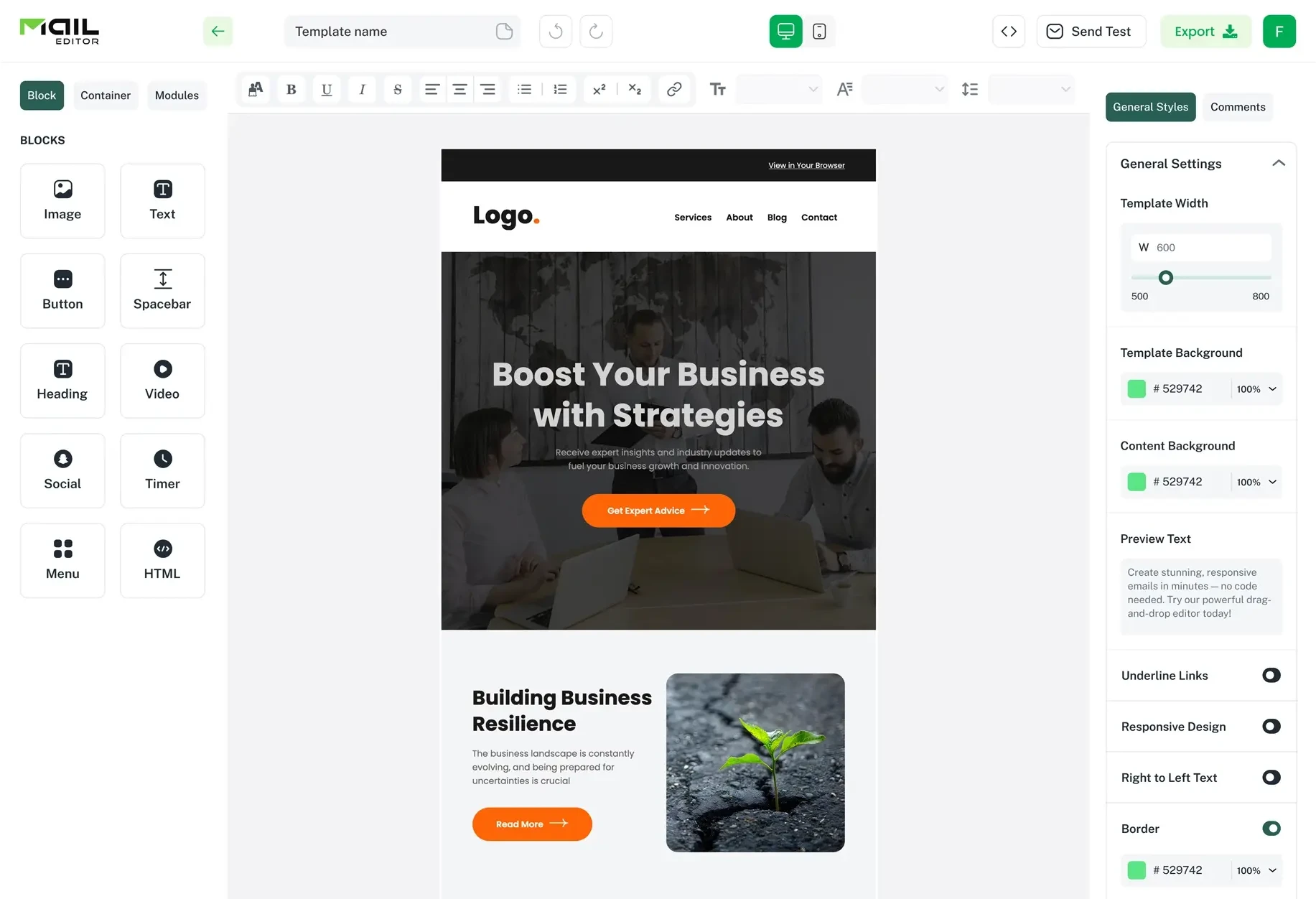
Email Design2 mins to read
Top Email Template Builders & HTML Email Editors for 2026
Compare the best email template builders and HTML editors to design professional, responsive campaigns without coding.
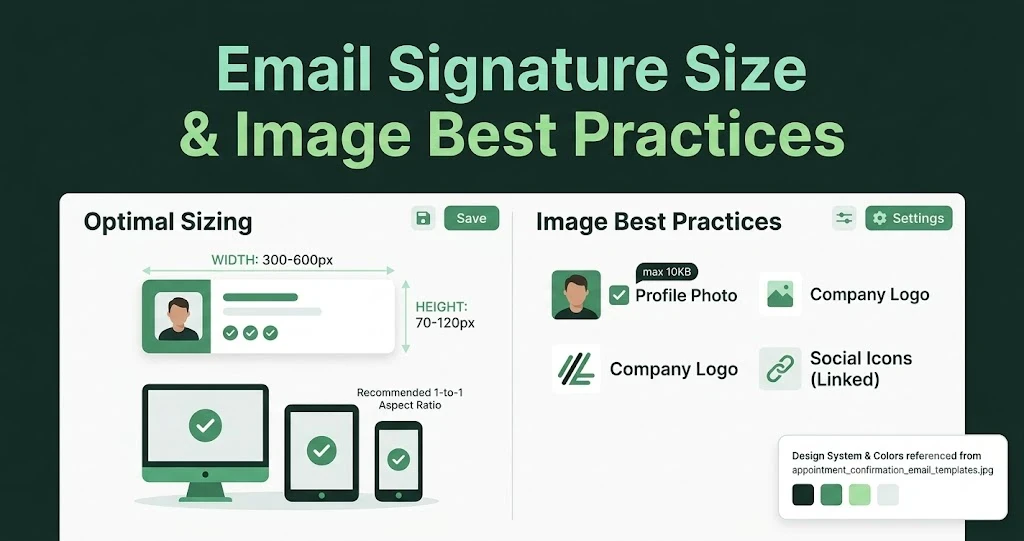
Email Design9 mins to read
Email Signature Size and Image Best Practices
The ideal email signature is 320–600px wide and 90–200px high. Learn the best image sizes, formats, file limits, and mobile-friendly design tips.

Email Tips7 mins to read
Best Drag and Drop Email Editors in 2026
Discover the best drag and drop email editors in 2026. Compare top tools, features, templates, pricing, and automation to build stunning emails fast.
Marketing7 mins to read
4 Best Unlayer Alternatives to Design Emails
Looking for Unlayer alternatives? Explore the 4 best email design tools to create beautiful, responsive emails faster and easier.
Marketing6 mins to read
5 Beefree Alternatives to Upgrade Email Design Workflows
Looking for a better email design tool? Explore 5 Beefree alternatives that streamline workflows, improve collaboration, and elevate email campaigns.