How to Do Email Marketing in 2026
Learn how to do email marketing in 2026 with proven strategies, AI-powered tools, personalization tips, automation, and compliance best practices to boost engagement and conversions.

Shahin Alam
When did you last check your email? Was it like five minutes ago or right before you started reading this?
You probably saw something appealing - like a sneaker brand flash sale, a news digest, or a "we miss you" note from a service. You clicked, you scrolled, maybe you even bought something.
Email marketing is unique because it feels like having a conversation rather than sending random messages.
Email connects you directly to someone, rather than getting lost in the noise of social media algorithms.
If you believe email is outdated or too complex, let me show you why it's still the best for digital marketing and how to succeed with it.
What Exactly Is Email Marketing?

Email marketing is a digital marketing strategy. Businesses use it to send emails to subscribers or customers. The goal is to build relationships, promote products or services, and encourage actions like purchases, sign-ups, or engagement.
Let’s explore the different types of email marketing with some practical examples:
Newsletter: A fitness brand sends a weekly newsletter with workout tips, healthy recipes, and links to new blog posts - without directly pushing a sale.
Promotional Emails: An online clothing store sends an email announcing a “20% off summer sale” with a clear call-to-action like “Shop Now.”
Transactional Emails: After purchasing a laptop online, a customer receives an email confirming the order, including the receipt and estimated delivery date.
Retention Emails: A company sends an email to a customer who hasn’t visited in a while, offering recommendations or rewards.
Why You Should Care (The Benefits)

Let’s clear up a few myths. Email isn’t dead. In fact, it’s doing better than ever. And there are some solid reasons why it should be a core part of your business.
It Actually Makes Money
You’ll see a lot of numbers online, but this one is hard to ignore. For every dollar spent on email marketing, the average return is around $42.
That’s the kind of ROI most social media ads can’t touch. I’ve worked with a SaaS business that pulled in over 40% of its monthly revenue just from email.
All it took was a simple welcome series and a few well-timed product launch emails.
It Feels Personal
Social media is like shouting on a crowded street. Email feels more like a one-on-one message.
With proper segmentation, you can send teachers ideas for using tech in the classroom, busy parents quick meal ideas, or newlyweds travel offers that actually make sense for them.
Think about Netflix recommendations—those emails work because they feel relevant, not random.
You Own Your Audience
This part matters more than people realize. If Instagram disappears tomorrow, your followers disappear with it.
Your email list is different. It’s yours. No algorithm, no platform changes. I’ve seen businesses survive major shifts, even full rebrands, simply because they had an email list they’d taken care of over time.
It’s Clear and Trackable
With email, there’s no guessing. You can see who opened your message, who clicked, and who ignored it.
That makes it easy to adjust quickly. Most email tools lay all this data out clearly, so you’re not working in the dark.
Get Ready for the Email Marketing (Step-by-Step)

Alright, you’re convinced—email marketing works. But where do you even start without feeling totally overwhelmed?
Let’s simplify it and break it down into small, easy steps.
Step 1: Build Your List (The Right Way)
Tip: Don’t ever buy an email list. Not only can it get you in legal trouble with things like GDPR or CAN-SPAM, but the people on those lists usually won’t care about your emails. All you’ll end up with is a bunch of dead contacts and a damaged sender reputation.
So how do you go from zero to a list of eager subscribers?
Case Study:
A local café boosted its subscriber count by 300% in a single month by placing a tablet at the checkout, offering a free pastry with newsletter signup.
Online, lead magnets like “Free 5-Day Productivity Challenge” PDFs or discount codes consistently perform.
A friend running an e-commerce shop saw a flood of sign-ups with a simple pop-up offering 10% off the first purchase.
Action steps:
- Place sign-up forms in high-traffic spots—homepages, blog posts, checkout pages.
- Run giveaways or offer exclusive resources only available via email.
- Promote signup across all channels: social media, webinars, physical events.
Pro Tip: Make it clear what subscribers will get—“No spam, only monthly tips and deals” builds trust and increases conversions.
Step 2: Choose Your Tools
You can’t send mass emails from your personal Gmail account. You’ll get flagged as spam faster than you can say "unsubscribe."
Instead, pick an email marketing platform—Mailchimp, Brevo, HubSpot, or even niche platforms tailored for your industry.
But there’s an often-overlooked step: making your emails actually look good.
Step 3: Design Emails That Pop
Here’s where most folks freeze up. They worry, “I’m not a designer” or “HTML is terrifying.” But honestly, you don’t need coding skills to dazzle your readers.
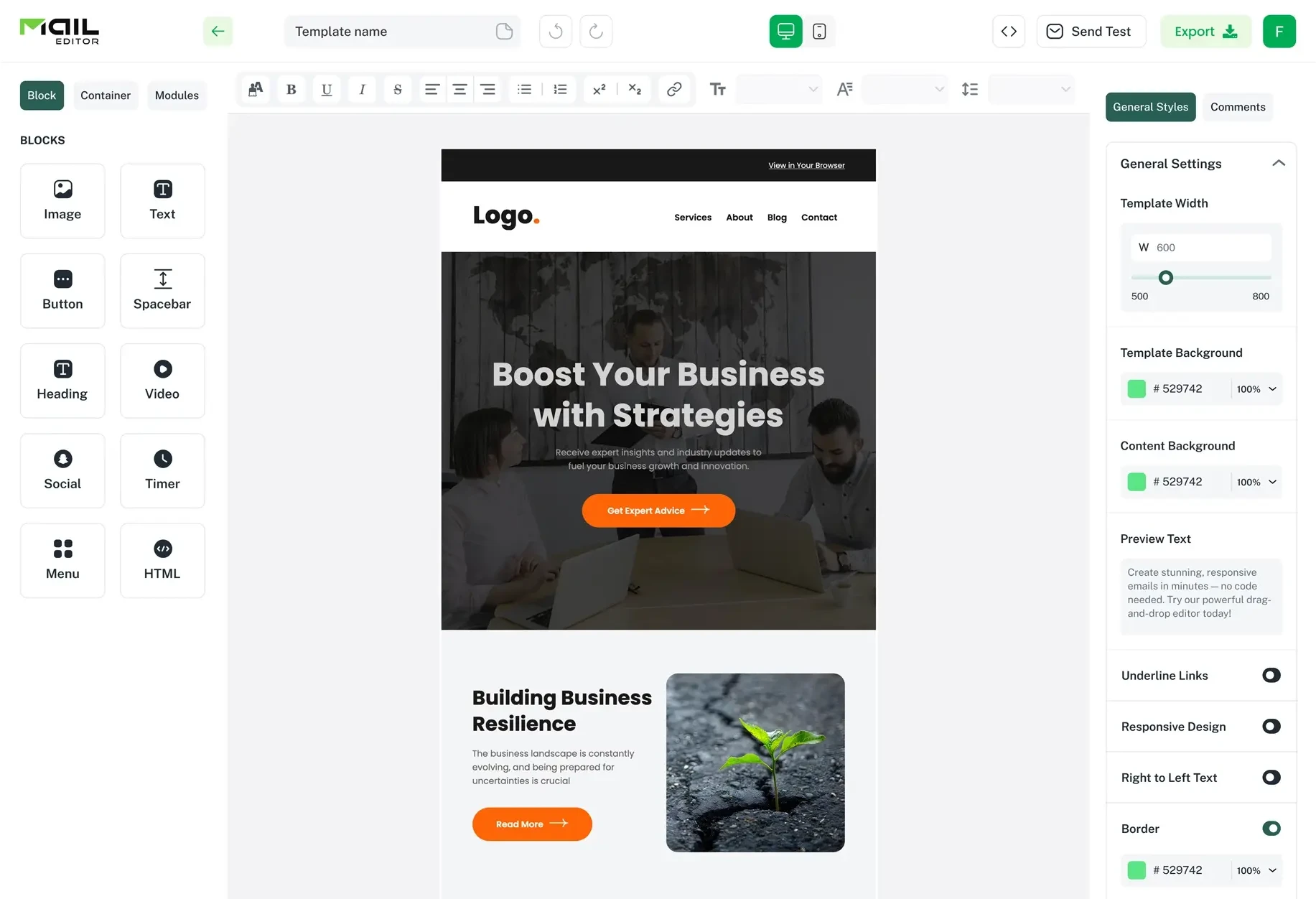
My favorite tool? MailEditor.
Why I recommend it (and use it myself):
- Drag-and-Drop Simplicity: Crafting a new campaign feels like building a presentation. No code, no headaches.
- Free, Modern Templates: MailEditor’s template gallery is extensive and updated regularly. Whether you want minimalist, bold, luxury, or playful, there’s a template ready to customize. (I once had a client launch a flash sale in under an hour—logo swapped, colors tweaked, product images added, and it looked like it was coded by a pro.)
- Pixel-Perfect Previews: See how your email appears on desktop and mobile before you send it.
- Easy Exports: You can export templates into any major email platform—no tech hurdles.
Scenario:
A nonprofit needed to send fundraising emails for Giving Tuesday, but their team was small and non-technical.
With MailEditor, they picked a donation-themed template, replaced images and text, and used the built-in color picker to match their brand.
Results? Their emails looked clean, professional, and their donations doubled compared to last year.
Step 4: Segment Like a Pro
Think about running a sports store. You wouldn’t try to sell a baseball bat to someone who only buys tennis gear, right?
Segmentation works the same way. It’s just about organizing your email list into groups—by age, location, past purchases, email activity, or interests. The more targeted your emails are, the happier your subscribers will be… and the better your results will look.
Advanced Example:
A beauty brand grew online sales by sending skincare routines to skincare buyers and separate makeup tutorials to makeup fans. Open rates and click-throughs spiked—because every message felt custom-made.
Actionable ideas:
- Ask new subscribers about their interests during sign-up.
- Use past purchase or browsing data.
- Segment by engagement, frequency, or location for local events/promos.
Advanced Email Marketing Strategies

Once you’ve got the basics down, you can take things to the next level with some proven tactics that the pros use.
Automation Workflows
Let’s be honest—manually sending each email is exhausting and just not scalable. Automation makes life easier and keeps your audience engaged.
Example Automations:
- Welcome Series: Roll out a red carpet for new subscribers with a warm greeting, your origin story, and an exclusive offer spread across 3–4 emails.
- Abandoned Cart Nudges: Recover missed sales with a reminder sequence—one email after one hour, another after 24 hours, and a final “last chance” with a discount.
- Re-engagement Campaign: If someone stops opening your emails for 90 days, automatically send a “We miss you” and perhaps a special incentive.
Pro Tip: Many ESPs, and MailEditor (when combined with platforms like Mailchimp or Brevo), allow you to trigger automations based on subscriber behavior or timeframes. Map your customer journey and automate touchpoints—they work while you sleep!
A/B Testing
Ever spent ages crafting an email, but the response was ‘meh’? That’s where A/B testing (also called split testing) comes in.
What Can You Test?
- Subject lines: “Spring Blowout” vs. “50% Off Spring Styles—Today Only!”
- Images: Lifestyle vs. product-focused visuals.
- CTAs: “Buy Now,” “Shop the Sale,” or “Grab Yours.”
Story:
A travel blogger tested “Let’s Escape Together” vs. “Cheap Flights for Summer” as subject lines. The emotional subject line pulled 13% higher opens. Small tweaks, big impact.
How to do it:
Most email platforms make A/B testing pretty simple. You just change one thing at a time, send both versions to a small group, and then let the better-performing email go to the rest of your list. Do this consistently, and those small tweaks add up to much better results over time.
Personalization: Go Beyond “Hello, [First Name]”
Just adding someone’s name at the start of an email isn’t enough anymore. Real personalization means using everything you know about them to make the email relevant.
Ideas:
- Reference birthdays, anniversaries, or big milestones.
- Suggest products or content based on past behavior.
- Use location data for local deals or events (“Hey, Boston! See What’s Happening This Weekend”).
Case Study:
Spotify’s annual “Your Year in Music” emails aren’t just flashy—they create real buzz. They recap listening habits, favorite genres, and custom playlists, making every subscriber feel special. As a result, these emails are widely opened, shared, and talked about on social media.
How MailEditor Helps:
The templates are made to be easily customizable. You can use dynamic content sections to add personalized recommendations, so every email feels unique. It’s simple - just drag and drop, no hassle.
Best Practices (The Do’s and Don’ts)

As you craft your first campaign, keep these golden rules in your back pocket.
The Subject Line is Everything
You might write an amazing email, but if the subject line is boring, nobody will open it.
Actionable tips:
- Keep it under 50 characters.
- Add curiosity or urgency.
- Use emojis sparingly for flair.
- Never deceive—bait and switch means lost trust.
Examples:
- “☀️ Summer’s here! Your essentials inside”
- “We saved you a spot—open for your invite”
- “3 tips for better mornings”
Think Mobile-First
Most people check their email on their phones while waiting in line for coffee. If your email is hard to read and requires zooming in, it will probably get deleted.
How MailEditor Nails This:
Every email templates is responsive by default. You can preview and test how it looks on a phone with just one click. This makes life much easier for people who are not designers.
Keep it Clean (Legally Speaking)
We need to talk about the rules. Laws like GDPR in Europe and CAN SPAM in the US are not optional. They are legal requirements.
- Consent is King: Only email people who gave you permission.
- The Exit Door: Always include a clear "Unsubscribe" link. It’s not just polite; it’s required. Hiding it destroys trust (and can get you hefty fines).
Bonus Tip:
Make sure to clean your email list regularly. Every few months, remove bounced emails, inactive subscribers, or fake addresses to keep your emails reaching the inbox.
Measuring Success

You hit "Send." Now what? Don't just walk away. Watch the scoreboard.
- Open Rate: Are people intrigued enough to look? (Target: 20%+)
- Click-Through Rate (CTR): Did they take action? (Target: 2–5%)
- Bounce Rate: Did the email actually land? If this is high, your list might need cleaning.
- Unsubscribes: It happens. Review email frequency, content, or audience fit to minimize.
Analytical example:
A real estate agent noticed that fewer people were opening her weekly tips email. After looking at open rates and click data, she realized subscribers preferred getting updates once a month instead. She made the switch, and engagement quickly doubled.
The Final Word
Email marketing is not about spamming strangers with ads. It is about telling a story. It is about showing up consistently, but not constantly, and adding something useful to someone’s day.
Start small. Build a list of people who actually want to hear from you. Use tools like MailEditor to save time on design and create great looking emails, even if you have never written a line of code.
And always remember, there is a real person behind every email address. Talk to them like one.
Now it’s your turn!
Create your first campaign, try things out, and have fun with the process. Your audience is already in their inbox, and your future results are waiting there too.
Hope to see you in another post. Ta ta for now.
Written by
A full-stack digital marketer and passionate blogger with more than seven years of hands-on experience helping brands grow, rank, and thrive online.
All postsPopular Blogs
Email Design2 mins to read
Top Email Template Builders & HTML Email Editors for 2026
Compare the best email template builders and HTML editors to design professional, responsive campaigns without coding.
Email Design9 mins to read
Email Signature Size and Image Best Practices
The ideal email signature is 320–600px wide and 90–200px high. Learn the best image sizes, formats, file limits, and mobile-friendly design tips.
Email Tips7 mins to read
Best Drag and Drop Email Editors in 2026
Discover the best drag and drop email editors in 2026. Compare top tools, features, templates, pricing, and automation to build stunning emails fast.
Marketing7 mins to read
4 Best Unlayer Alternatives to Design Emails
Looking for Unlayer alternatives? Explore the 4 best email design tools to create beautiful, responsive emails faster and easier.
Marketing6 mins to read
5 Beefree Alternatives to Upgrade Email Design Workflows
Looking for a better email design tool? Explore 5 Beefree alternatives that streamline workflows, improve collaboration, and elevate email campaigns.