How to Build CRM Landing Pages for Lead Generation?
Build CRM landing pages for lead generation with a clear offer, lead forms, CRM integration, automation, and A/B testing to increase conversions.

Md. Yaikub Hossain Razon
The median landing page converts 6.6% of visitors into leads. But according to a Harvard Business Review study of 2,241 companies, those that respond to a lead within 1 hour are nearly 7× more likely to qualify it.
That’s why you need to know how to build CRM landing pages for lead generation. Apparently, putting a bunch of words gets you 0 results.
To build a CRM landing page for lead generation, create one with a clear offer, a simple lead-capture form, and a direct connection to your CRM. Once you submit the form, their information is automatically stored, matched to the right sales rep, and added to follow-up workflows so no lead gets missed.
Sounds confusing? Well, then read on to get the clear answer.
What Is a CRM Landing Page?
A CRM landing page is a landing page connected directly to a Customer Relationship Management (CRM) system. Its purpose is not only to collect leads but also to automatically store their information.
But don't mix it up with a normal landing page! Both are kinda different, as in-
Mainly, A CRM landing page sits between lead generation and sales qualification.
It captures visitor information at the top of the funnel and automatically pushes every lead into your CRM, where sales and marketing can continue the conversation.
Sales funnel flow basically looks like this:
Visitor → CRM Landing Page → Lead Form Submission → CRM → Lead Qualification (MQL/SQL) → Sales Follow-up → Customer
Without a CRM connection, leads often end up in an inbox waiting for someone to respond.
And with a CRM landing page, every submission immediately enters your sales pipeline. So, you can track and qualify leads, automate follow-ups, and track conversions from first visit to closed deal.
What Makes a High-Converting CRM Landing Page?
A high-converting CRM landing page does more than collect contact information. It gives visitors a clear reason to take action, removes unnecessary friction, and sends every lead directly into your CRM for immediate follow-up.
Speed also plays a bigger role than many businesses realize.
A study of 27,000+ landing pages found that for B2B lead-generation websites, a page that loads in 1 second converts 3× better than one that loads in 5 seconds and 5× better than one that loads in 10 seconds.
So, if visitors have to wait, many will leave before they even see your offer.
To improve your chances of converting visitors into qualified leads, your landing page should include:
- Clear Value Proposition
- Strong Call-to-Action (CTA)
- Simple Lead Capture Form
- Trust Signals
- Mobile-Friendly Design
- Fast Page Speed
Every extra click, distraction, or second of load time gives them another reason to leave.
How to Build a CRM Landing Page Step by Step?
Here is how I build a high-converting CRM landing page:
Step 1: Define Your Conversion Goal
Before starting to build a CRM landing page, I list down the goals like-
- Book a demo
- Start a free trial
- Request a consultation
- Download an ebook
- Register for a webinar
The main point is the same as building an email page. But it can change depending on your business. For example, if your goal is a demo booking, the page should focus on demonstrating the product's value and guiding visitors toward the demo CTA.
If the goal is an ebook download, the page should focus more on the problem, the resource, and why the visitor should share their contact details.
Do not start with design first. Start with the action you want.
Step 2: Understand Your Audience
A good CRM landing page speaks to one specific audience. That is why you need to understand your ICP and buyer persona before writing the page.
Start by asking:
- Who is the ideal customer?
- What company size do they work in?
- What problem are they trying to solve?
- Are they a founder, marketer, sales manager, or operations person?
- Are they just researching, comparing tools, or ready to buy?
Then map the buyer persona and buying stage.
A visitor who is still learning needs more education. A visitor comparing CRM tools needs proof, use cases, and a reason to choose your product. A visitor ready to book a demo needs a clear CTA and fewer distractions.
This step helps you avoid weak copy like “manage your business better.” Instead, the page can say something more specific, such as helping sales teams stop losing leads, automate follow-ups, and track every deal from one place.
Step 3: Write a Clear Value Proposition
Your value proposition tells people why they should care. It should focus on the outcome, not only the features.
Don’t say:
“CRM with automation, pipelines, and reporting.”
Say something like:
“Track leads, automate follow-ups, and close more deals from one simple CRM dashboard.”
That line explains the problem, the action, and the outcome. It also gives the page a clearer direction.
A strong CRM value proposition should answer three things quickly: what problem the CRM solves, who it helps, and what result the user gets. Keep it focused on one main problem, because trying to solve every CRM problem on a single landing page usually weakens the message.
Step 4: Create a High-Converting Hero Section
The hero section is the first part people see, so it needs to explain the offer quickly. Do not make visitors scroll just to understand what the page is about.
Your hero section should include:
- A clear headline
- A short subheadline
- One main CTA button
- A product image, dashboard screenshot, or short video
- Trust signal, if available
For example:
Headline: Manage Every Lead From One CRM DashboardSubheadline: Capture leads, assign them to your team, automate follow-ups, and track every deal without losing important customer data.CTA: Book a Free Demo
If you are also building email assets for the same CRM campaign, Maileditor can help with the supporting design work. It offers a drag-and-drop HTML email editor, reusable modules, and export options.

This can be useful for creating follow-up emails, webinar reminders, or lead nurturing templates connected to your landing page funnel.
A/B Test and Optimize Your Landing Page
Sometimes I run A/B testing. Cause your first version is rarely your best one. Once your landing page is live, test one element at a time to see what encourages more visitors to convert.
In fact, 60% of companies A/B test their landing pages, and 85% prioritize testing their CTAs first, according to VWO. That shows how important continuous optimization is for generating more leads.
So, I usually start with:
- Headline: Test different value propositions or messaging angles.
- Lead capture form: Compare shorter and longer forms, or reduce the number of required fields.
- CTA button: Try different button text such as Book a Demo, Get Started, or See It in Action.
- Hero section: Test different images, videos, or page layouts.
- Social proof: Move testimonials, client logos, or case studies above or below the form to see which performs better.
But remember, run only one test at a time.
If you change multiple elements together, you won't know which one improved or reduced conversions.
Before launching a test, write a simple hypothesis. For example:
If we reduce the form from five fields to three, more visitors will complete it because the form requires less effort.
After collecting enough traffic, compare the results, keep the winning version, and move on to the next test. Small improvements across multiple elements can significantly increase your landing page's overall conversion rate.
Step 5: Design a Lead Capture Form
The form is where the conversion happens. Make it simple enough for users to complete, but useful enough for your sales or marketing team.
For a demo or consultation page, you may ask for:
- Name
- Work email
- Company name
- Phone number
- Company size
- CRM need or challenge
For an ebook or webinar, keep the form shorter. Name and email may be enough at the first step.
Use smart fields when possible. If the visitor has already provided their email, the form can request new information rather than repeating the same fields.
Place the form where it is easy to find:
- Beside the hero section
- After the value proposition
- After benefits or social proof
- In a sticky CTA or popup, if suitable
Do not ask for too much information too early. Long forms can reduce conversion if the offer is not strong enough.
Step 6: Add Social Proof
People trust a CRM landing page more when they see proof. Social proof helps reduce doubt and makes the offer feel safer.
You can add:
- Customer reviews
- Case studies
- Customer logos
- Short testimonials
- Usage statistics
- Industry results
- Before-and-after examples
For example, instead of only saying “our CRM improves sales productivity,” show a short result like:
“ABC Company reduced missed follow-ups by 35% after moving their lead process into one CRM.”
Use proof that matches the audience. If your page targets small businesses, show examples of small businesses. If it targets agencies, show agency case studies.
Step 7: Connect Your CRM
This is the most important technical step. A CRM landing page should not just collect leads. It should send them to the right place automatically.
Connect the form with your CRM, so every lead is captured properly. Then set up the backend process.
You should configure:
- Lead routing
- Workflow automation
- Email notifications
- Sales assignment
- Lead source tracking
- Tags or lifecycle stage
- Follow-up email sequence
For example, when someone books a demo, the CRM can automatically assign the lead to a sales rep, send an email notification, create a task, and trigger a confirmation email.
Also track where the lead came from. Add UTM tracking for ads, email campaigns, social posts, and search traffic. This helps you understand which channel brings better leads.
Step 8: Build a Thank You Page
Do not end the journey after form submission. A thank you page tells the visitor what happened and what to do next.
Your thank you page should include:
- Confirmation message
- Next steps
- Meeting booking option
- Resource download button
- Contact information
- Short reminder of the offer
For a demo page, you can add a calendar booking link. For an ebook page, give the download link right away. For a webinar page, show the date, time, and confirmation details.
Example:
“Thanks for requesting a CRM demo. Our team will contact you soon. You can also book a time directly using the calendar below.”
This keeps the visitor engaged and reduces confusion after submitting the form.
How to Integrate Your CRM Landing Page With Your Sales Stack?
A CRM landing page works best when it's connected to the tools your sales and marketing teams already use. Here is how to do things like-
Connect Your CRM
The first step is connecting your landing page to your CRM. As soon as a visitor submits the form, their information should be stored as a new lead, assigned to the right salesperson, and added to your sales pipeline.
Most CRM platforms, including Salesforce, HubSpot CRM, Zoho CRM, Pipedrive, and Microsoft Dynamics 365, support direct integrations with landing page builders or form tools.
Set Up Marketing Automation
After the lead enters your CRM, automate the next steps. Send a confirmation email, notify your sales team, assign follow-up tasks, or enroll the lead in a nurture campaign. Marketing automation platforms.
If your tools don't connect directly, platforms such as Zapier or Make can automate the data flow between them.
Track Performance
Finally, measure how your landing page performs. Track metrics such as form submissions, CTA clicks, conversion rate, bounce rate, and traffic sources.
Google Analytics 4 (GA4) and Google Tag Manager (GTM) help you measure conversions, while Microsoft Clarity and Hotjar show how visitors interact with your page through heatmaps and session recordings.
When all these tools work together, your landing page becomes more than a lead capture form. It becomes the starting point for an automated sales process in which every lead is captured, tracked, nurtured, and followed up on without manual effort.
Conclusion
A great CRM landing page doesn't just help you collect more leads. It helps you turn those leads into real sales opportunities. So, keep an eye on how people use it, test new ideas, and make small improvements over time.
Don’t think that once you build the page, you are done with it! You need to change it depending on the situation.
Frequently Asked Questions
Question: Do I need a CRM to create a landing page?
Answer: No. You can create a landing page without a CRM, but connecting one allows you to organize leads, automate follow-ups, and track every opportunity from a single place.
Question:Can one CRM landing page target multiple audiences?
Answer: It's better to create separate landing pages for different audiences or campaigns. A focused message usually converts better than trying to speak to everyone on one page.
Question:What's the best traffic source for a CRM landing page?
Answer: It depends on your goals. SEO works well for long-term lead generation, PPC delivers faster results, email marketing targets existing contacts, and LinkedIn is effective for B2B campaigns.
Question:How often should I update my CRM landing page?
Answer: Review performance at least once a month. Update the page whenever you notice declining conversion rates, launch a new offer, or learn something new from A/B testing.
Question:Should I gate every piece of content behind a form?
Answer: No. Gate content that provides high value, such as templates, whitepapers, webinars, or industry reports. Blog posts and educational resources often perform better without a form.
Question:Can I connect multiple landing pages to the same CRM?
Answer: Yes. Most CRM platforms let you connect multiple landing pages while keeping leads organized by campaign, source, or audience using tags, lists, or pipelines.
Question:What happens after someone submits the form?
Answer: The lead is added to your CRM, where you can assign it to a sales rep, trigger automated emails, schedule follow-ups, or place it into a nurturing workflow based on your sales process.
Popular Blogs
Email Design2 mins to read
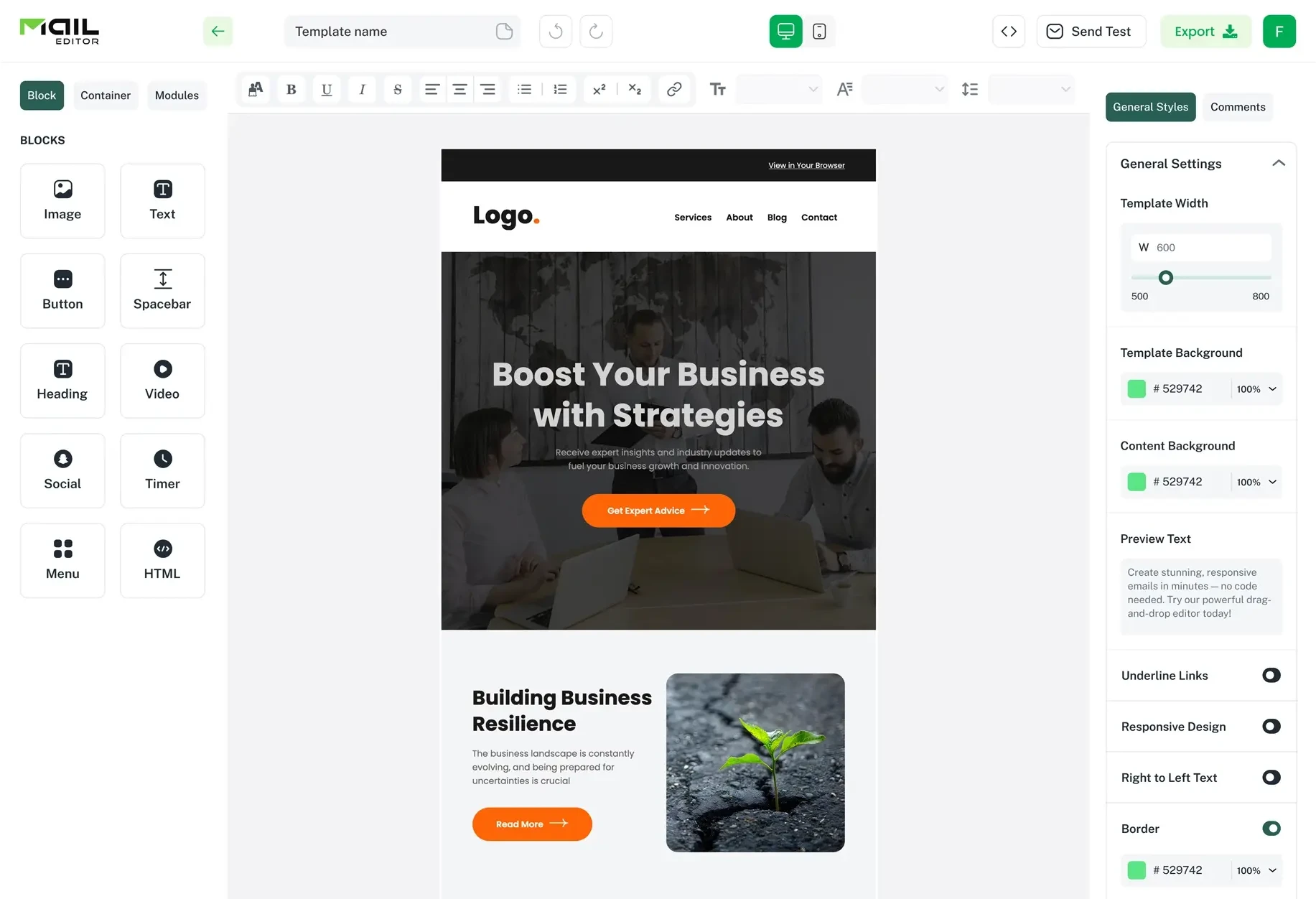
Top Email Template Builders & HTML Email Editors for 2026
Compare the best email template builders and HTML editors to design professional, responsive campaigns without coding.
Email Tips7 mins to read
Best Drag and Drop Email Editors in 2026
Discover the best drag and drop email editors in 2026. Compare top tools, features, templates, pricing, and automation to build stunning emails fast.
Email Design9 mins to read
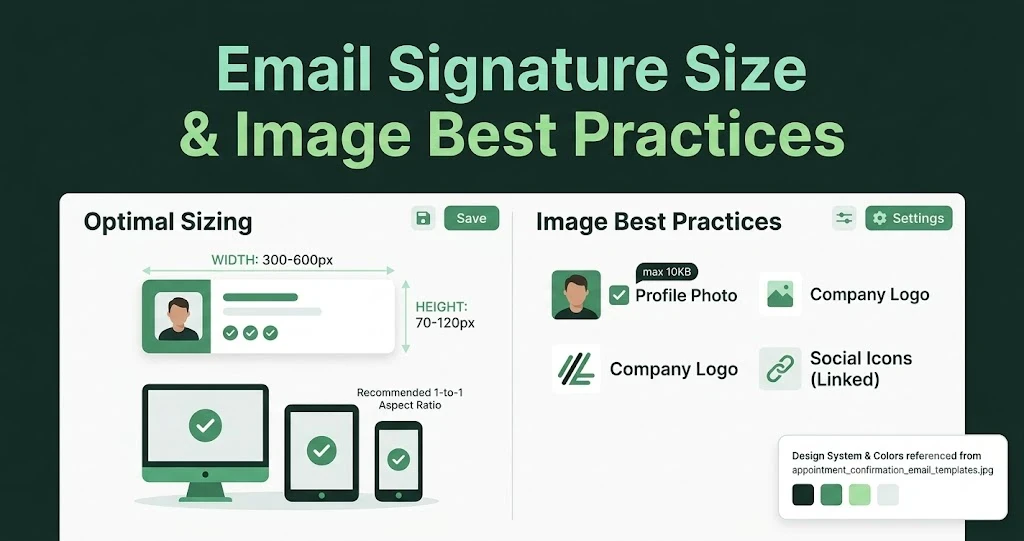
Email Signature Size and Image Best Practices
The ideal email signature is 320–600px wide and 90–200px high. Learn the best image sizes, formats, file limits, and mobile-friendly design tips.
Marketing7 mins to read
4 Best Unlayer Alternatives to Design Emails
Looking for Unlayer alternatives? Explore the 4 best email design tools to create beautiful, responsive emails faster and easier.
Marketing6 mins to read
5 Beefree Alternatives to Upgrade Email Design Workflows
Looking for a better email design tool? Explore 5 Beefree alternatives that streamline workflows, improve collaboration, and elevate email campaigns.