Edit vs Build Email Templates: 5x Faster Workflow
Editing an email template is faster than building from scratch, minutes, not hours. See the time each takes, when to build, and the fastest way to ship.

Md. Yaikub Hossain Razon
Editing an email template is faster than building one from scratch. Editing reuses a tested, responsive layout and changes only the content, which takes minutes. Building from scratch means hand-coding table-based HTML, inlining CSS, and testing across clients, which takes hours and demands developer skill.
The gap comes from work you avoid. A finished template has already solved rendering, responsiveness, and cross-client quirks. Building from scratch makes you solve all three again for every send.
What does building an email from scratch involve?
Building an email from scratch means writing the HTML, CSS, and structure of the message by hand before adding any content. Email HTML is not web HTML. It relies on nested <table> layouts, inline CSS on nearly every element, and a fixed body width around 600px, because email clients strip <head> styles and modern CSS support is inconsistent.
The build also includes defensive coding for specific clients. Outlook on Windows renders with the Microsoft Word engine, so backgrounds and buttons need VML fallbacks. Gmail clips any message over 102KB, hiding content past the limit. Dark mode and mobile each require their own handling. None of this is content work; it is engineering that must happen before the email says anything.
What does editing a template involve?
Editing a template means opening a pre-built, tested layout and replacing its placeholder content with yours. The structure, inline CSS, responsive rules, and client fixes already exist, so you change text, swap images, adjust colors, and rearrange blocks. The rendering problems are solved before you start.
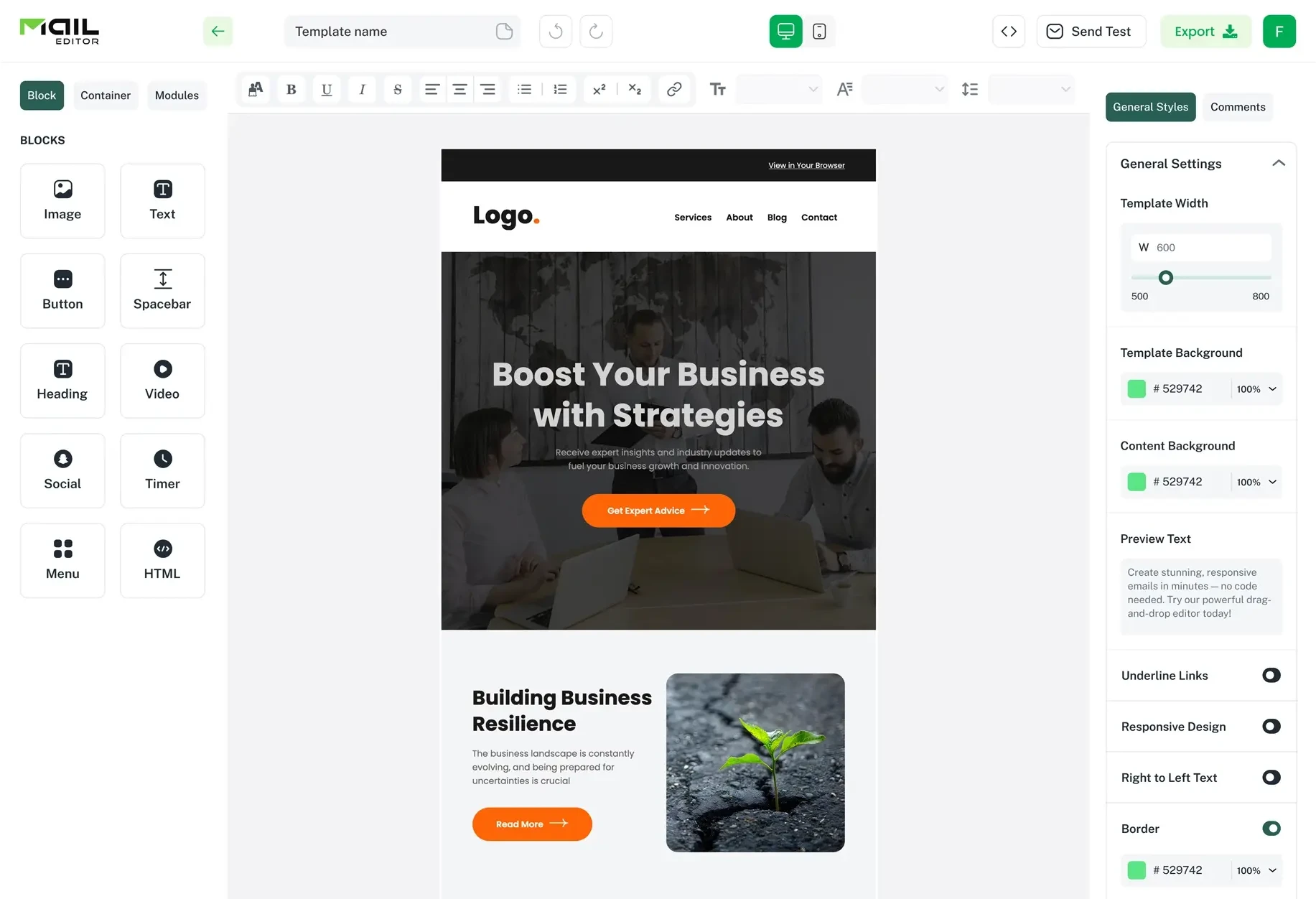
A drag-and-drop editor removes the code layer entirely. You move blocks visually, and the editor writes email-safe HTML underneath. The output is the same table-based, inline-styled markup a developer would write by hand, produced in a fraction of the time.
Is editing an email template faster than building from scratch?
Yes. Editing a template is faster because it reuses solved work, while building from scratch repeats that work every time. A campaign that takes a developer hours to code and test from zero takes minutes to assemble from a template, because the layout, responsiveness, and cross-client testing are already done.
The advantage compounds with volume. The first hand-coded email is slow; the tenth is still slow, because each new design restarts the build-and-test cycle. With templates, the first send establishes a reusable base and every send after it gets faster.
You can edit a tested email template in MailEditor without writing code, swap in your content, and export clean HTML to any ESP. Browse the free HTML email template library to start from a layout that already renders everywhere.
Why is coding an HTML email from scratch so slow?
Hand-coding is slow because email rendering is fragmented and unforgiving. Three technical realities drive most of the time cost.
Table-based layout and inline CSS
Email clients ignore external and embedded stylesheets, so every style is written inline on tables and cells. A single column shift means editing many nested elements by hand.
Cross-client inconsistency
Outlook, Gmail, Apple Mail, and Yahoo each render differently. Outlook's Word engine ignores standard CSS for spacing and backgrounds, forcing conditional code and VML workarounds.
Mandatory testing
Code that looks correct in a browser can break in the inbox. Building from scratch requires testing across clients and devices before sending, then fixing what breaks, then re-testing.
Each cycle adds time. A template absorbs all three problems once, so editing skips the build-test-fix loop.
Does editing a template limit your customization?
No. Editing a quality template does not limit customization, because a modular template exposes every element for change. You can rewrite copy, replace images, restyle buttons, change colors and fonts, and add or remove content blocks. The template sets a tested foundation; it does not lock the design.
The practical limit is the opposite of what people expect. Building from scratch limits you to what you have time to code and test. Editing frees you to focus design effort on the message instead of the markup.
When should you build an email from scratch?
Build from scratch when the design is genuinely novel and no template structure fits. A fully custom interactive email, a one-off brand showcase, or a layout no existing template approximates can justify the build time and developer cost. These are the exception.
For newsletters, promotions, transactional emails, and any recurring send, editing a template is the correct default. Reuse beats rebuild whenever the structure repeats, which is most of the time.
What is the fastest way to make an HTML email?
The fastest way to make an HTML email is to edit a responsive template in a visual editor and export the code. The path below produces a finished, inbox-ready email in minutes.
1. Open a template that matches your goal, newsletter, promotion, or transactional.
2. Replace the placeholder text and images with your content.
3. Adjust colors, fonts, and button styles to your brand.
4. Rearrange, add, or remove content blocks as needed.
5. Preview across devices, then export clean HTML or send to your ESP.
This workflow removes the two slowest stages of building from scratch: writing email-safe HTML and debugging cross-client rendering. Both are already solved inside the template.
Reuse vs rebuild: which scales better?
Reuse scales; rebuild does not. Reusing and editing templates turns email production into a repeatable process, where saved blocks and brand styles carry from one send to the next. Rebuilding from scratch resets that process every time, so output stays slow no matter how many emails you have already made.
Teams feel this most. Shared, reusable email template blocks let a marketer assemble an on-brand email without a developer, while hand-coding keeps every send dependent on someone who can write and test email HTML.
Worked example: a promotional email two ways
A team needs a promotional email. Building from scratch, a developer writes the table layout, inlines the CSS, codes a bulletproof button, adds Outlook fallbacks, and tests across clients before the copy is even final, a multi-hour task tied to one person.
Editing a template, a marketer opens a promotional layout, swaps in the offer copy and product image, recolors the button to match the brand, and previews on mobile. The email is ready in minutes, renders correctly because the template is already tested, and needs no developer. Same result, a fraction of the time.
FAQ
Question: Is it faster to edit an email template or build one from scratch?
Answer: Editing is faster. A template reuses a tested, responsive layout, so you change only content and ship in minutes. Building from scratch means hand-coding table-based HTML, inlining CSS, and testing across email clients, which takes hours and requires developer skill.
Question: What is the fastest way to create an HTML email?
Answer: The fastest way is to edit a responsive template in a visual editor and export the HTML. You replace placeholder content, restyle to your brand, preview across devices, and send. This skips writing email-safe HTML and debugging cross-client rendering, the two slowest parts of building from scratch.
Question: Does using an email template limit customization?
Answer: No. A modular template exposes every element, text, images, colors, fonts, and blocks,for editing. It provides a tested foundation, not a fixed design. Building from scratch limits you more, because you can only ship what you have time to code and test.
Question: When should I build an email from scratch instead of using a template?
Answer: Build from scratch only when the design is truly novel and no template structure fits, such as a fully custom interactive email or a one-off brand showcase. For newsletters, promotions, and transactional emails, editing a template is faster and the right default.
Question: Why is coding an HTML email so time-consuming?
Answer: Email HTML uses nested tables and inline CSS because clients strip <head> styles. Outlook renders with the Word engine, Gmail clips messages over 102KB, and each client differs, so every build needs cross-client testing and fixes. A template solves these once so you can skip them.
Stop rebuilding the same email. Sign up free and edit a tested template in MailEditor, change the content, keep the rendering, and ship in minutes instead of hours. Start from the free template library today.
Popular Blogs
Email Design2 mins to read
Top Email Template Builders & HTML Email Editors for 2026
Compare the best email template builders and HTML editors to design professional, responsive campaigns without coding.

Email Tips7 mins to read
Best Drag and Drop Email Editors in 2026
Discover the best drag and drop email editors in 2026. Compare top tools, features, templates, pricing, and automation to build stunning emails fast.
Email Design9 mins to read
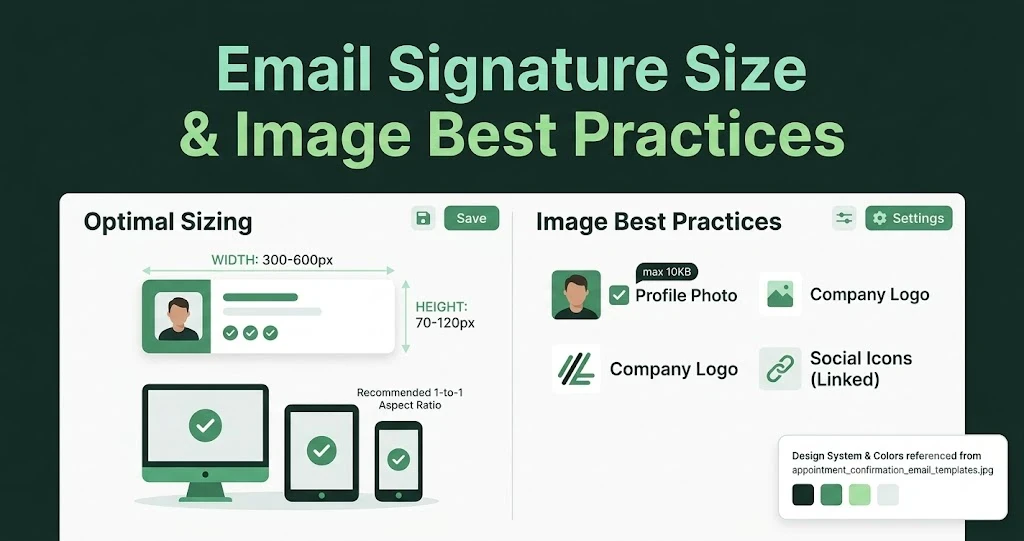
Email Signature Size and Image Best Practices
The ideal email signature is 320–600px wide and 90–200px high. Learn the best image sizes, formats, file limits, and mobile-friendly design tips.

Marketing7 mins to read
4 Best Unlayer Alternatives to Design Emails
Looking for Unlayer alternatives? Explore the 4 best email design tools to create beautiful, responsive emails faster and easier.

Marketing6 mins to read
5 Beefree Alternatives to Upgrade Email Design Workflows
Looking for a better email design tool? Explore 5 Beefree alternatives that streamline workflows, improve collaboration, and elevate email campaigns.