10 Email Marketing Trends Developers Should Follow in 2026
Explore 10 key email marketing trends developers should follow, from AI personalization to privacy-first strategies that boost engagement and deliverability.

Abul Kalam Azad
Over the years, I have worked on many email campaigns, and guided teams working on projects of their own. Throughout this experience, I have seen common problems that repeatedly rise up and disrupt workflows.
Teams face common issues like campaigns looking perfect in staging, but breaking apart the moment it is opened in Outlook, and templates that worked great a few weeks ago, but failing completely after a minor edit during a reuse.

Most articles on email marketing trends you will find online only focus on ensuring strong subject lines or storytelling, but very few talk about the things that developers need to look at, such as rendering engines, authentication layers, or brittle HTML.
As we well and truly enter 2026, the role of email developers is evolving. We don’t just support campaigns anymore. Rather, we are shaping the infrastructure of campaigns, and whether strategies succeed or fail.
In this guide, I will discuss email marketing trends from a developer’s perspective. You won’t find any recycled advice here. Instead, you’ll learn about implementation decisions, workflow design, and more, so that you can make smarter choices for your email campaigns.
Key Takeaways
- A clear view the trends that require code-level adjustments
- Practical tips on how to improve reliability and deliverability
- Strategic insight into how email architecture should evolve
- A smarter way to work with tools such as MailEditor that make modular, clean templates easier
Why Email Marketing Trends Now Need Developer Attention

Back in the day, email used to be simple. In a nutshell, all you had to do was build a responsive layout, test it in a few clients, and ship it. If it looked good in Gmail and Outlook, you were done. Those days, however, are over, and things aren’t quite as simple anymore.
Today, the same campaign can behave differently in Gmail web, Gmail mobile, Apple Mail with privacy protections, and multiple versions of Outlook. The rendering engines vary, as does CSS support. As a result, even small layout assumptions can break quickly.
Privacy regulations add another layer of complexity nowadays. Apple Mail Privacy Protection makes open tracking less reliable. Spam filters evaluate authentication, domain reputation, and content structure more aggressively than they did before.
This means developers now directly influence outcomes. The structure of conditional logic affects the depth of personalization, and authentication settings determine how your email will be placed in inboxes. Even the weight of HTML influences load speeds on mobiles.
Here is how the shift looks in practical terms.
| Email Development in Earlier Years | Email Development in 2026 |
| Static templates with basic merge tags | Dynamic templates with conditional logic and data-driven blocks |
| Open rate as primary metric | Engagement and conversion signals are prioritized |
| Limited focus on authentication | Strict SPF, DKIM, and DMARC alignment is required |
| One off campaign builds | Modular, reusable component systems |
| Basic responsive testing | Cross-client validation and tracking for privacy awareness |
These changes are not dramatic, but they are already shaping email design and development workflows. In other words, these changes have created a new email reality that developers are living in today.
10 Email Marketing Trends Developers Should Follow in 2026

Email development is no longer just about sending polished content. It’s about developing systems that perform well on a regular basis, can scale efficiently, and adjust to evolving client behaviors.
As I explained in the previous section, email developers now face new challenges in the form of varying rendering engines and stricter privacy protections and authentication rules, which affects email engagement and deliverability.
This means developers now must understand email marketing trends at a root level. These trends help them make smart and effective decisions on developing email, and skipping on them can lead to weak templates and wasted time.
That said, here are 10 email marketing trends that developers should follow. Each trend includes practical insights, implementation considerations, and examples of how teams can adapt their workflows.
1. AI-Driven Personalization at the Template Level
Personalization has moved on from being a simple “Hi [First Name].” Modern email systems can adjust content based on user behavior, preferences, and live data, meaning developers now have to structure templates so that logic can change content without breaking layouts.
Conditional rendering is now crucial, since blocks may appear or hide depending on segments or engagement history. If the conditions are handled poorly, spacing and alignment issues multiply across clients.
Data integration also matters. Developers need to decide what logic runs server-side versus what runs in the client; the former ensures consistency but can slow delivery, while the latter offers speed and interactivity but must degrade gracefully when unsupported.
2. Build Emails Based on Modules and Components
In 2026, rebuilding emails from scratch is not a sustainable practice anymore. Instead, developers are switching to modular systems with reusable sections, such as headers and footers, to reduce duplication efforts and keep designs consistent across templates.
Email design systems allow teams to maintain brand consistency and make this scalable. Teams can update individual components, and the changes carry over to all templates that use it. Plus, version control ensures small changes don’t break blocks that are widely used.
Tools like MailEditor shine here. It helps teams create and prepare modular templates quickly, without having to touch a single line of complex code. This means designers can work visually and templates stay reliable across campaigns.
Developer Takeaways
- Build and work with reusable content modules and sections
- Version control for every component that is edited
- Test each block in the email across major clients
- Use a design system to make sure brand standards are met
- Focus on building predictable templates instead of single-use layouts
3. Interactive Email That Don’t Break in Clients
In-email interactivity is no longer optional; it’s necessary. AMP and CSS-driven elements let users engage with carousels, accordions, or forms directly inside emails, without leaving the inbox. But not every client supports these features, so developers need a careful approach.
Progressive enhancement is key here. The interactive elements should work where supported, but degrade gracefully elsewhere. Fallback strategies like static images, simplified buttons, or default content ensure the message remains readable and functional.
Testing is also mandatory. A feature that works perfectly in Gmail might collapse in Outlook, so developers need to maintain multiple render paths while keeping templates clean and maintainable.
Developer Considerations
- Use AMP for supported clients but include fallback HTML for others
- Leverage simple CSS-based interactivity
- Apply progressive enhancement principles to maintain usability
- Test each interactive component across top email clients
- Keep code maintainable to avoid errors from cascading
| Feature | Traditional Email | Interactive Email |
| User Engagement | Click-through to website | In-email actions like forms or carousels |
| Client Support | Universal but static | Varies, requires fallback handling |
| Code Complexity | Low | Higher, requires careful testing |
| Maintenance | Simple updates | Needs ongoing monitoring and adjustments |
4. Enable Data Collection Inside Emails
If it feels seamless, email recipients share preferences directly in their email. Things like embedded forms let them update their interests or manage subscriptions without having to leave their inbox.
The benefit of this approach? It reduces inconveniences for the reader. If you embed such forms or features inside the email, it saves users an extra trip to an external web page, ensuring developers can collect data where the engagement is the highest.
Capturing this data directly in the email also improves personalization downstream. But there are things that developers should note. The templates need to be readable, fields must validate correctly, fallbacks must be there, and submissions must integrate with the backend.
Developer Takeaways
- Embed forms for preferences and subscriptions
- Ensure proper validation and error handling inside the template
- Integrate form submissions with backend systems or CRM
- Include fallback content for unsupported clients
- Monitor data capture rates to for layout improvements
Implementation Checklist
- Identify the necessary fields for personalization
- Build form blocks compatible with major clients
- Connect the form submissions to your database or CRM
- Test each block for reliability and usability across devices
- Refine based on user interaction data
5. Treat Deliverability as a Development Discipline
Your email’s deliverability is not just a job for the marketing team. As a developer, you also play a critical role in ensuring emails reach inboxes consistently. Authentication and headers directly affect whether a campaign succeeds or ends up in spam.
SPF, DKIM, and DMARC are foundational layers that verify if the sending domain is authorized, the message hasn’t been altered, and policy rules are followed. Plus, BIMI strengthens visual verification by showing brand logos in the inbox and improving trust.
Even small HTML errors, such as extra spaces, broken tags, or bloated inline CSS can set off filters and hurt email placement. This means you need to maintain tidy, consistent code for the best deliverability.
6. Make Accessibility a Core Development Requirement
Accessibility is no longer an optional extra in 2026 but a necessity that developers must ensure. All users should be able to read and navigate emails, including those who rely on screen readers or high contrast modes.
Heading structures, lists, and landmarks must be proper, as they allow assistive technology to interpret content accurately. Images must also have meaningful alt text, and color contrast should meet legibility standards across devices.
Testing with screen readers and keyboard navigation also helps to catch hidden issues. Small mistakes can make a campaign unusable for your audience, which is why teams should build accessibility into templates from the start as it helps to prevent lengthy fixes.
| Common Accessibility Mistake | Impact |
| Missing alt text | Screen readers cannot describe images |
| Poor color contrast | Text becomes unreadable |
| Improper heading structure | Navigation for assistive tech breaks or fails |
| Non-keyboard friendly links/buttons | Users cannot interact without a mouse |
7. Performance Optimization in Email Code
Emails that load slowly frustrate recipients and reduce engagement. That’s why in 2026, developers should optimize templates for speed without sacrificing design. Mobile users dominate email open rates, making every kilobyte count.
To ensure optimization, images should be compressed while balancing quality and file size. Inline CSS should be used efficiently; too much bloated code can slow rendering or trigger clipping in Gmail. After all, a light overall payload ensures emails load quickly.
Mobile rendering speed is especially important. Even small delays can affect visibility, interaction, and conversions, and templates should be tested on multiple devices to catch performance bottlenecks early.
8. Cross-Platform Rendering Reliability
Even in 2026, how emails render across clients remains one of the biggest headaches for developers. This makes testing discipline absolutely necessary.
Every component must be tested and validated across multiple clients before sending. If you can ensure consistency in reusable blocks and modular components, surprises get reduced significantly, which makes troubleshooting far easier than before.
Moreover, anticipating quirks and building templates that degrade gracefully keeps campaigns reliable. Developers who plan for these differences save hours that would otherwise be spent on last-minute fixes.
| Email Client | Known Rendering Quirks |
| Outlook 2016+ | Ignores certain CSS, breaks margins and padding |
| Gmail Web | Strips style tags and media queries in some cases |
| Apple Mail | Generally reliable but may conflict with custom fonts |
| Mobile Gmail | Can truncate long lines or break flex layouts |
9. API-Driven Email Workflows
Emails are dynamic campaigns and not static nowadays. Headless email systems allow developers to generate content programmatically and push it through APIs, giving teams more control over timing, personalization, and automation.
This makes integration with backend systems critical. Dynamic data from CRMs, e-commerce platforms, or analytics tools feeds templates in real time. Automation logic ensures messages are triggered correctly without manual intervention.
Scalable infrastructure supports volume growth and complex workflows. Developers can build systems that adapt to new requirements without rebuilding templates from scratch, making future campaigns easier to manage.
10. Using Email Builders that are Developer-Friendly
Modern email builders have evolved into hybrid tools. These developer-friendly builders let designers drag and drop components visually, without having to touch a single line of code, while maintaining clean and exportable HTML.
This approach allows developers to build templates that are reusable and remain consistent across campaigns.
Tools like MailEditor shine here and excel in ensuring balance. It allows teams to visually assemble emails while generating clean, modular designs that developers can edit or integrate with automated workflows. As a result, emails render as you want them to.
| Feature | Traditional Email Builders | Developer-Friendly Builder like MailEditor |
| Reusability | Limited | High |
| Hybrid Workflow | Designers only | Designers and developers |
| Maintenance | Hard | Easy |
Five Mistakes that Email Developers Commonly Make

Even teams that have years of experience in developing emails can struggle if they ignore the trends that are shaping the email landscape. That is why as a developer, you should treat emails as dynamic content to make sure that you don’t waste valuable time and effort.
The following are five common mistakes that email developers make.
Ignoring Client Quirks
Many developers rely on a template to work everywhere without testing for broken leads and lost engagement. This is a common pitfall that leads to less-than-optimum results.
Overloading Templates
Teams that overload email templates with heavy images and excessive inline CSS slow down mobile rendering and trigger message clipping in Gmail.
Skipping Authentication Checks
Misconfigurations in SPF, DKIM, and DMARC have a negative impact on email deliverability, which consequently damages brand reputation.
Neglecting Accessibility
Developers that build emails without using semantic HTML or providing alt text exclude a portion of their target audience and increase legal risk.
Underestimating Modular Design
Teams that develop one-off templates often have to deal with maintenance headaches. They also face a greater rate of errors when they need to make updates to the layouts.
If you reflect on these mistakes now, it can significantly help you build systems that are resilient, maintainable, and ready to deliver the best performance.
Final Word
All in all, email is no longer just a simple channel that is used for sending messages. It has evolved and has become proper infrastructure, with its own templates, authentication, and workflow logic.
Developers shape the outcomes of their email campaigns with factors like performance and personalization, and affect how inbox placements will look like.
That is why to build smarter systems, teams now think about modular design, accessibility, data integration, and reliability across different clients from the start, as even the smallest technical choice can ripple across campaigns and affect engagement and user experience.
By using tools like MailEditor that embrace these trends easily and effectively, developers can reduce errors, improve inbox placement, and create reusable systems.
In other words, teams that plan, test, and adapt email development will see reliable, maintainable, and high-performing email campaigns that win in 2026.
Written by
I am a results-driven digital marketing expert with a proven track record of driving business growth through data-driven strategies, performance marketing, and strategic brand positioning.
All postsPopular Blogs
Email Design2 mins to read
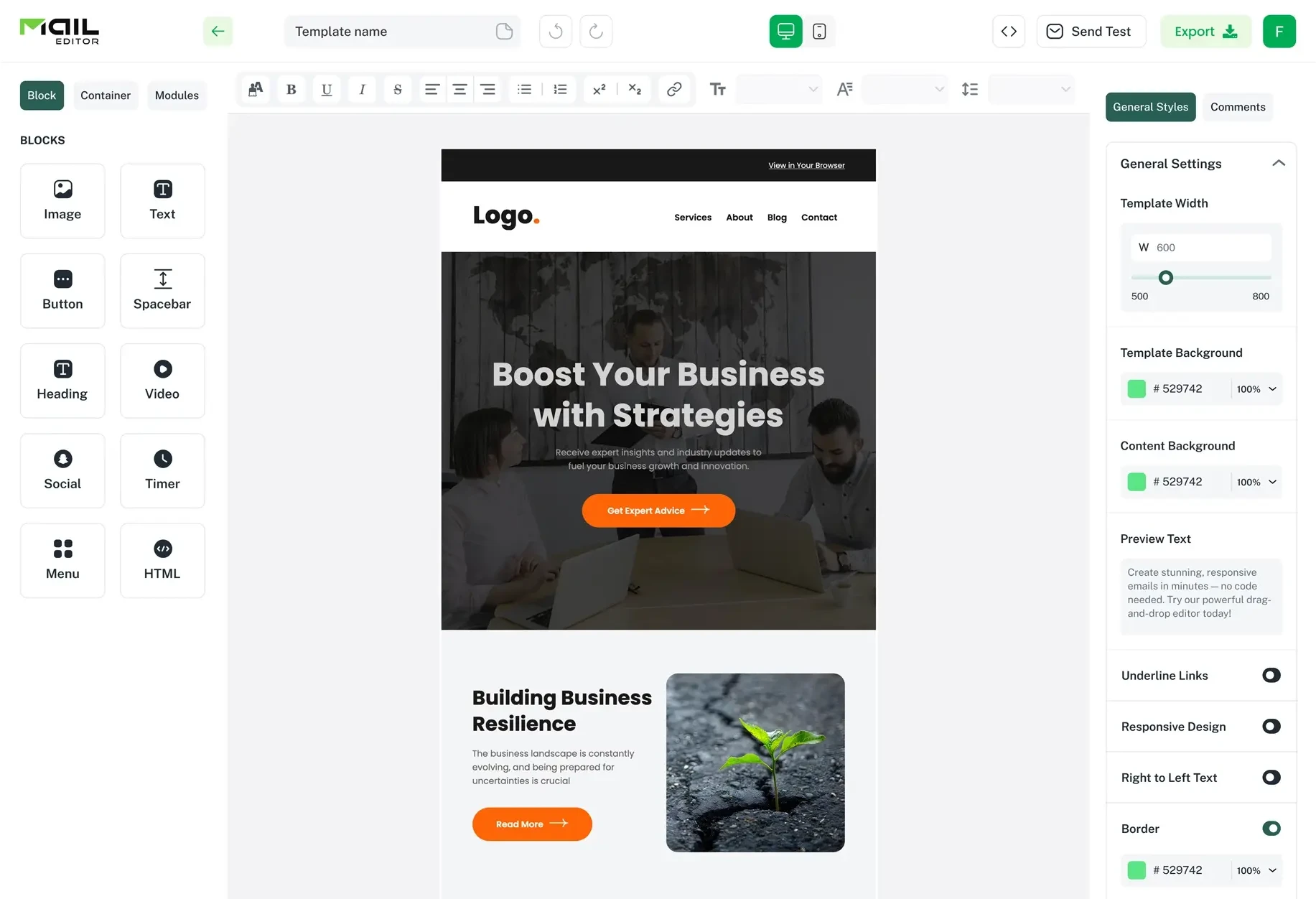
Top Email Template Builders & HTML Email Editors for 2026
Compare the best email template builders and HTML editors to design professional, responsive campaigns without coding.
Email Design9 mins to read
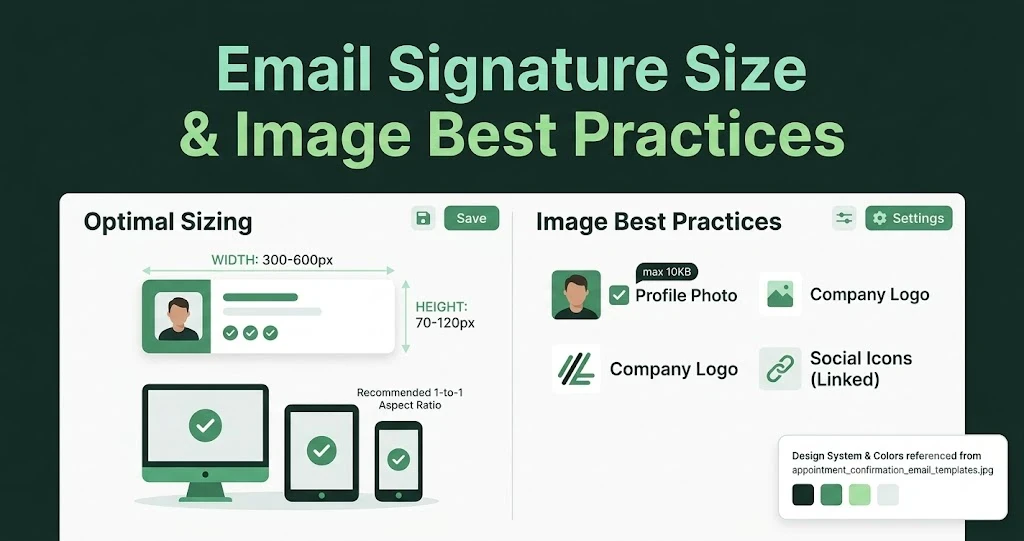
Email Signature Size and Image Best Practices
The ideal email signature is 320–600px wide and 90–200px high. Learn the best image sizes, formats, file limits, and mobile-friendly design tips.

Email Tips7 mins to read
Best Drag and Drop Email Editors in 2026
Discover the best drag and drop email editors in 2026. Compare top tools, features, templates, pricing, and automation to build stunning emails fast.

Marketing7 mins to read
4 Best Unlayer Alternatives to Design Emails
Looking for Unlayer alternatives? Explore the 4 best email design tools to create beautiful, responsive emails faster and easier.

Marketing6 mins to read
5 Beefree Alternatives to Upgrade Email Design Workflows
Looking for a better email design tool? Explore 5 Beefree alternatives that streamline workflows, improve collaboration, and elevate email campaigns.