Email Marketing for Consultants
Email Marketing for Consultants helps you attract qualified leads, build authority, and grow your consulting business with targeted, high-converting email campaigns.

Shahin Alam
I recently got an email from a strategy consultant who wanted some advice. She had a good reputation, her referrals were ready, and she was getting decent engagement on her LinkedIn posts. Despite these positives, she hadn’t signed a new client in almost ten weeks.
She said she had no explanation of why her pipeline felt so thin.
This is the reality for many consultants. The revenue stream in consulting isn’t steady. It comes in waves. Some quarters feel great, but the next can be strangely quiet. Prospects go silent for months, and by the time you follow-up, they have already forgotten you exist.
Many consultants assume that the answer lies in greater networking or more posting, but in my experience, these only work at the surface. To treat this problem at a deeper level, you need a different approach. And that approach is email marketing for consultants.
You see, the real problem here is a lack of a structured follow-up system.
Not a blast tool or a newsletter that you only send once in a while, but a deliberate system that keeps you top-of-mind of the right people even before they’re ready to hire.
In this guide, I will walk you through what works, what doesn’t, and how you can create a practical system in simple steps to bring in clients for a stable, consistent revenue stream.
Why Email Marketing for Consultants Feels Harder Than It Should

I personally know at least one consultant who has heard of email marketing, but gave up before even giving it a try. I understand why; email marketing sounds simple, and maybe even outdated, on paper. But in practice, it exposes every weakness in your sales process.
Let’s break down what really gets in the way.
Long Decision Cycles
When you want to onboard clients for your consultation services, the deals don’t close after a single conversation. A prospect may read your proposal in March and only respond in July, let alone signing up with you.
During that gap, silence creeps in, and without consistent communication and follow-ups, you quickly fade from the prospect’s memory.
Small, High-value Audiences
Let’s be real here. You’re not selling a $20 product, and your list might have 400 people, not 40,000. This means each contact matters, and you should treat every email as a high-stake one.
Fear of Sounding Salesy
Most consultants are experts first, and marketers second. When they think about creating and sending email campaigns, they may worry about it being too pushy. This hesitation can delay emails from going out to prospective clients by weeks and even months.
Inconsistent Sending Habits
A common pattern with consultants is that the activity and communication with clients come in bursts, not consistently. They may send three emails in one week, and then nothing for the next three months. Consistency is crucial. It may feel boring, but it is absolutely necessary.
Overreliance on Social Platforms
Social media may seem like an effective platform that solves your problems, but it’s not as effective as you think.
Sure, posts on LinkedIn get likes, and the comments feel good, but you don’t always reach your target audience. The algorithm decides who sees your work, and that is something you have no control over.
Here are some common struggles that I hear about most often from consultants.
- I don’t know what to write about
- My list is too small to matter
- I don’t want to annoy people
- I only email when I have something to sell
- I’m not sure if it even works
Despite sounding simple, email remains one of the highest ROI channels in marketing. Research often shows that for every dollar spent, you get several times higher returns. That is not hype; it’s direct access to real inboxes, not ones being controlled by algorithms.
Yes, it feels harder for consultants than it looks, but once you stop treating it like a megaphone and start treating it like a conversation, it becomes much more controllable than most other channels.
The Real Benefits of Email Marketing for Consultants Who Sell Expertise

When done right, email marketing for consultants does more than keep lists warm. It reshapes how your pipeline behaves and improves client relationships over time.
Let me explain what that looks like in practical terms.
Revenue Stability
When you send emails to clients consistently, it reduces those damaging silent gaps I mentioned earlier and creates ongoing conversations. Even if deals close slowly, they still close. This creates a steady revenue stream.
Authority Positioning
Regularly posting online and sending emails consistently are two very different things.
When you post on social media platforms, you get visibility. Emails build depth. When someone opens their inbox, sees your name, and reads your thinking consistently, you stop being a familiar name and become a trusted voice.
Shorter Trust Cycles
Clients won’t hire you immediately after the first interaction. They will take time in doing so. If they talk to you, get your emails and read your thinking routinely for, say, three months, the second call becomes easier. In that call, there will be less explaining and more deciding.
Higher Lifetime Client Value
Many consultants think emails are just meant for prospective clients, and not existing or previous ones. This is incorrect. When past clients continue to see your email in their inbox, they remember your expertise, which can often lead to follow-on work or referrals.
Re-engagement with Past Clients
This is a good example of just how powerful email can be. If a client becomes inactive, just one well-timed check-in email can revive that relationship, even after months. When you nurture the relationships you already have, the need for new clients is often mitigated.
How Email Impacts a Consulting Sales Cycle
| Stage | What Happens Without Email | What Happens With Email | Business Impact |
| Awareness | Prospect forgets initial conversation | Prospect continues reading insights | Higher recall |
| Consideration | Long silent gaps | Ongoing value builds familiarity | Faster follow-ups |
| Decision | Competitors feel equally credible | You feel like the safer and more trusted choice | Higher close rate |
| Post-project | Relationship fades | Continued contact maintains trust | Repeat project and revenue |
When you look at it this way, email is not a marketing add-on. It is a powerful tool that supports every stage of the consulting journey. It reduces uncertainty, keeps trust alive with clients, and turns sporadic interactions into steady engagement.
5 Steps to Create A Practical System for Email Marketing for Consultants
Creating an effective email marketing system isn’t as complex as you might think at first. You don’t need complicated funnels or a 20-email automation maze. All you need is a simple and repeatable structure.
Here are five easy steps you can follow to create an email marketing system.
1. Clarify Your Audience Segments
Before writing anything, decide who you are sending the email to.
Many consultants treat their entire list as one group, and send everyone the same generic message. These emails are ineffective, to say the least.
Instead, start with simple segments such as the following.
- Prospects who have shown interest but haven’t hired you
- Past clients who already trust your work
- Referral partners who influence decisions
You don’t need things like advanced tagging at the beginning. Focus on separating past clients from prospects, and watch the tone and relevance of your messages change for the better.
2. Build a Simple Welcome Sequence
When someone joins your list, don’t let silence set in. It kills communication and wastes opportunity. To avoid this, send a welcome series of emails that help to set expectations and build your credibility.
The sequence could look like the following.
- Email 1. Who you help and what your beliefs are about your field
- Email 2. A short story or lesson from real client work that you did
- Email 3. A practical insight that can be used immediately
- Email 4. A low pressure invitation to reply or book a call
This sequence doesn’t need to be clever, just human and specific.
3. Send One Consistent Insight Email
Many consultants overthink things and focus on volume over consistency, when in reality, the opposite matters. You don’t need to write essays in every email. Instead, send one or two thoughtful emails every week. It keeps you in the conversation and builds familiarity.
Ensure each email contains the following points.
- One clear idea
- One real example or observation
- One soft call to action, such as asking for a reply
Remember, quality over quantity is the way to go.
4. Share Proof Without Bragging
You can share case studies, but don’t make them sound like press releases. Keep them humble and share examples of measurable outcomes, such as “Client X reduced costs by 18% after restructuring this process.” Then explain what you helped change, and why.
Focus on insight rather than applause, as this tone helps you build authority.
5. Invite Conversations, Not Clicks
Consultants don’t sell with flashy funnels. They close through dialogue.
Don’t push people toward complex landing pages. Instead, ask them simple questions to maintain communication. Invite them to reply and encourage short exchanges, as this conversation can lead to a serious business discussion faster than a polished campaign.
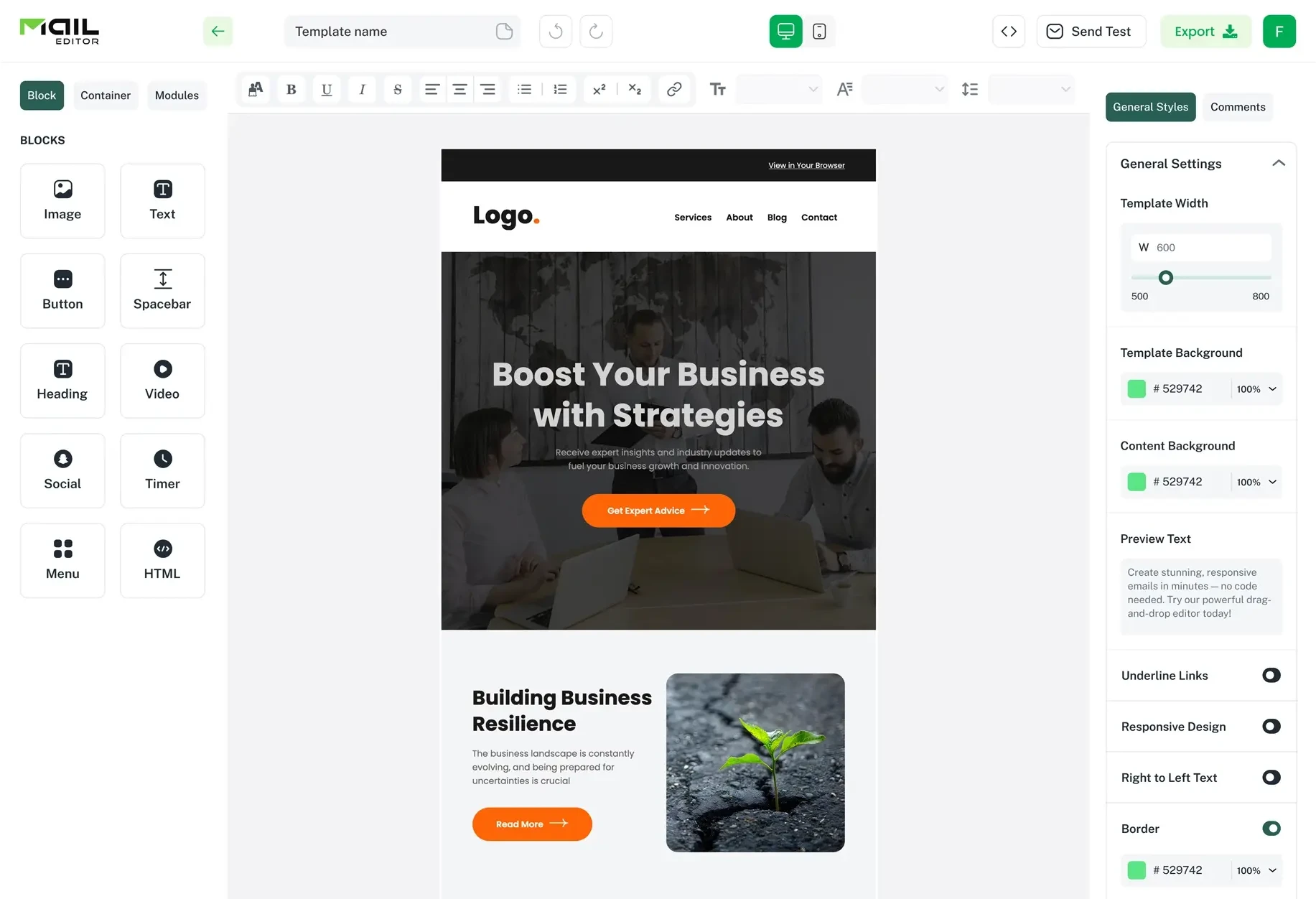
Many consultants struggle with things like formatting consistency, mobile responsiveness, or editing HTML templates. This is where a visual builder like MailEditor becomes useful.
With this tool, you don’t have to deal with complex lines of code. You can use the drag and drop editor to edit email visually. Plus, you can use structured layouts from the template library to keep your emails clean and professional without hiring a developer.
Designing Emails That Make You Look Like the Expert You Are
I have seen brilliant consultants undermine themselves with messy emails.
Too many colors. Giant banners. Fonts that look like they came from three different decades.
Your design does not need to impress. It needs to reassure.
When someone opens your email, they are subconsciously asking one question. Does this person look organized and credible?
Here is what tends to work better than people expect:
- Keep layout clean and simple
- Avoid cluttered banners that push the text down
- Use readable font sizes that do not strain the eyes
- Maintain consistent branding across every email
- Optimize for mobile since many decision makers read on their phones
A clean structure signals clarity of thinking.
If your email feels chaotic, readers assume your work might be chaotic too. It may not be fair, but it is real.
Short paragraphs help. Clear spacing helps. One idea per section helps.
This is where a consistent template matters. If each email looks slightly different, it feels improvised. A structured builder like MailEditor makes it easier to maintain the same visual rhythm every time without adjusting code or worrying about formatting breaking on mobile.
Design is not decoration. It is a quiet statement about how you operate.
Mistakes I See Consultants Make Over and Over
Even experienced consultants fall into the same traps when it comes to email. Here are the most common, and how to avoid them.
Only emailing during launches
Sending messages only when you need a client makes your list feel like a transaction. Consistency builds familiarity and trust.
Writing long essays
Wall-of-text emails scare people off. Short, focused messages get read and remembered.
No segmentation
Treating all contacts the same waters down your message. Separate prospects, past clients, and partners for targeted relevance.
Ignoring inactive subscribers
Not engaging dormant contacts is lost potential. A simple reactivation email can spark conversations you might have thought were gone.
Overdesigning or underdesigning
Too many graphics or inconsistent fonts distract from your message. Minimal, clean design signals professionalism and clarity.
Reflecting on Follow-Up
“The fortune is in the follow-up.” — Jim Rohn
In consulting, deals are rarely closed on the first call. Consistent, thoughtful follow-up through email keeps you visible and trusted. Small, deliberate touches over weeks or months often produce more results than one flashy outreach.
In other words, it’s the quiet persistence that separates consultants who are noticed from those who are forgotten.
Key Takeaways
- Consistency matters more than volume. Regular, thoughtful emails keep you top of mind with prospects and clients.
- Small lists can generate strong revenue. Even a few dozen contacts, if nurtured well, can produce repeat business and referrals.
- Structured systems outperform random sending. A clear sequence or framework reduces guesswork and keeps your communications purposeful.
- Design clarity builds authority. Clean, readable emails make you look professional and credible without overcomplicating your message.
- Conversations drive conversions. Encouraging replies and dialogue often leads to more meaningful engagements than clicks or form submissions.
Frequently Asked Questions About Email Marketing for Consultants
How often should consultants send emails?
Consistency is more important than frequency. One well-thought-out email every week or two keeps you visible without overwhelming your audience. The goal is to build familiarity, not fatigue.
If your content is valuable and concise, readers will look forward to hearing from you, and engagement will naturally increase over time.
Is email better than LinkedIn for consulting outreach?
Email gives you direct access to a prospect’s inbox, while LinkedIn is controlled by algorithms. Both have value, but email allows you to nurture relationships at your own pace. Posts get likes; emails create ongoing dialogue and repeated exposure.
This is critical for building trust with high value clients.
What if my list is small?
A small, targeted list can be more powerful than a large, unengaged one. Focus on nurturing each contact with insight, case studies, or relevant stories. Even a few consistent conversations can lead to referrals, repeat business, and credibility amplification.
Size matters less than the quality of attention you cultivate.
What should I write if I am not selling anything?
Share ideas, lessons learned, or practical advice that helps your audience solve problems. Emails should focus on demonstrating your expertise and staying present in their minds. Soft invitations to reply keep the conversation alive without feeling like a hard pitch.
How long before email produces results?
Results don’t appear overnight, so it’s best to expect several weeks of consistent communication before prospects respond or engage. Trust is built over time, and consistent, valuable touchpoints accelerate decision-making.
Patience combined with structured follow-ups often delivers more predictable outcomes than sporadic, flashy campaigns.
Conclusion
Remember the consultant I talked to at the start, staring at an empty pipeline despite having a strong reputation? That situation is far too common, but it is also fixable.
The missing piece is consistent, structured communication. Email marketing for consultants turns sporadic outreach into a reliable rhythm that keeps relationships alive and conversations flowing.
Execution does not need to be a headache. Tools like MailEditor help maintain clean formatting, responsive designs, and ready-to-use templates, so the technical side never slows you down.
Building a system is about patience and presence. Small, deliberate actions over weeks and months quietly create trust, authority, and opportunities. Consistency is not flashy, but it is what separates consultants who are remembered from those who are overlooked.
Written by
A full-stack digital marketer and passionate blogger with more than seven years of hands-on experience helping brands grow, rank, and thrive online.
All postsPopular Blogs
Email Design2 mins to read
Top Email Template Builders & HTML Email Editors for 2026
Compare the best email template builders and HTML editors to design professional, responsive campaigns without coding.
Email Design9 mins to read
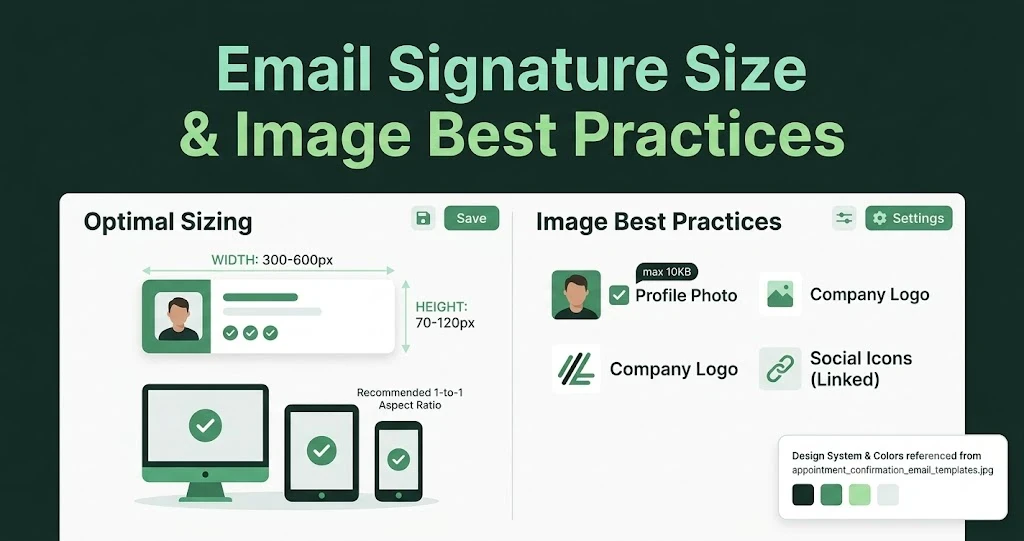
Email Signature Size and Image Best Practices
The ideal email signature is 320–600px wide and 90–200px high. Learn the best image sizes, formats, file limits, and mobile-friendly design tips.

Email Tips7 mins to read
Best Drag and Drop Email Editors in 2026
Discover the best drag and drop email editors in 2026. Compare top tools, features, templates, pricing, and automation to build stunning emails fast.
Marketing7 mins to read
4 Best Unlayer Alternatives to Design Emails
Looking for Unlayer alternatives? Explore the 4 best email design tools to create beautiful, responsive emails faster and easier.
Marketing6 mins to read
5 Beefree Alternatives to Upgrade Email Design Workflows
Looking for a better email design tool? Explore 5 Beefree alternatives that streamline workflows, improve collaboration, and elevate email campaigns.