Collaboration Email Templates: 10 Examples & Tips
Find 10 collaboration email templates for brand outreach, business partnerships, influencer pitches, and follow-ups, with copy-ready examples and tips.

Md. Yaikub Hossain Razon
A collaboration email introduces a partnership idea and explains why working together could be useful to both sides. A strong message names the proposed activity, shows why the recipient is a good fit, and asks for one simple next step.
This guide includes 10 original, copy-ready collaboration email templates for business partnerships, brand campaigns, creators, events, guest contributions, and follow-ups. You will also find subject lines, a practical writing framework, example replies, and a MailEditor design option for ongoing project updates.
What Is a Collaboration Email?
A collaboration email is a professional message proposing a joint activity, such as a brand partnership, shared webinar, content project, referral agreement, or product integration. It may be sent as a first introduction, a response to an interested partner, or a follow-up after an earlier discussion.
Unlike a standard sales pitch, a collaboration email should explain what both parties contribute and gain. The goal of the first message is usually to start a conversation, not to finalize contract terms or make every decision at once.
| Email type | Primary goal | Typical next step |
|---|---|---|
| First partnership outreach | Introduce a mutually useful idea | Ask whether they are open to discussing it |
| Creator or brand pitch | Propose content or a campaign | Request the right contact or a short call |
| Co-marketing proposal | Plan a shared event or resource | Align on audience and scope |
| Project collaboration update | Keep an existing team or partner aligned | Review milestones or action items |
How to Write a Professional Collaboration Email
Start with one well-researched reason this person or business is relevant. Then move quickly to the proposed collaboration and its potential value. The structure below is a flexible formula, not a script to send unchanged.
For a first email, focus on the smallest useful commitment, such as reviewing a two-sentence idea or identifying the right contact. Move pricing, deliverables, usage rights, timelines, and contractual details into the appropriate follow-up once both parties show interest.
10 Collaboration Email Examples You Can Copy
These original collaboration email examples cover distinct situations rather than small variations of a single pitch. Replace bracketed information with accurate details, adjust the tone for the recipient, and confirm any offer before sending.
1. Simple Business Partnership Outreach
Best for: Business development teams contacting a complementary company
Subject: Partnership idea for [Company] and [Your Company]
Preheader: A specific way our teams could help [Shared Audience].
Hi [First Name],
I noticed that [Their Company] helps [Audience] with [Specific Service or Problem]. Our team at [Your Company] works with a similar audience on [Related Need].
I have one idea worth exploring: [Concrete Partnership Idea]. We could contribute [Your Contribution], while your team could provide [Their Potential Contribution]. Together, the result could help [Shared Audience] achieve [Practical Benefit].
Would you be open to a short discussion next week to see whether this makes sense?
Best,
[Your Name]
[Role, Company]
Customization tip: Reference a real product, service, or audience intersection. Do not claim a relationship that does not exist.
2. Brand Collaboration Pitch
Best for: Creators or small brands approaching a relevant business
Subject: Collaboration idea around [Specific Product or Theme]
Preheader: One content concept for your [Audience or Campaign].
Hello [First Name],
I enjoyed [Specific Brand Campaign or Content Piece] because [Genuine Reason]. It connects with the topics I cover for [Audience Description].
I would like to propose a collaboration featuring [Content Idea]. My audience is interested in [Relevant Topic], and I could create [Proposed Deliverable] that demonstrates [Useful Angle].
If this aligns with your current plans, I can share a short concept and verified audience details.
Would you be the right person to discuss this with?
Thank you,
[Your Name]
[Creator or Business Details]
Customization tip: Replace generic praise with a specific observation. Include only real audience or engagement data.
3. Influencer Collaboration Invitation
Best for: Brands offering a paid or gifted creator partnership
Subject: Creator partnership for [Campaign Name]
Preheader: Details on our proposed collaboration and deliverables.
Hi [Creator Name],
Your recent content on [Specific Topic] stood out to us, especially [Accurate Detail]. We are planning [Campaign or Launch] at [Brand] and think your approach could be relevant to the audience we want to reach.
We would like to discuss [Deliverable Type], expected timing, and compensation. Our initial idea is [Brief Concept], but we would welcome your creative input.
Are you accepting collaborations for [Month or Period]? If so, please share your media kit or preferred next step.
Best,
[Brand Representative]
[Brand]
Customization tip: Specify whether the proposal is paid, gifted, or exploratory. Do not imply an unpaid offer is compensated.
4. Co-Marketing Webinar Proposal
Best for: SaaS teams and industry partners with complementary audiences
Subject: Co-hosted webinar idea: [Topic]
Preheader: A shared learning session for both audiences.
Hi [First Name],
Your team publishes useful material on [Relevant Topic], and we often hear a related question from our audience: [Real Audience Question].
Would [Their Company] be interested in co-hosting a practical webinar on [Proposed Topic]? We could lead the section on [Your Expertise] and invite your team to cover [Their Expertise].
If there is interest, we can compare audience fit, registration ownership, promotion responsibilities, and the session outline before confirming a date.
Would a short planning call be useful?
Regards,
[Your Name]
[Company]
Customization tip: Agree on registration ownership, privacy notices, promotional responsibilities, and speaker approvals.
5. Guest Contribution or Content Collaboration
Best for: Editors and content teams considering expert contributions
Subject: Contribution idea for [Publication or Blog]
Preheader: A focused article that complements your existing coverage.
Hello [Editor Name],
I read your article on [Existing Topic] and appreciated the explanation of [Specific Point]. One related question your readers may have is [Unanswered Practical Question].
I would be interested in contributing an original article on [Proposed Title]. It would include [Specific Example or Data Type] and practical guidance for [Reader Audience].
I can share a concise outline and examples of relevant work if the topic fits your editorial calendar.
Is this a subject you are currently considering?
Best,
[Your Name]
[Relevant Expertise]
Customization tip: Pitch original expertise and a real content gap. Do not promise links, placement, or publication.
6. Product Integration Partnership Proposal
Best for: Technology companies exploring an integration
Subject: Integration idea for [Product A] and [Product B]
Preheader: A workflow that could simplify [User Task].
Hi [First Name],
Customers using [Your Product] often work with [Other Product Category] when completing [Workflow]. I noticed that [Their Product] supports [Relevant Capability].
We are exploring whether a connection between our products could help users [Specific Outcome]. An initial discussion could cover use cases, technical requirements, security expectations, and joint customer demand.
Would you be open to a brief discovery call with our product team? There is no commitment implied at this stage.
Thank you,
[Your Name]
[Product Partnerships Team]
Customization tip: Do not promise an integration, API feature, or launch date until both teams confirm feasibility.
7. Sponsorship Collaboration Proposal
Best for: Event teams and organizations approaching sponsors
Subject: Sponsorship opportunity: [Event Name]
Preheader: An event with a relevant audience and defined partner options.
Hello [First Name],
We are organizing [Event Name] for [Target Audience] on [Date]. Given [Brand]’s work in [Relevant Area], I wanted to ask whether sponsorship could be relevant to your current initiatives.
The event will focus on [Topic], with opportunities such as [Verified Sponsor Benefits]. We can share our event overview, audience information, and available sponsorship packages for your review.
Would you like me to send the sponsorship brief?
Kind regards,
[Your Name]
[Event Organization]
Customization tip: Only include confirmed attendance projections, sponsor benefits, and package details.
8. Referral or Affiliate Partnership Invitation
Best for: Service firms or SaaS businesses considering referrals
Subject: Referral partnership discussion for [Company]
Preheader: An option to support customers with complementary needs.
Hi [First Name],
Our team helps [Audience] with [Your Service], and we sometimes meet customers who need help with [Their Specialty]. I think there may be a useful referral opportunity between our businesses.
Would you be interested in reviewing a simple partner arrangement? We could discuss qualification criteria, customer consent, handoff expectations, and whether a referral fee would be appropriate.
If this is relevant, I can send a short proposal outlining the workflow.
Best,
[Your Name]
[Company]
Customization tip: Do not promise fees or data sharing before commercial and privacy terms are approved.
9. Polite Collaboration Follow-Up
Best for: Recipients who have not replied to a relevant first pitch
Subject: Following up on [Specific Collaboration Idea]
Preheader: A short reminder with the practical next step.
Hi [First Name],
I wanted to follow up on my note about [Collaboration Idea]. The reason I reached out is that [One-Sentence Mutual Benefit].
If the timing is not right, I understand. If this is something your team might consider, I can send a brief outline that covers the proposed format and responsibilities.
Would that be useful?
Best,
[Your Name]
Customization tip: Add something useful rather than restating the entire pitch. Stop when the recipient declines.
10. Positive Reply and Next-Step Email
Best for: Prospective partners who have expressed interest
Subject: Next steps for our [Project or Partnership] discussion
Preheader: A short outline to help us evaluate the idea.
Hi [First Name],
Thanks for your interest in [Collaboration Idea]. I am glad the topic seems relevant to your team.
To make our discussion productive, I suggest we cover three points: the shared audience, what each team would contribute, and what success would look like.
I am available [Two Genuine Time Options]. If another time is easier, feel free to suggest one.
Looking forward to exploring the opportunity.
Best,
[Your Name]
[Company]
Customization tip: Use real availability and confirm scope, ownership, and timeline after the discussion.
Collaboration Email Subject Lines and Preheaders
A useful subject line names the idea or shared audience without creating false urgency. The preheader can clarify the format or potential benefit rather than repeat the subject.
| Use case | Subject line | Preheader |
|---|---|---|
| Business partnership | Partnership idea for [Company] | A practical way to support our shared audience. |
| Brand pitch | [Brand] + [Your Name]: Content idea | One relevant creative concept for [Audience]. |
| Influencer | Creator collaboration for [Campaign] | Could we discuss scope and timing? |
| Webinar | Co-host a session on [Topic]? | A learning opportunity for both communities. |
| Guest content | Article idea for [Publication] | An original angle on [Reader Question]. |
| Technology | Integration discussion: [Product A] + [Product B] | Exploring one useful customer workflow. |
| Sponsorship | [Event Name]: Sponsorship inquiry | Audience details and available partner options. |
| Referral | Referral partnership for [Service] | A potential fit for complementary customer needs. |
| Project kickoff | Next steps for [Project Name] | Roles, milestones, and decisions to confirm. |
| Follow-up | Following up on [Idea] | Happy to share a short outline if relevant. |
| Interested reply | Planning our [Partnership] discussion | Suggested agenda and available times. |
| Newsletter | Project collaboration update: [Month] | Milestones, decisions, and upcoming work. |
Collaboration Proposal vs. Partnership Email
A collaboration outreach email starts the conversation with a brief idea and a simple ask. A collaboration proposal email usually follows once the other party is interested and needs details about deliverables, ownership, schedule, budget, responsibilities, and measurement.
Use a short first message when the relationship is new. Share a structured proposal after interest is confirmed, ideally with a clear summary and a document or meeting that the recipient has agreed to review.
How to Personalize a Collaboration Email
Personalization is not simply inserting a first name. Good outreach shows you understand what the other party does, why the idea fits their audience, and which contribution you can credibly make.
- The recipient's role and whether they handle partnerships.
- One relevant project, audience, product, or editorial theme.
- The specific collaboration format you are offering.
- A realistic benefit for each organization.
- Any evidence, performance information, or audience metrics you mention.
- One low-friction next step that matches the message.
Avoid generic compliments, fabricated familiarity, and unverified numbers. A brief message with a genuine reason to reach out is more useful than a long introduction centered on the sender.
Collaboration Email Templates You Can Customize
For first-contact partnership requests, a concise personal email often works better than a heavily designed newsletter. Once you are sharing updates with partners, clients, or internal teams, a branded layout can help organize information and make the next step clearer.
Browse MailEditor’s collaboration email templates for more designs. The three examples below cover project coordination, B2B SaaS communication, and team recruitment. Each has a different purpose, so choose one that fits your audience.
1. Global Project Collaboration Newsletter Template
Best for: Distributed teams, project leads, international partners, and ongoing project communication.

This structured newsletter helps active partners and teams share project progress, resources, collaboration strategies, and next steps. It is most relevant after a collaboration has started, rather than for an initial cold pitch.
Adapt the project details, visuals, links, and action buttons to your real stakeholders. Keep each update focused on what recipients need to know and do.
2. B2B SaaS Solutions Newsletter Template
Best for: SaaS partnerships, product updates, integration announcements, and business technology audiences.

This SaaS newsletter leads with a product value proposition and supports it with concise feature and benefit sections. It can suit a collaboration campaign that explains a joint integration, shared solution, or technology offering to an existing audience.
Customize the software details, partner contribution, benefit claims, and CTA to reflect a genuine offering. It is not a substitute for a personalized first partnership request.
3. Recruitment Email Template
Best for: Hiring collaboration, creative teams, talent communities, and joint recruitment announcements.

This recruitment-focused design includes team imagery, a culture-centered message, and prominent calls to action. It can support partner talent initiatives, joint hiring announcements, or collaborations where a team is inviting people to participate.
Replace the hiring language with accurate role, team, and project information. Keep application links and other actions pointed to the correct real destinations.
See additional designs for partner communications, project updates, and business collaboration campaigns.
Browse Collaboration Email TemplatesFor broader company announcements and stakeholder messages, explore business communication email templates.
When to Follow Up and How to Reply
Follow-up timing depends on the relationship, project urgency, and the recipient’s role. A useful starting approach is to send one short follow-up after several business days and, if the opportunity still appears relevant, one final check-in later. This is a planning example, not an optimal timing claim.
If the recipient replies positively, summarize the idea and offer a small next step. If they decline, thank them and stop outreach unless they specifically invite future contact. Silence does not justify indefinite reminders.
Collaboration Email Best Practices and Common Mistakes
| Do | Avoid |
|---|---|
| Name a single relevant idea | Offering unrelated concepts in one cold message |
| Show a specific mutual benefit | Explaining only what you want to gain |
| Use verified facts and audience details | Inventing metrics or prior relationships |
| Ask one easy question | Demanding a meeting without context |
| Disclose compensation and expectations | Leaving paid or gifted arrangements ambiguous |
| Respect declines and communication preferences | Sending repeated unwanted reminders |
| Check spelling, names, and links | Using generic placeholders in a live message |
For cold personal outreach, clean text is usually enough. Use a designed newsletter when you need structured project updates or consistent branding across a broader audience, not simply because a visual template is available.
How to Create a Branded Collaboration Email with MailEditor
MailEditor is useful when a collaboration message needs a reusable visual layout, such as a partner newsletter, joint announcement, or project update. The writing and relationship strategy still need to be tailored by the sender.
- Choose a relevant layout from the business communication template category.
- Open the preferred design in the MailEditor email editor.
- Replace example copy with approved partner names, project details, and action items.
- Use one primary CTA that points to a verified document, calendar, or next step.
- Remove sections that do not support the communication goal.
- Preview the final layout on mobile and desktop, then test the links and email rendering before sending.
You can explore the MailEditor email editor and customize a design without rebuilding its full layout manually.
Use a reusable business email layout for project news, partner resources, and next steps.
Browse Business TemplatesOpen Email EditorFinal Answer
A strong collaboration email is specific, relevant, and easy to answer. Identify a genuine fit, describe one idea that creates value for both sides, and close with a clear question. Use the copy-ready examples above as starting points and replace every placeholder with accurate information before sending.
If the relationship develops into an ongoing project, a branded update can keep everyone aligned. The Global Project Collaboration Newsletter Template offers a starting layout for that later stage of communication.
Frequently Asked Questions
Popular Blogs
Email Design2 mins to read
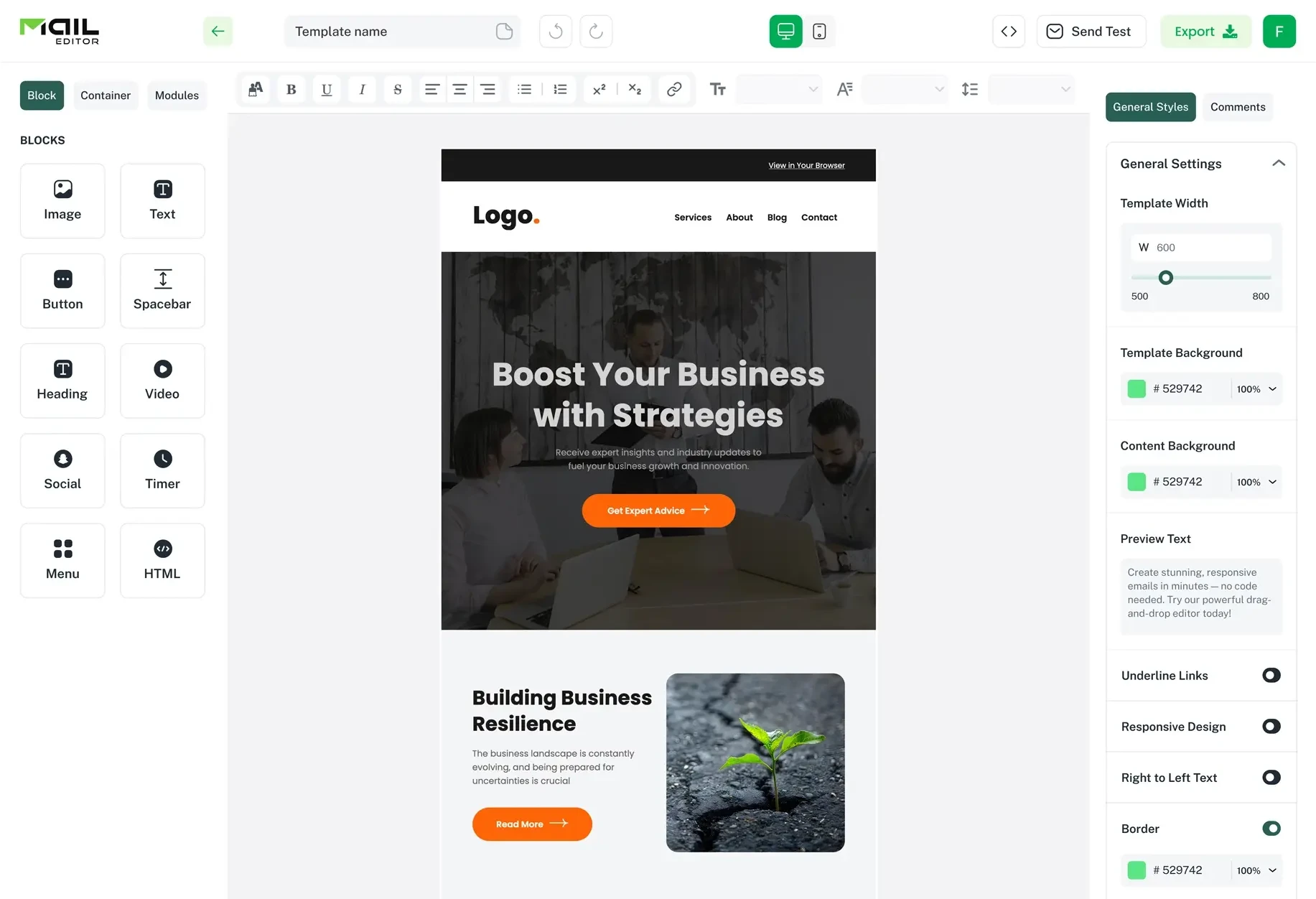
Top Email Template Builders & HTML Email Editors for 2026
Compare the best email template builders and HTML editors to design professional, responsive campaigns without coding.
Email Design9 mins to read
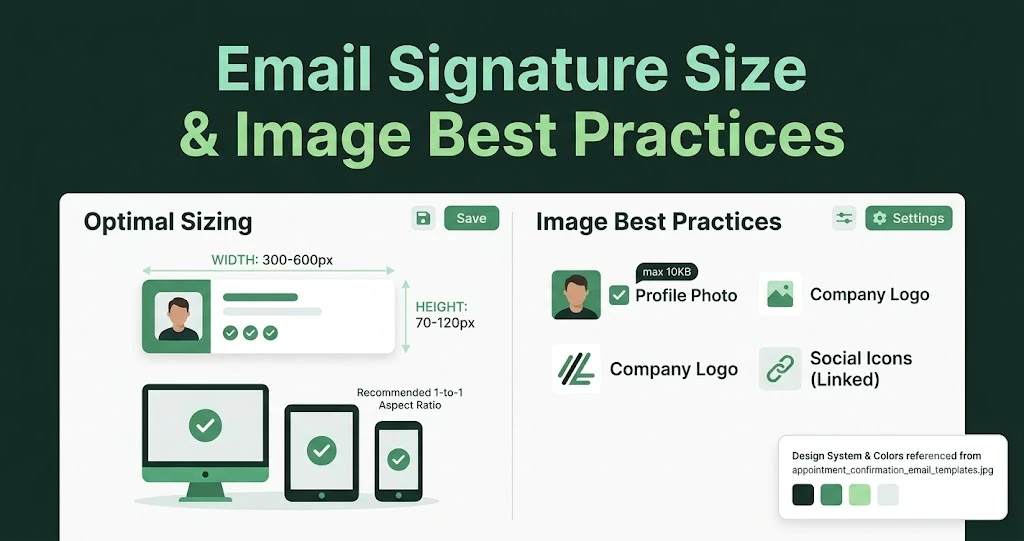
Email Signature Size and Image Best Practices
The ideal email signature is 320–600px wide and 90–200px high. Learn the best image sizes, formats, file limits, and mobile-friendly design tips.

Email Tips7 mins to read
Best Drag and Drop Email Editors in 2026
Discover the best drag and drop email editors in 2026. Compare top tools, features, templates, pricing, and automation to build stunning emails fast.
Marketing7 mins to read
4 Best Unlayer Alternatives to Design Emails
Looking for Unlayer alternatives? Explore the 4 best email design tools to create beautiful, responsive emails faster and easier.
Marketing6 mins to read
5 Beefree Alternatives to Upgrade Email Design Workflows
Looking for a better email design tool? Explore 5 Beefree alternatives that streamline workflows, improve collaboration, and elevate email campaigns.