Best Practices for Mobile-Responsive Email Design
Best practices for mobile-responsive email design to improve readability, engagement, and conversions across all devices.

Shahin Alam
People do not sit down to read emails anymore. They squeeze them in. Either standing in line for a coffee, or halfway through a meeting they should be paying attention to. Or, they could be on a phone held in one hand, with the thumb doing most of the work. The scroll is impatient and lasts only a few seconds at most. As a result, most emails today get only a few seconds to prove they are worth staying on the screen.
You can usually tell right away when an email was not built for that reality, one that is dominated by mobile devices with screens that can fit in the palm of your hand. Text feels cramped, buttons feel awkward to tap, and the whole thing demands more effort than the reader wants to give.
This is where mobile-responsive email design earns its place, not as a trend or a buzzword, but as a survival skill, one that matters more than most teams like to admit. It is about designing for small screens and catering to distracted readers, with factors like inconsistent rendering and very little margin for error all accounted for.
This article is not a checklist or a theory lesson. Not by a long shot. No, it is the result of an exhaustive amount of time spent building emails that looked fine in previews, but failed in real life, the moment they hit inboxes. It focuses on the decisions you make when the screen real estate is limited, attention is more fragile than ever before, and every element has to justify its presence. The goal? Practical execution that separates good mobile emails from the ones that look fine in a preview, but fall apart in the real world.
Key Takeaways
- Mobile layouts succeed when structure is simple and spacing is treated as a design tool
- Content works better when it is written and arranged for fast scanning and easy taps
- Consistent testing and reusable templates matter more than one-off visual comforts
Mobile-Responsive Email Designs Start With Constraints, Not Creativity

Mobile email design is a curious thing. It has a way of humbling even teams with years of email design experience under their belts. An email may look pretty and polished on a wide computer screen, yet the moment it’s opened on a mobile device, it feels cramped, awkward, and fragile. All the time and effort spent perfecting it? Straight out the window.
It’s not a failure of creativity; it’s a reality check. Email, especially on mobile, operates inside tighter boundaries than most design work.
The inbox sets the rules first
Emails differ from websites and apps in one crucial way. And that is control. You see, emails live in an environment you have no real control over. Mobile devices come in all sorts of shapes and sizes, from compact phones to large-format tablets. Screen sizes vary wildly, yet the reading distance and interaction pattern remain (roughly) the same. Most taps on emails and buttons happen with a thumb, often on the move, with little patience for precision, if any at all.
Industry data reflects this shift. Around 55 percent of emails are opened on mobile devices. That alone changes the rules of the game. Factors like thumb reach zones come into play, where the most comfortable interaction area sits in the lower half of the screen, and suddenly placement matters as much as appearance, if not more.
The disadvantage of following desktop habits
More often than not, teams will find that their desktop habits sneak into mobile emails as well. They may use multi-column layouts that rely on visual balance but start stacking in unpredictable ways on a mobile inbox. Small text that felt tasteful on a monitor turns into work for tired eyes glancing at mobile screens. Buttons and click targets shrink until they are almost untappable; just barely usable.
The biggest issue here is not broken layouts. It is broken intent. An email designed around fine alignment or visual perfection demands way too much time and attention, something that mobile users and readers simply do not have or give. On a phone, clarity beats cleverness. And this holds true every time.
Technical limits you cannot design around
Even the best layout ideas have to survive real inbox conditions.
- Email clients handle CSS differently, especially on mobile
- Images load at different speeds depending on connection quality
- Dark mode can flip colors in ways you did not intend them to
These factors are not isolated cases. They’re everyday occurrences. Ignoring them makes a design weaker, not bolder.
The mindset shift that changes everything
A strong mobile-responsive email design starts with a change in mindset. A change in acceptance. You must accept that inboxes are less than ideal, that screens are small, and that readers are distracted more often than not. Once you take heed of these factors, the design choices become clearer.
Soon enough, you will find that you have stopped asking “how much” you can fit, and start asking “what” actually needs to be there. That shift, more than any tool, more than any layout trick, is what makes mobile emails work consistently.
Mobile-Responsive Email Design Layouts That Survive Real Screens

Once you accept the limits of mobile inboxes, a curious thing happens. The layout decisions get simpler and harder at the same time. How? Simpler because many flashy ideas fall away on their own. Harder because every remaining choice carries more weight. In a mobile-friendly email design, the layout is less about visual flair and more about reliability.
Single-column layouts are the safest bet
These layouts are popular, not because they’re boring, but because they survive existence in real inboxes. They stack predictably, scroll naturally, and rarely surprise the reader in the wrong way.
On a phone, content flows vertically. Fighting that behavior usually creates friction. When everything moves in one clear direction, it makes things easier for readers, as they then have to spend less effort figuring out where to look next. That effort gets redirected to the message itself, increasing its chances of successful conversion.
Multi-column designs can work, but only when they collapse cleanly and intentionally. In many cases, columns stack in an order that feels accidental. Headlines drift away from context, and buttons separate from the copy meant to support them.
Spacing does not mean empty space on mobile
Tight spacing is one of the most common mobile email mistakes. What feels efficient on desktop quickly becomes claustrophobic on a phone. Fingers need room. Eyes need breaks.
The following are some quiet but important things that good spacing enables.
- Improved scan speed
- Reduced accidental taps
- Lighter-feeling text without changing a single word
If something feels like it fits perfectly on desktop, it is usually too tight for mobile.
When layout choices start working against you
Good intentions can often lead to complex grids. Of course designers want balance, symmetry, and control. But mobile email strips much of that away. The inbox decides how things stack, resize, and render.
Image-heavy layouts can also backfire. Images load slower on mobile connections, and sometimes not at all. When the structure depends on them, the email collapses. Text-led layouts, even simple ones, tend to degrade more gracefully.
Comparing layout approaches in practice
| Layout Approach | Readability | Tap Accuracy | Loading Speed |
| Single column | High | High | Fast |
| Multi-column | Medium | Medium | Slower |
| Image-heavy | Medium | Low | Slow |
| Text-led | High | High | Fast |
| Fixed width | Medium | Medium | Medium |
| Fluid sections | High | High | Fast |
This table is not about declaring winners. It’s about finding consistency across the messy range of devices and inboxes your emails land in. When you choose layouts with that mindset, they tend to hold up long after the send button is clicked.
Designing Content for Thumbs, Not Cursors

Once you get the layout to hold together, the content becomes the real test. Mobile readers do not interact with emails gently. They scroll fast, tap loosely, and abandon anything that asks for more than a few seconds of their time. When you design content for mobile, you need to plan for that rough handling.
Taps are messy by default
On phones, accuracy is rare. People tap while walking, waiting, eating, or multitasking. When a button works, it feels obvious. But when it doesn’t, the mistake feels personal.
In practice, buttons smaller than roughly 44 by 44 pixels almost always cause problems. Even when they technically meet guidelines, they still invite mis-taps if they sit too close to other elements. Breathing room matters too; the space around a button does as much work as the button itself.
Placement also plays an important role here. Actions placed lower in the email tend to get cleaner engagement, since they sit closer to natural thumb zones (areas users can easily access with their thumbs). Upper sections get seen. Lower sections get used.
Copy has to earn the next swipe
Mobile copy fails quietly. Not because it is bad, but because it asks for attention longer than readers are willing to give.
Short paragraphs help, but structure matters more. Lines break sooner on phones. Sentences that felt smooth on desktop start wrapping in awkward places. Dense copy feels heavier than it actually is.
A few patterns consistently help here, including the following points.
- Lead with meaning, not setup
- Use line breaks where the eye naturally pauses
- Let spacing signal importance instead of extra words
Most mobile readers engage meaningfully with the first 300 to 400 pixels of an email. After that, every swipe is a small decision. This means the content has to justify staying on the screen.
Design follows behavior, not intent
The strongest mobile emails respect how people actually behave. Thumbs miss. Attention drifts. Decisions happen fast. These are mobile-email realities. And when content is shaped around these realities, interaction feels easy. Otherwise, even well-written messages struggle to get touched at all, let alone be opened.
Testing Is Where Mobile Emails Either Hold Up or Fall Apart

If mobile email design has a weak spot, it is testing. Not because teams ignore it entirely, but because they underestimate how many ways an email can quietly break once it leaves the editor. On mobile, testing is not a final polish step. It is part of the build itself.
One email, dozens of realities
An email that looks solid on one phone can behave very differently on another. Screen sizes shift, and different operating systems interpret things their own way. Email clients apply rules that are rarely consistent or clearly documented.
For instance, iOS Mail handles spacing differently than Gmail. Outlook on Android has its own opinions. Dark mode flips colors you assumed were safe. Even the same device can render an email entirely differently after an OS update. None of this shows up in a single preview.
This is why mobile testing cannot rely on assumptions. What works once does not automatically work everywhere.
What experienced teams actually test
Seasoned teams don’t test for perfection. They test for failure points. They’re not trying to make an email look identical everywhere. Instead, they check whether it still works when conditions change.
That usually means looking at a few specific things, such as the following.
- Does the hierarchy still make sense when spacing shifts?
- Are buttons still easy to tap when fonts resize?
- Does the email remain readable if images load slowly (or not at all)?
These checks catch more issues than obsessing over pixel alignment ever will.
A workflow built around iteration, not approval
In practice, testing works best when it is fast and repeatable. Build, preview, adjust, repeat. Waiting until the end to test mobile versions slows everything down and turns small fixes into stressful rework.
This is where tools matter, but only as part of the flow. For teams working inside MailEditor, the value shows up in moments like quickly switching between mobile previews or adjusting a shared template without starting from scratch. You are not testing to admire the design. You are testing to see what breaks and fixing it while the context is still fresh.
Over time, this kind of iteration compounds. Templates get cleaner, and fewer surprises show up after sends. Mobile issues stop feeling random and start feeling predictable.
Testing as a mindset, not a checklist
The goal is not to test everything. It is to test the things that fail quietly. Mobile emails reward teams that expect variation and design with it in mind. When testing becomes routine instead of reactive, mobile design feels more dependable and less fragile.
Templates That Age Well on Mobile

Single campaigns are easy to obsess over. That’s because they ship, perform, and then disappear. Templates, on the other hand, are different. They stick around, collect edge cases, and quietly expose every shortcut you took early on. On mobile, that exposure happens fast.
Why one-off fixes stop working
Many mobile issues get patched instead of solved. A button gets resized for one send, and spacing gets tweaked for a specific phone. It works, until the next campaign reintroduces the same problem in a slightly different light.
Mobile-first thinking changes that pattern. When templates are designed around small screens from the beginning, fewer exceptions pile up later. The layout, spacing, and hierarchy already assume limited space and touch interaction, so new content fits more naturally.
Why modular beats custom every time
Templates that hold up tend to be built from small, reusable pieces. A header that behaves the same way every time. Content blocks that stack cleanly without surprise spacing issues. Buttons that always land where thumbs expect them.
Here are three ways in which modular systems make things easier.
- Swap content without breaking layout
- Maintain consistent spacing across campaigns
- Fix issues once instead of repeatedly
When mobile is the starting point, these modules naturally stay simpler. This simplicity reduces rework that might pop up later on, especially when deadlines are tight and changes happen fast.
Maintenance is where mobile shows its value
The real benefit of mobile-friendly templates appears over time. After a few campaigns, patterns emerge. You find that certain sections always need adjustment, while others rarely cause trouble.
Templates built with mobile in mind reduce that friction. Updates take minutes instead of hours, and new campaigns feel familiar instead of risky, as numerous small changes do not ripple through the entire layout.
Lessons that only show up later
The biggest lesson from maintaining mobile templates is that simplicity builds up. Every clean decision made early saves multiple fixes later. Over dozens of sends, it adds up. Templates become dependable instead of delicate. And when mobile works by default, the rest of the email usually falls into place.
Final Words
Mobile email design rarely announces itself. When it works, it disappears into the experience. The email opens, the message makes sense, and the reader moves on without fuss. This outcome is not the result of following trends. It comes from a series of deliberate choices made long before a campaign is sent.
Layout sets the foundation, but it only holds when the content respects how people actually interact with their phones. Testing exposes the cracks that theory never shows. Scalable templates turn those hard-earned lessons into something repeatable. None of these pieces matter much on their own. But together, they determine whether an email feels sturdy or fragile on mobile.
This is also where workflows start to matter more than individual designs. Teams that treat mobile as an afterthought end up fixing the same issues over and over, whereas teams that build with mobile in mind from the start tend to move faster with fewer surprises. Tools like MailEditor fit naturally into that kind of process, not as a centerpiece, but as a quiet support for building, testing, and refining what already works.
In the end, good mobile emails do not chase attention. They respect the reader’s time, survive imperfect conditions, and get out of the way. This is what makes them effective long after the send.
Written by
A full-stack digital marketer and passionate blogger with more than seven years of hands-on experience helping brands grow, rank, and thrive online.
All postsPopular Blogs
Email Design2 mins to read
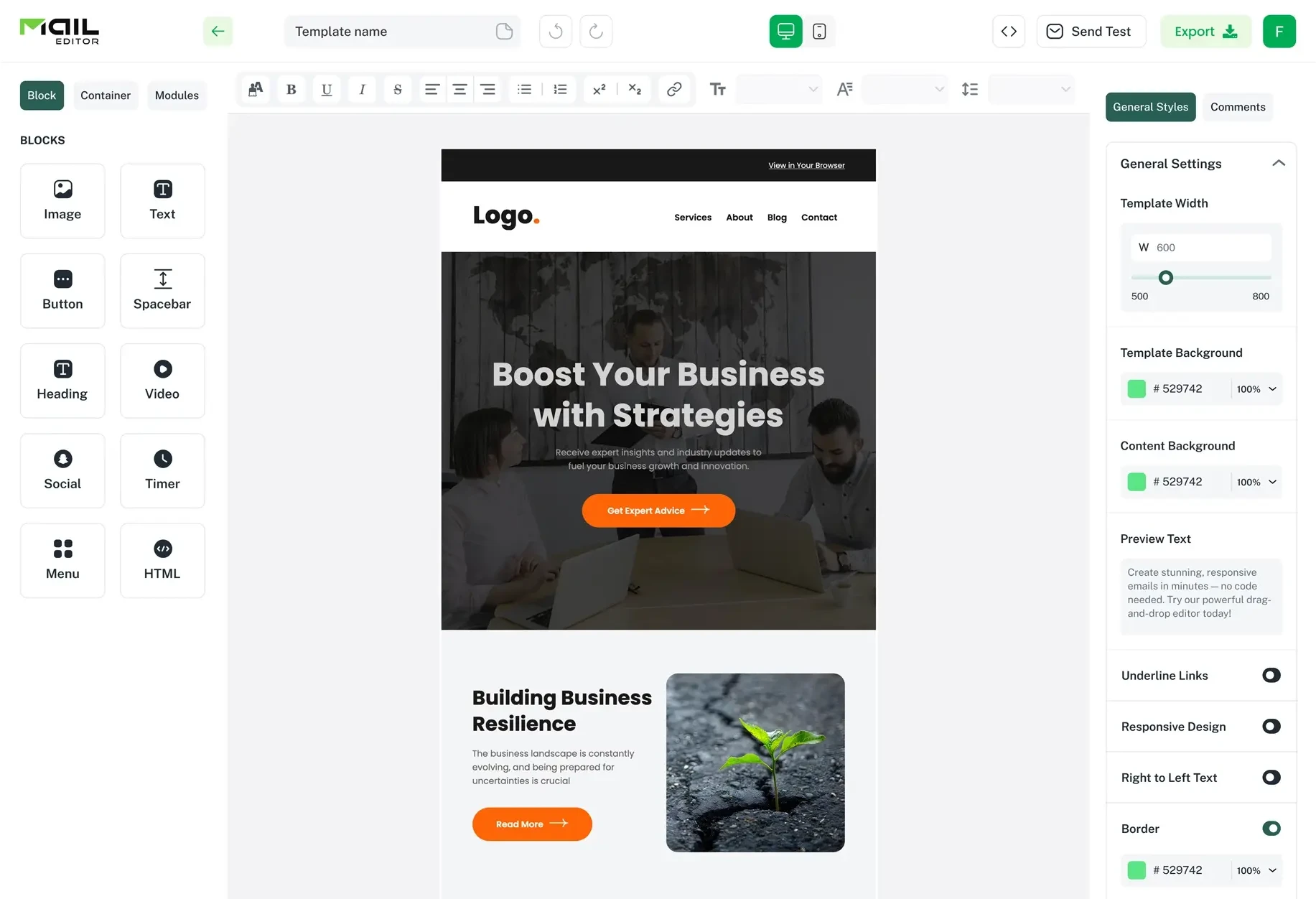
Top Email Template Builders & HTML Email Editors for 2026
Compare the best email template builders and HTML editors to design professional, responsive campaigns without coding.
Email Design9 mins to read
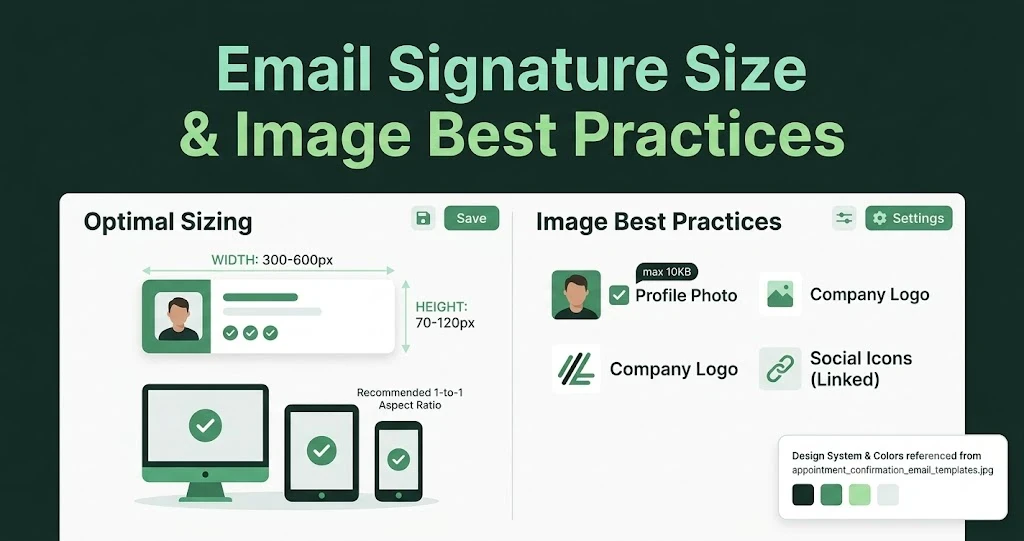
Email Signature Size and Image Best Practices
The ideal email signature is 320–600px wide and 90–200px high. Learn the best image sizes, formats, file limits, and mobile-friendly design tips.

Email Tips7 mins to read
Best Drag and Drop Email Editors in 2026
Discover the best drag and drop email editors in 2026. Compare top tools, features, templates, pricing, and automation to build stunning emails fast.

Marketing7 mins to read
4 Best Unlayer Alternatives to Design Emails
Looking for Unlayer alternatives? Explore the 4 best email design tools to create beautiful, responsive emails faster and easier.

Marketing6 mins to read
5 Beefree Alternatives to Upgrade Email Design Workflows
Looking for a better email design tool? Explore 5 Beefree alternatives that streamline workflows, improve collaboration, and elevate email campaigns.