7 Best Email Template Builders for Ecommerce Brands
The best email template builder for e-commerce with responsive templates, reusable blocks, and HTML export. Compare 7 top tools and choose the right fit.

Md. Yaikub Hossain Razon
The best email template builder for e-commerce should help brands create responsive, reusable, and conversion-focused emails without slowing down production. MailEditor is our top overall choice for flexible visual editing, reusable modules, responsive templates, HTML export, and compatibility with different email marketing workflows.
E-commerce teams create many types of emails. These include product launches, promotions, welcome emails, cart reminders, order confirmations, and post-purchase campaigns.
The right email template builder makes those campaigns easier to design and reuse while keeping branding consistent.
For ecommerce brands, the best tool should offer more than attractive templates. It should support mobile-responsive design, product-focused layouts, reusable content, strong CTA controls, and an easy way to move completed emails into your sending platform.
This guide compares seven of the best email template builders for ecommerce brands and explains which type of business each one suits best.
What Makes a Great E-commerce Email Builder?
A good ecommerce email template builder helps brands create responsive emails quickly while keeping design, branding, and content reusable.
Ecommerce teams often produce many campaigns each month. Rebuilding headers, product sections, buttons, and footers every time adds unnecessary work.
A strong email builder should provide:
- Drag-and-drop editing
- Responsive email layouts
- Product-focused templates
- Reusable sections
- Brand customization
- CTA controls
- Mobile optimization
- HTML or ESP export
- Pre-built ecommerce layouts
- Email preview and testing options
The builder should also support common ecommerce email types.
These include:
- Product promotion emails
- New product launches
- Flash sales
- Abandoned-cart emails
- Welcome sequences
- Order confirmations
- Back-in-stock emails
- Post-purchase emails
- Product recommendations
- Win-back campaigns
The number of templates matters, but workflow flexibility matters more.
A smaller collection of well-structured reusable templates can often provide more value than hundreds of layouts that do not fit your brand.
Best E-commerce Email Builders Compared
|
Email Builder |
Best For |
Main Strength |
|
MailEditor |
Flexible ecommerce email design |
Responsive templates, reusable modules, HTML export |
|
Klaviyo |
Ecommerce automation |
Customer data and personalized campaigns |
|
Omnisend |
Store-connected marketing |
Product blocks and ecommerce automation |
|
Stripo |
Template variety |
Large template library and advanced design |
|
RGE Studio |
Team collaboration |
Shared design and approval workflows |
|
Mailchimp |
Existing Mailchimp users |
Email design inside a broader marketing platform |
|
Brevo |
Integrated email workflows |
Campaigns, automation, and transactional email |
1. MailEditor

Best Overall Ecommerce Email Builder
MailEditor is our top choice for ecommerce brands that want a dedicated email design workspace with responsive templates, reusable modules, visual editing, HTML export, and flexible email platform workflows.
Instead of tying email design to one sending platform, MailEditor lets teams create and manage email templates separately.
That makes it useful for ecommerce brands, agencies, designers, and marketing teams that work across different email platforms.
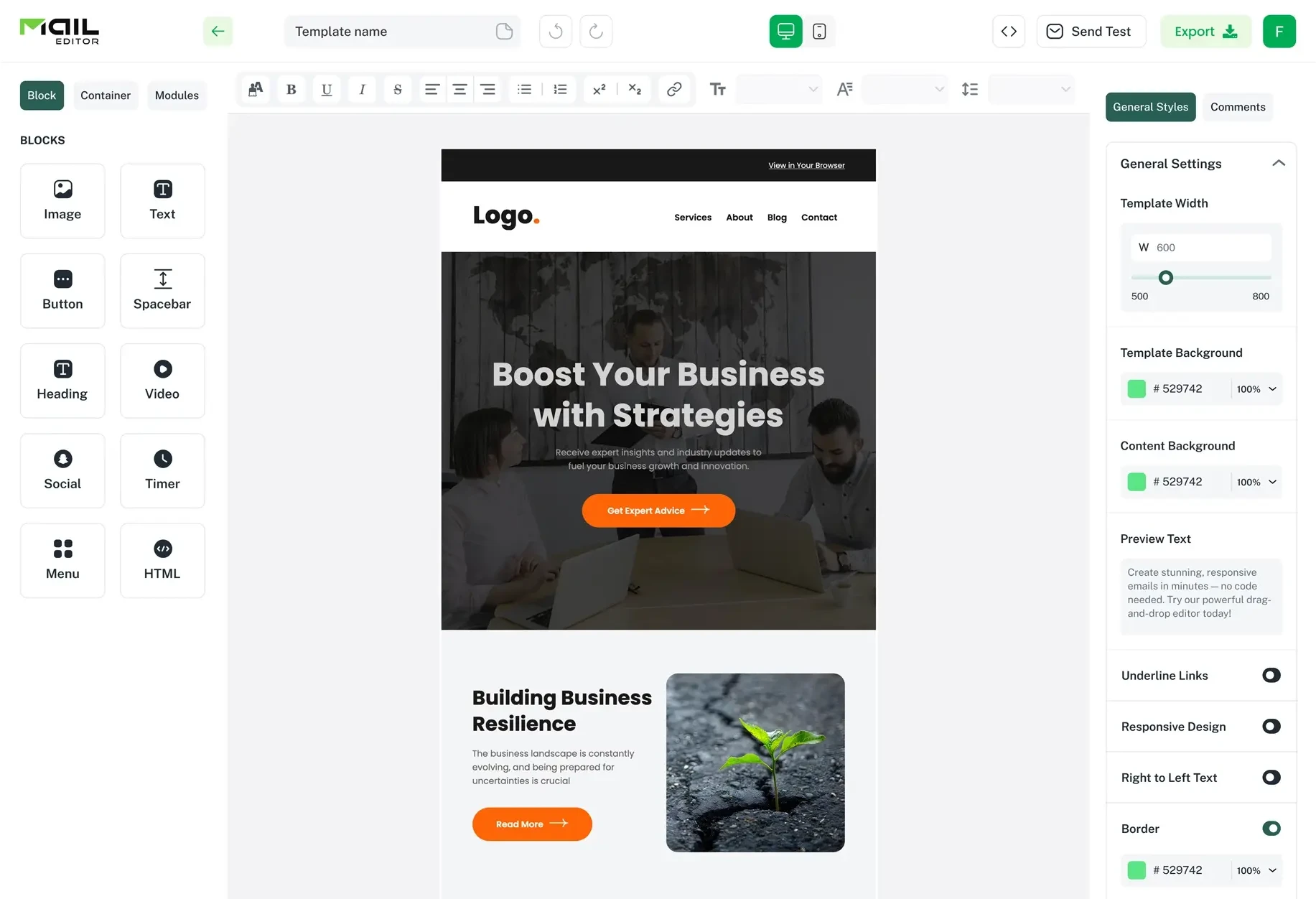
The MailEditor drag-and-drop HTML email builder lets users create emails visually without rebuilding every section manually.
Key MailEditor Features
MailEditor includes:
- Drag-and-drop email editing
- 200+ responsive HTML email templates
- 120+ pre-built modules
- Reusable sections
- Custom HTML blocks
- Responsive columns
- AI-assisted template creation
- HTML export
- ESP export options
- Email preview and testing tools
- Free plan availability
Reusable modules are especially helpful for ecommerce teams.
A brand can create reusable:
- Headers
- Footers
- Product sections
- CTA blocks
- Promotional banners
- Social sections
- Brand elements
These can then be reused across future campaigns.
Ecommerce Templates
MailEditor provides templates for many ecommerce use cases.
Brands can start with product promotion email templates for:
- New products
- Featured collections
- Product bundles
- Seasonal promotions
- Customer recommendations
- Limited-time campaigns
For customer communications, MailEditor also provides order confirmation email templates with editable product, payment, delivery, and support sections.
The complete MailEditor email template library contains more than 200 templates across ecommerce, newsletters, events, onboarding, transactional emails, and promotional campaigns.
Why Choose MailEditor?
MailEditor is especially useful when your workflow looks like this:
Choose template → customize visually → reuse sections → export → send through your preferred platform
This gives ecommerce teams more control over design while allowing them to continue using their existing email marketing platform.
2. Klaviyo

Best for Ecommerce Automation
Klaviyo is a strong option for ecommerce brands that want email design closely connected with customer data, segmentation, and automation.
It is widely used by online stores because customer behavior can influence email content and automated flows.
Brands can create campaigns such as:
- Welcome emails
- Product recommendations
- Abandoned-cart sequences
- Post-purchase messages
- Customer win-back campaigns
- Product promotions
Klaviyo also provides a drag-and-drop editor and reusable content blocks.
Its main advantage is the connection between ecommerce data and email automation.
For brands already using Klaviyo, creating and sending emails inside the same system can create a smooth workflow.
MailEditor users can also start with Klaviyo-ready email templates and customize their designs before moving them into their campaign workflow.
3. Omnisend

Best for Store-Connected Campaigns
Omnisend is designed around ecommerce marketing and combines email building with automation and store-connected product content.
Its editor supports product-focused blocks that make it easier to build promotional campaigns.
Ecommerce teams can use Omnisend for:
- Product promotions
- Discount campaigns
- Welcome emails
- Cart recovery
- Product recommendations
- Automated customer journeys
Product information can be connected with store data, which can reduce the amount of manual content entry required.
Omnisend is a useful choice when ecommerce automation and campaign building need to stay inside the same platform.
Brands using MailEditor can also work with Omnisend-compatible email templates for ecommerce campaigns.
4. Stripo

Best for Template Variety
Stripo is a dedicated email design platform suited to teams that want a large template collection and advanced email design controls.
It provides many prepared templates across different industries and campaign types.
Useful capabilities include:
- Drag-and-drop editing
- Reusable modules
- Dynamic content
- Product cards
- Brand styling
- Interactive email elements
- HTML export
- ESP integrations
Stripo can work well for teams that prefer to design emails separately before moving them into a sending platform.
Its large library can also provide inspiration for brands producing many different campaign styles.
5. RGE Studio

Best for Collaborative Design
RGE Studio, formerly known as Beefree, is suited to marketing teams that need collaborative email design and approval workflows.
It combines visual email editing with tools for teams working together.
Features include:
- Drag-and-drop editing
- Responsive design
- Reusable content
- Mobile design controls
- Team comments
- Shared projects
- ESP connections
This can be useful when several people take part in the email production process.
For example, a designer may build the email while a marketer reviews copy and another team member approves the final campaign.
A collaborative workspace can make that process easier to manage.
6. Mailchimp

Best for Existing Mailchimp Users
Mailchimp is a practical choice for ecommerce brands already using Mailchimp for campaigns, audiences, and marketing automation.
Its email builder provides drag-and-drop content blocks and prepared layouts.
Businesses can create:
- Promotions
- Newsletters
- Product announcements
- Welcome emails
- Customer updates
- E-commerce campaigns
Mailchimp also provides branding tools that can help apply logos, colors, and other brand elements.
Its strongest advantage appears when a company already relies on the wider Mailchimp platform.
In that situation, designing and sending emails from the same system can keep the workflow straightforward. Brands using MailEditor can also work with Mailchimp email templates for ecommerce campaigns.
7. Brevo

Best for Integrated Email Workflows
Brevo combines email design with marketing campaigns, automation, personalization, and transactional email tools.
Its drag-and-drop editor allows teams to create emails without manually writing the entire HTML structure.
Ecommerce brands can use Brevo for:
- Marketing campaigns
- Product emails
- Automated messages
- Order communications
- Customer journeys
- Transactional emails
Dynamic content can also help adjust email content based on customer information.
Brevo can be a good option for teams that prefer campaign design, automation, and transactional communication inside one environment.
Standalone Builder vs Ecommerce ESP
A standalone email builder is usually better when design flexibility and template portability matter most. An ESP-native builder is useful when customer data, automation, and sending need to stay inside one platform.
|
Choose a Standalone Builder If |
Choose an ESP Builder If |
|
You work with several ESPs |
You use one primary marketing platform |
|
HTML export matters |
Automation is a major priority |
|
Designers need a dedicated workspace |
Customer data should connect directly |
|
Reusable design is important |
Sending and design should stay together |
|
You want template portability |
Store integrations drive campaigns |
For example, an ecommerce agency may create emails for clients using several email platforms.
A flexible standalone builder such as MailEditor can help the agency manage designs in one workspace.
A store that runs most customer automation inside Klaviyo may prefer Klaviyo's built-in editor for some campaigns.
The best choice depends on the workflow.
How to Choose the Right Builder
Choose an ecommerce email builder based on the emails you send, the platforms you use, and how often your team creates new campaigns.
Use these five steps.
1. List Your Email Types
Start with the campaigns your store actually sends.
For example:
-
Promotions
-
Product launches
-
Welcome emails
-
Cart recovery
-
Order confirmations
-
Post-purchase campaigns
Choose a builder that makes these emails easy to create and reuse.
2. Check Your Current ESP
Decide where the final email will be sent.
If you use Klaviyo, Mailchimp, Omnisend, HubSpot, or another platform, make sure your design workflow fits that system.
HTML export and ESP integrations can make this easier.
3. Prioritize Mobile Design
Ecommerce emails need to work well on smaller screens.
Check:
-
Text readability
-
CTA size
-
Image scaling
-
Column stacking
-
Spacing
-
Content order
A desktop layout can look very different after it stacks on mobile.
The MailEditor guide to mobile-responsive email design explains how to build layouts that adapt more effectively across screen sizes.
4. Look for Reusable Modules
Reusable sections can save time when campaigns share common elements.
Good reusable components include:
-
Headers
-
Footers
-
Product cards
-
CTA blocks
-
Offer banners
-
Social sections
This also helps maintain visual consistency across campaigns.
5. Test the Complete Workflow
Do not judge a tool only by the editor.
Review the complete process:
Template → customization → mobile review → export → ESP → final testing
A builder that fits this workflow can make regular ecommerce campaign production much easier.
What Is the Best Email Template Builder for Ecommerce?
MailEditor is our top overall choice for ecommerce brands that want responsive templates, visual editing, reusable modules, HTML export, and the flexibility to work with different email platforms.
The other tools are strong choices for specific workflows.
Choose:
-
MailEditor for flexible visual design and portable templates.
-
Klaviyo for ecommerce data and automation.
-
Omnisend for store-connected campaigns.
-
Stripo for extensive template choice.
-
RGE Studio for collaborative email production.
-
Mailchimp when your business already uses Mailchimp.
-
Brevo for combined campaigns, automation, and transactional email.
Final Answer
The best email template builder for ecommerce should make email creation faster while keeping your campaigns responsive, reusable, and easy to manage.
-
Choose responsive ecommerce templates for promotions, launches, customer journeys, and transactional emails.
-
Prioritize reusable content blocks so your team can maintain consistent branding without rebuilding common sections.
-
Check HTML export and ESP compatibility if your business works across several email platforms.
-
Make mobile design a priority because product content and CTA buttons need to remain easy to use on smaller screens.
-
Choose MailEditor for a flexible ecommerce design workflow with drag-and-drop editing, reusable modules, responsive templates, HTML export, and support for different email marketing workflows.
For ecommerce brands that want more control over template creation, start with the MailEditor drag-and-drop email builder and explore more than 200 responsive HTML email templates.
Frequently Asked Questions
Question: What is the best email template builder for ecommerce?
Answer: MailEditor is a strong overall choice for ecommerce brands that want responsive templates, reusable modules, visual editing, HTML export, and flexible ESP workflows.
Question: Can I create ecommerce emails without coding?
Answer: Yes. Drag-and-drop email builders let ecommerce teams create product promotions, newsletters, order emails, and automated campaign designs without manually coding every element.
Question: What features should an ecommerce email builder have?
Answer: An ecommerce email builder should include responsive layouts, product-friendly sections, reusable modules, strong CTA controls, mobile optimization, brand customization, and practical export options.
Question: Do I need a separate email builder with Klaviyo?
Answer: Not always. Klaviyo includes its own email editor.
Question: What is the best free ecommerce email builder?
Answer: MailEditor offers a free plan that lets users start creating responsive email designs with drag-and-drop editing and reusable templates.
Question: Are ecommerce email templates mobile responsive?
Answer: Well-built ecommerce email templates should adapt to different screen sizes.
Question: Which email builder can export HTML?
Answer: Standalone email builders such as MailEditor and Stripo support HTML export, which is useful when you want to design an email independently and move it into another email platform.
Popular Blogs
Email Design2 mins to read
Top Email Template Builders & HTML Email Editors for 2026
Compare the best email template builders and HTML editors to design professional, responsive campaigns without coding.
Email Design9 mins to read
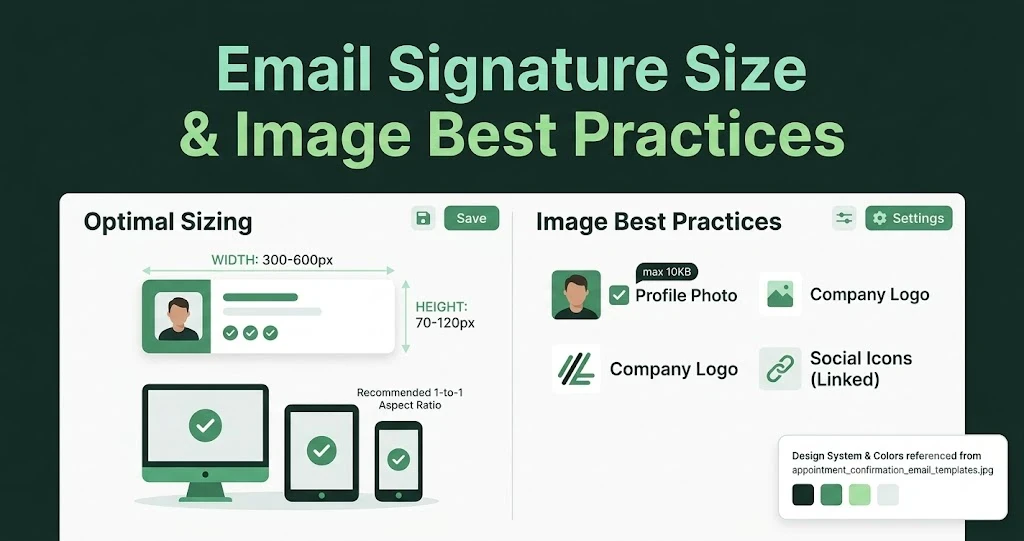
Email Signature Size and Image Best Practices
The ideal email signature is 320–600px wide and 90–200px high. Learn the best image sizes, formats, file limits, and mobile-friendly design tips.

Email Tips7 mins to read
Best Drag and Drop Email Editors in 2026
Discover the best drag and drop email editors in 2026. Compare top tools, features, templates, pricing, and automation to build stunning emails fast.

Marketing7 mins to read
4 Best Unlayer Alternatives to Design Emails
Looking for Unlayer alternatives? Explore the 4 best email design tools to create beautiful, responsive emails faster and easier.

Marketing6 mins to read
5 Beefree Alternatives to Upgrade Email Design Workflows
Looking for a better email design tool? Explore 5 Beefree alternatives that streamline workflows, improve collaboration, and elevate email campaigns.