Best Email Builder for HubSpot: 7 Top Picks
MailEditor is the best email builder for HubSpot for flexible design, reusable modules, HTML editing, and smooth HubSpot workflows. Compare 7 top picks.

Md. Yaikub Hossain Razon
The best email builder for HubSpot should make it easy to create responsive emails, reuse branded content, collaborate with your team, and move finished designs into HubSpot. MailEditor is our top overall choice for teams that want flexible visual editing, reusable modules, custom HTML support, and a streamlined HubSpot workflow.
HubSpot already gives marketers powerful tools for CRM data, automation, personalization, email sending, and reporting. However, many teams also want a dedicated email design environment with more flexibility over layouts, reusable content, and existing HTML templates.
This guide compares seven email builders that can complement a HubSpot email marketing workflow. We reviewed their email editing experience, responsive design options, reusable content, HTML capabilities, collaboration tools, and HubSpot integration options.
Whether you are a marketer, agency, designer, or growing business, this comparison will help you choose the right option.
What Makes a Good HubSpot Email Builder?
A good HubSpot email builder should make email production faster while keeping the final campaign easy to use inside HubSpot.
The most useful features include:
- Drag-and-drop email editing
- Responsive layouts
- Mobile design controls
- Reusable email sections
- Custom HTML support
- Brand styling controls
- HubSpot export or integration
- Email preview tools
- Team collaboration
- Template organization
- Personalization support
- Easy campaign reuse
The ideal workflow should also be simple.
For many teams, it looks like this:
Design → Review → Export to HubSpot → Personalize → Test → Send
This setup allows your design team to work in a dedicated email editor while HubSpot continues to manage contacts, automation, personalization, campaign delivery, and reporting.
Best Email Builders for HubSpot Compared
|
Email Builder |
Best For |
HubSpot Workflow |
Standout Feature |
|
MailEditor |
Overall email production |
HubSpot export workflow |
Existing HTML editing and reusable modules |
|
HubSpot |
Native HubSpot campaigns |
Built in |
CRM personalization and reporting |
|
Stripo |
Template variety |
Direct export |
Large template and module library |
|
RGE Studio |
Team collaboration |
Direct export |
Reviews and approval workflows |
|
Chamaileon |
Brand governance |
Template synchronization |
Reusable brand assets |
|
Tabular |
Responsive design |
HubSpot upload |
Detailed mobile controls |
|
Postcards |
Visual design |
Direct export |
Modular and AI-assisted creation |
Each tool serves a slightly different type of email team.
If you want flexible visual editing, reusable HTML, and greater control over existing email templates, MailEditor provides a particularly useful workflow.
1. MailEditor

Best Overall Email Builder for HubSpot
MailEditor is our top choice for marketers, agencies, designers, and businesses looking for a flexible email template builder for HubSpot.
It gives teams several ways to start an email.
You can choose a ready-made template, build an email with reusable modules, or import an existing HTML email and continue editing it visually.
This flexibility is especially useful for businesses that already have professionally designed email assets.
Instead of rebuilding a campaign every time the copy, image, product, CTA, or offer changes, teams can continue working with their existing email structure.
The MailEditor email template library covers common business communication needs.
Key MailEditor Features
MailEditor provides:
-
Drag-and-drop visual email editing
-
Existing HTML email import
-
Reusable email sections
-
200+ pre-built modules
-
Responsive email layouts
-
Custom HTML blocks
-
Ready-to-use email templates
-
AI-assisted email creation
-
HTML export
-
HubSpot workflow support
-
Multiple ESP integration options
-
Email testing tools
Why MailEditor Works Well With HubSpot
HubSpot can remain the center of your marketing operations.
You can continue using HubSpot for:
-
CRM contacts
-
Segmentation
-
Personalization
-
Marketing automation
-
Campaign sending
-
Reporting
-
Lead management
MailEditor can handle the email design stage.
A simple workflow is:
Choose or import template → edit visually → reuse modules → export → finish campaign in HubSpot
This can be useful for teams that produce email campaigns frequently.
Common email elements can also be reused across campaigns.
Examples include:
-
Headers
-
Footers
-
Product blocks
-
CTA sections
-
Offer sections
-
Social links
-
Navigation areas
-
Legal content
Reusable components help teams maintain a consistent visual identity while reducing repetitive design work.
Edit Existing HTML Visually
One of MailEditor's most useful capabilities is existing HTML editing.
Many companies already own email templates created by developers, agencies, or previous marketing teams.
MailEditor allows those templates to remain useful.
Teams can import their HTML email and continue editing content visually without starting from zero.
This gives marketers more control over existing assets while preserving the original email structure.
For HubSpot users who regularly reuse custom designs, this can create a more efficient production workflow.
Who Should Choose MailEditor?
MailEditor is a strong fit for:
- Marketing teams
- Small businesses
- Agencies
- Email designers
- Freelancers
- Ecommerce teams
- Businesses with existing HTML templates
- Teams using more than one email platform
Best for: Flexible HubSpot email production, reusable templates, existing HTML editing, and responsive email design.
MailEditor's guide to mobile-responsive email design provides more detail on building emails that adapt across screen sizes.
2. HubSpot Email Builder

Best for Native HubSpot Campaigns
HubSpot's built-in email editor is a strong choice for teams that want their entire marketing email workflow inside one platform.
The editor allows marketers to build responsive emails using drag-and-drop sections rather than creating every layout manually with HTML.
HubSpot also connects email creation directly with its CRM.
This makes it easy to combine email campaigns with contact information, audience segmentation, automation, personalization, and campaign reporting.
Key HubSpot Email Features
HubSpot provides:
-
Drag-and-drop email editing
-
Responsive email templates
-
CRM personalization
-
Contact-property personalization
-
Marketing automation
-
Campaign analytics
-
A/B testing options
-
AI-assisted content tools
-
Email scheduling
-
Contact segmentation
The biggest advantage is convenience.
Design, audience data, automation, sending, and analytics can all stay within the same ecosystem.
Who Should Choose HubSpot?
HubSpot's native builder is ideal for companies that prefer to keep design and campaign execution in one marketing platform.
It can also work well for teams that do not require a separate email design workspace.
Best for: Businesses that want an entirely native HubSpot marketing workflow.
3. Stripo

Best for Template Variety
Stripo is a dedicated email design platform that supports HubSpot workflows.
It provides a large selection of templates and reusable email modules that marketers can customize before moving their designs into HubSpot.
Key Stripo Features
Stripo offers:
-
Drag-and-drop editing
-
HTML and CSS editing
-
Responsive email templates
-
Reusable modules
-
Interactive email elements
-
Dynamic content options
-
HubSpot export
-
Team collaboration features
-
Mobile email controls
-
Template organization
Its large template ecosystem can help teams that regularly create campaigns with different visual styles.
Instead of designing every email from a blank canvas, marketers can start from an existing layout and customize it.
Who Should Choose Stripo?
Stripo can be a good option for marketers who prioritize template selection and modular email design.
Best for: HubSpot teams that want a wide range of templates and reusable design elements.
4. RGE Studio

Best for Team Collaboration
RGE Studio is designed for teams that collaborate on email production.
It combines visual email design with review and approval workflows.
This approach can be useful when several people contribute to a campaign.
For example:
-
A designer builds the layout.
-
A copywriter adds content.
-
A marketer updates the campaign offer.
-
A manager reviews the email.
-
The approved design moves into HubSpot.
Key RGE Studio Features
RGE Studio includes:
-
Visual email editing
-
Responsive design
-
Reusable email content
-
Comments
-
Review workflows
-
Approval tools
-
User permissions
-
Custom HTML blocks
-
Dynamic content
-
Merge tag support
-
HubSpot export
-
Landing page creation
Collaboration features can become especially valuable for agencies and larger marketing teams.
They allow feedback to stay closer to the design process instead of being spread across several communication tools.
Who Should Choose RGE Studio?
RGE Studio is suited to companies with multiple people involved in email creation and approval.
Best for: Collaborative HubSpot email production.
5. Chamaileon

Best for Brand Governance
Chamaileon focuses on collaborative email creation and reusable brand assets.
Teams can create approved layouts and reusable components that help maintain consistent visual standards.
Key Chamaileon Features
Chamaileon provides:
-
No-code email editing
-
Real-time collaboration
-
Reusable content blocks
-
Shared asset libraries
-
Team roles
-
Review workflows
-
Approval tools
-
Brand controls
-
HubSpot template workflows
Reusable brand content can be especially helpful for organizations with several departments.
Instead of every contributor creating email elements independently, approved components can become part of a shared design system.
Who Should Choose Chamaileon?
Chamaileon can work well for established teams that prioritize brand consistency and structured collaboration.
Best for: HubSpot teams managing shared email assets and brand guidelines.
6. Tabular

Best for Responsive Design Control
Tabular is a visual email builder with a strong focus on responsive email layouts.
The editor provides detailed controls that allow designers to adjust how different parts of an email appear across desktop and mobile screens.
Key Tabular Features
Tabular provides:
-
Drag-and-drop email creation
-
Responsive design controls
-
Mobile layout customization
-
Reusable blocks
-
Team folders
-
Collaboration
-
HubSpot variables
-
HTML downloads
-
HubSpot upload options
-
Email template library
Responsive control is valuable because email subscribers use many different devices and screen sizes.
A design that works well on desktop should also remain readable and easy to interact with on mobile.
Who Should Choose Tabular?
Tabular can be a good option for designers who want detailed responsive layout controls.
Best for: Teams that prioritize desktop and mobile email design flexibility.
7. Postcards by Designmodo

Best for Visual and AI-Assisted Design
Postcards by Designmodo is a modular email builder designed for visually polished email campaigns.
It combines drag-and-drop editing with reusable design elements and AI-assisted creation features.
Key Postcards Features
Postcards offers:
-
Drag-and-drop email modules
-
Responsive layouts
-
AI-assisted email creation
-
Brand presets
-
Mobile design controls
-
Team comments
-
Version history
-
Reusable modules
-
Email previews
-
HubSpot export workflows
Its modular approach allows marketers to assemble email designs from predefined sections.
This can help teams create visually consistent campaigns without designing every element individually.
Who Should Choose Postcards?
Postcards is suited to teams that place strong emphasis on visual design and modular email creation.
Best for: Design-focused teams creating polished HubSpot campaigns.
External Email Builder vs HubSpot
Should You Use an External Email Builder With HubSpot?
An external email builder can be useful when you want a dedicated email design environment while continuing to use HubSpot for marketing operations.
The goal is not necessarily to replace HubSpot.
Instead, the two tools can handle different stages of the same workflow.
|
Choose |
Best When |
|
HubSpot native editor |
You want email design and campaign management in one platform |
|
External email builder |
You want additional design flexibility, reusable content, or collaboration |
|
MailEditor |
You also want to import, edit, and reuse existing HTML emails |
A common workflow looks like this:
-
Create the email in your preferred builder.
-
Review desktop and mobile layouts.
-
Export or move the design into HubSpot.
-
Add HubSpot personalization.
-
Configure the audience.
-
Review campaign settings.
-
Send a test email.
-
Launch the campaign.
This setup keeps HubSpot at the center of campaign execution while giving design teams a specialized workspace.
How to Choose the Right HubSpot Email Builder
The best email builder for HubSpot depends on how your team creates and manages campaigns.
Consider the following factors before choosing a platform.
1. Do You Have Existing HTML Templates?
If your company already has custom HTML templates, choose a builder that allows you to continue using them.
This can save time and help preserve valuable design assets.
MailEditor is particularly useful for this workflow because existing HTML emails can be imported and edited visually.
A marketing team can update:
-
Text
-
Images
-
Buttons
-
Links
-
Offers
-
Product information
-
Sections
without rebuilding the complete email.
2. Do You Reuse Email Sections?
Teams that send frequent campaigns often reuse the same content structures.
Examples include:
-
Headers
-
Footers
-
Product cards
-
CTA sections
-
Social media links
-
Promotional banners
-
Shipping information
-
Legal sections
A builder with reusable modules can turn these elements into a repeatable email design system.
This can also help maintain brand consistency.
3. How Important Is Collaboration?
Consider how many people participate in email production.
A small team may only need basic sharing.
A larger team may benefit from:
-
Comments
-
User roles
-
Approval workflows
-
Version control
-
Shared assets
-
Team folders
RGE Studio and Chamaileon place particular emphasis on collaborative workflows.
4. Do You Need Email Portability?
Some companies use HubSpot for most campaigns but still work with other email platforms.
In that situation, portable HTML can be valuable.
Your team can maintain a reusable design library rather than recreating campaigns for each platform.
MailEditor supports workflows for HubSpot and several other popular email marketing platforms.
That can make it useful for agencies or companies managing multiple ESPs.
5. How Much Responsive Control Do You Need?
Responsive email design should be a core part of your workflow.
Subscribers may open emails on:
-
Smartphones
-
Tablets
-
Laptops
-
Desktop computers
-
Different email applications
Your email builder should therefore make it easy to check how layouts behave across different screen sizes.
Pay particular attention to:
-
Font sizes
-
Button sizes
-
Image scaling
-
Column stacking
-
Padding
-
Navigation
-
CTA placement
A good responsive email builder helps keep the message readable and easy to interact with.
6. Do You Need Custom HTML?
Custom HTML gives advanced teams more control over email design.
A visual editor can make HTML-based campaigns easier for non-developers to manage.
If developers create the original email and marketers make regular content updates, a tool that combines HTML support with visual editing can improve the workflow.
MailEditor is built around this type of flexibility.
How to Use MailEditor With HubSpot
How Do You Build a HubSpot Email in MailEditor?
You can create or import an email in MailEditor, customize the design visually, review the responsive layout, and then move the finished design into your HubSpot workflow.
Here is a practical process.
Step 1: Choose Your Starting Point
Start with:
-
A MailEditor template
-
Reusable email modules
-
Your existing HTML email
-
A new email layout
Choose the option that best matches your campaign.
Step 2: Customize the Design
Update the email with your campaign content.
You can edit:
-
Headlines
-
Body copy
-
Images
-
Buttons
-
Backgrounds
-
Links
-
Spacing
-
Product information
-
Promotional sections
Keep the design aligned with your existing brand style.
Step 3: Add Reusable Sections
Save frequently used email components.
For example:
-
Logo header
-
Navigation
-
Promotional banner
-
Product section
-
CTA block
-
Footer
Reusable modules can make future campaign production faster.
They can also help maintain consistent styling.
Step 4: Review Mobile Design
Check how the email appears on smaller screens.
Review:
-
Font size
-
Images
-
Buttons
-
Padding
-
Column layouts
-
CTA placement
Make adjustments before exporting.
Step 5: Prepare the Email for HubSpot
When the design is complete, prepare it for your HubSpot workflow.
Review the final content before moving the email.
Check:
-
Links
-
Images
-
Buttons
-
Branding
-
Footer information
-
Responsive layout
Step 6: Move the Design Into HubSpot
Select the appropriate HubSpot workflow and move the finished email design into your HubSpot marketing environment.
HubSpot can then handle the campaign-specific settings.
Step 7: Configure the Campaign in HubSpot
Once the design is available in HubSpot, complete your campaign setup.
Add:
-
Subject line
-
Preview text
-
Personalization
-
Sender details
-
Contact list
-
Automation rules
-
Campaign settings
Step 8: Test Before Sending
Send a test email before launching the campaign.
Review:
-
Content
-
Links
-
Images
-
Personalization
-
Mobile appearance
-
Desktop appearance
-
CTA buttons
-
Footer details
Testing gives your team a final opportunity to review the campaign before delivery.
Which HubSpot Email Builder Is Best for You?
Different teams need different email production workflows.
Here is a simple way to choose.
Choose MailEditor If:
-
You want flexible visual email editing
-
You already have HTML email templates
-
You want reusable email modules
-
You work with several email platforms
-
You want a dedicated email design workspace
-
You want to reuse existing campaign assets
Choose HubSpot If:
-
You want everything inside HubSpot
-
CRM personalization is central to your workflow
-
You prefer native campaign management
-
You do not need a separate design platform
Choose Stripo If:
-
You want a large template library
-
You rely heavily on reusable modules
-
You create many different campaign styles
Choose RGE Studio If:
-
Several people review each campaign
-
Collaboration is a priority
-
You need structured approval workflows
Choose Chamaileon If:
-
Brand governance is important
-
Multiple teams use shared email assets
-
You want structured reusable components
Choose Tabular If:
-
Responsive design control is a priority
-
You want detailed mobile layout options
Choose Postcards If:
-
Visual design is central to your campaigns
-
You like modular workflows
-
You want AI-assisted design features
What Is the Best Email Builder for HubSpot?
The best email builder for HubSpot depends on your email production needs.
For teams that want a dedicated visual editor, reusable modules, custom HTML support, existing-template editing, and a flexible HubSpot workflow, MailEditor is our top overall choice.
HubSpot's native editor is an excellent choice for teams that want an entirely HubSpot-based workflow.
Meanwhile, Stripo, RGE Studio, Chamaileon, Tabular, and Postcards can each be strong choices for specific design or collaboration requirements.
The key is choosing a builder that complements HubSpot rather than adding unnecessary complexity.
Final Answer
Finding the best email builder for HubSpot becomes easier when you separate email design from email campaign management.
HubSpot already provides powerful tools for CRM data, segmentation, automation, personalization, sending, and reporting.
The right email builder should make the design stage easier.
For teams that want flexible HTML email production, reusable modules, visual editing, and the ability to continue working with existing email templates, MailEditor is our top choice.
MailEditor lets marketers create new designs, reuse existing assets, visually edit HTML emails, and prepare responsive campaigns for HubSpot.
This makes it possible to build a more repeatable email production system without changing the central role HubSpot plays in your marketing workflow.
Frequently Asked Questions
Question: Does HubSpot have an email builder?
Answer: Yes. HubSpot includes a drag-and-drop email builder for creating marketing emails. It also connects email creation with CRM data, personalization, automation, contact segmentation, campaign management, and reporting.
Question: Can I edit an existing HTML email for HubSpot?
Answer: Yes. If your workflow supports custom HTML, existing email code can be reused. MailEditor allows users to import existing HTML emails and visually edit content, which can be useful for teams with established templates.
Question: Can I create responsive HubSpot emails without coding?
Answer: Yes. Drag-and-drop email builders allow marketers to create responsive layouts without writing the complete email code manually. Tools such as MailEditor, HubSpot, Stripo, RGE Studio, Chamaileon, Tabular, and Postcards provide visual editing options.
Question: Which HubSpot email builder is best for agencies?
Answer: MailEditor can be a strong option for agencies because it supports reusable templates, existing HTML editing, visual design, and workflows across multiple email platforms. Agencies that require advanced review and approval processes may also consider collaboration-focused tools such as RGE Studio.
Popular Blogs
Email Design2 mins to read
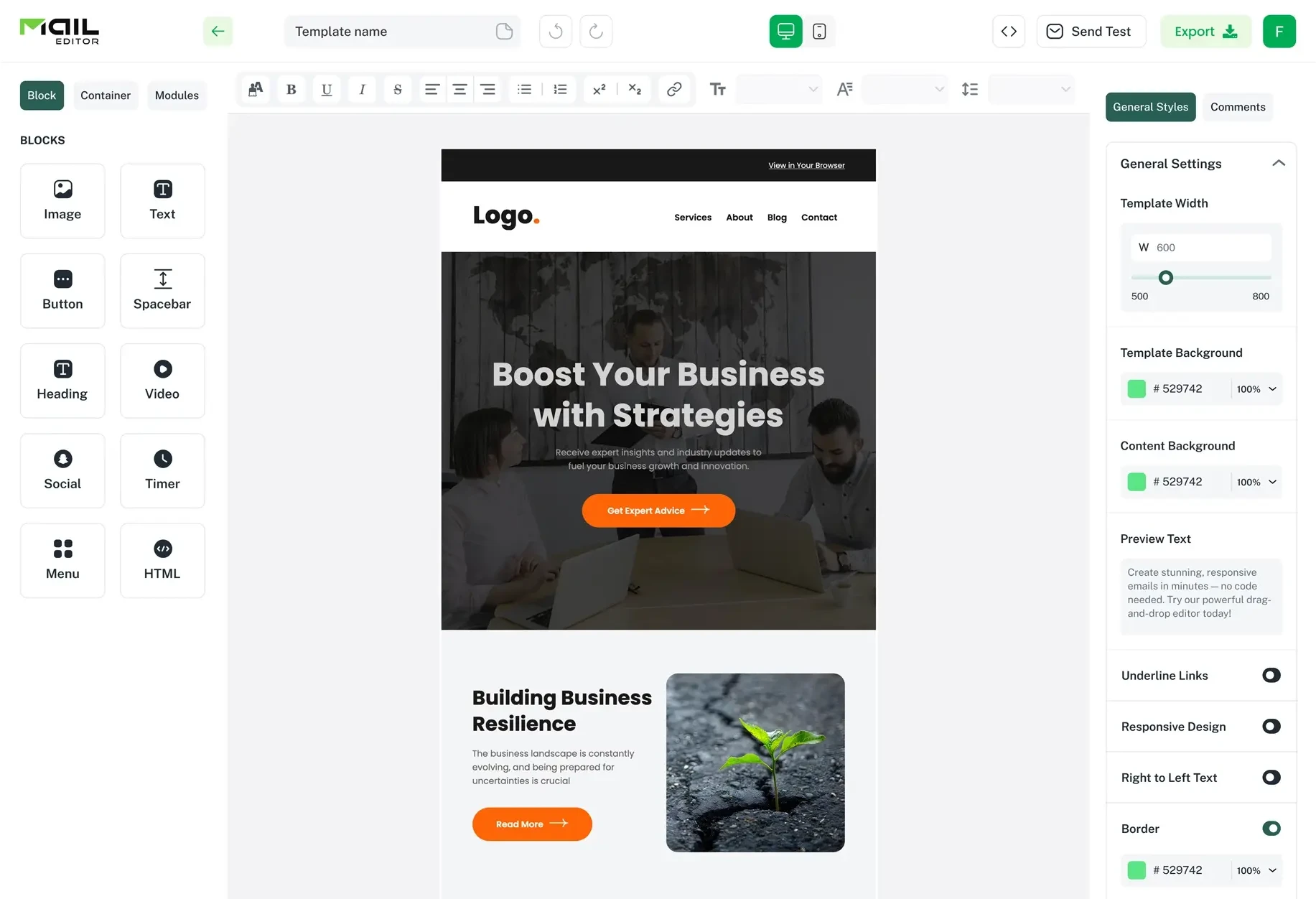
Top Email Template Builders & HTML Email Editors for 2026
Compare the best email template builders and HTML editors to design professional, responsive campaigns without coding.
Email Design9 mins to read
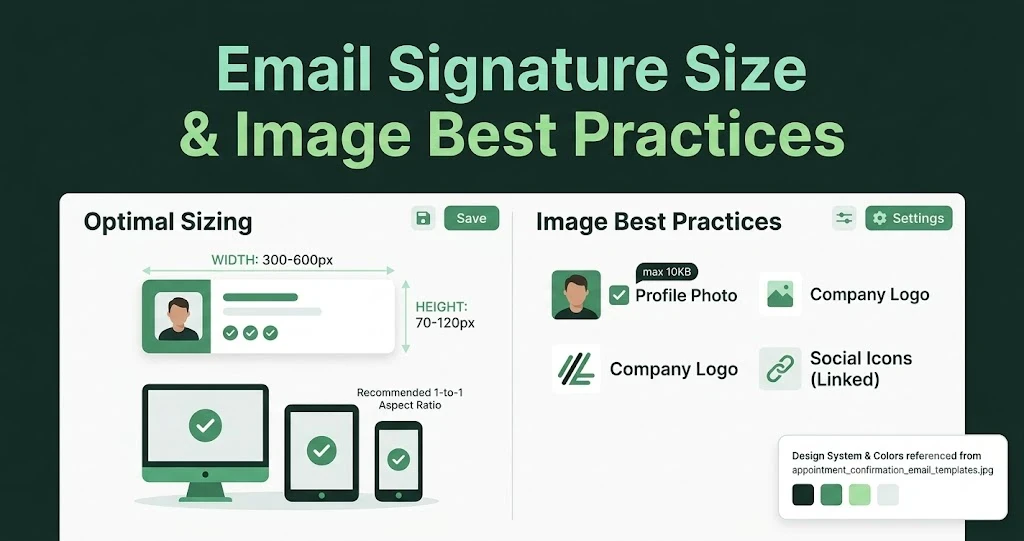
Email Signature Size and Image Best Practices
The ideal email signature is 320–600px wide and 90–200px high. Learn the best image sizes, formats, file limits, and mobile-friendly design tips.

Email Tips7 mins to read
Best Drag and Drop Email Editors in 2026
Discover the best drag and drop email editors in 2026. Compare top tools, features, templates, pricing, and automation to build stunning emails fast.

Marketing7 mins to read
4 Best Unlayer Alternatives to Design Emails
Looking for Unlayer alternatives? Explore the 4 best email design tools to create beautiful, responsive emails faster and easier.

Marketing6 mins to read
5 Beefree Alternatives to Upgrade Email Design Workflows
Looking for a better email design tool? Explore 5 Beefree alternatives that streamline workflows, improve collaboration, and elevate email campaigns.