6 Best White-Label Email Editors For B2b Platforms
Compare the best white label email and page editors for SaaS. Explore features, pros, cons, and find the right solution for your platform.

Md. Yaikub Hossain Razon
Thousands of software B2B platforms like B2B marketplaces (like RangeMe) are in the USA. Each of them uses email marketing to expand their business. White label email editors make the email outreach easy.
Cause the editors' B2B platforms can integrate a ready-made solution and customise it with their own logo, colors, and branding. That’s stronger than their brand authority.
But the challenge is that not every white-label email editor offers the same features. Platforms like MailEditor, Unlayer, and BeeFree’s drag-and-drop feature ease the challenge a little bit.
But are all those convenient enough? Let’s find out.
Must-Have Features in a White-Label Email Editor
Markets are filled with 100+ email editors, but not all of them are worth your money. Before closing the deal, you need to check if you have those features or not:
Drag-and-Drop and WYSIWYG Editing
A good white-label email editor should be easy for anyone to use, even without coding experience. A drag-and-drop editor and WYSIWYG (What You See Is What You Get) interface let users create professional emails.
You can do it simply by moving content blocks around. This helps your customers build emails faster while reducing the learning curve.
HTML Editing and Clean HTML Export
Developers often need more control. That's why HTML editing is an important feature. It lets users edit email designs or upload existing templates when needed. The editor should also export clean, responsive HTML that works with most Email Service Providers (ESPs) without breaking the design.
Responsive Email Templates and Template Libraries
It takes a lot of time to create every email. Look for an editor that offers a library of responsive templates and reusable content blocks. This allows users to build newsletters and promotional emails. And transactional emails are much faster while remaining optimised for desktop and mobile devices.
White-Label Branding and Multi-Tenant Support
If you're offering the editor as part of your B2B platform, it should feel like your own product. Multi-tenant support is another must-have, especially if your platform serves multiple businesses.
Because it allows each customer to manage their own workspace while maintaining separate branding and settings.
API, SDK, and Webhook Integrations
A good white-label email editor should be easy to integrate into your platform. So, provide a well-documented API and SDK. So developers can embed the editor with little effort. Webhooks are also useful because they help automate tasks and keep your platform synchronized with other systems.
CRM and Marketing Automation Integrations
Your email editor should work smoothly with the tools your customers already use. So, the platforms should have access to HubSpot, Salesforce, ActiveCampaign, Mailchimp, and other marketing automation tools.
That will make it easier to manage contacts, launch campaigns, and keep customer data up to date without switching between multiple applications.
Security, GDPR, SSO, and Access Control
Security is especially important for B2B platforms that handle customer data. So, choose an editor that supports GDPR compliance and Single Sign-On (SSO). It will secure authentication and role-based access control. These features help protect sensitive information.
Analytics, A/B Testing, and Campaign Performance
The email editor should have built-in analytics and A/B testing. So, you can compare subject lines, layouts, and call-to-action buttons to see which perform best. Also, tracking metrics like open rates and click-through rates. That’s why conversions help businesses optimise future campaigns and get better results over time.
6 Best White-Label Email Editors for B2B Platforms
Here are 6 platforms that have all the features:
MailEditor

MailEditor lets you embed a fully branded email editor into your platform. So, your customers can create and edit emails without leaving your dashboard.
They also have the Upload, Edit & Export feature. You can upload an existing HTML B2B email and make changes with the drag-and-drop editor. You can also export clean HTML in 2 minutes.
It also includes an AI template generator, more than 200 reusable modules, and responsive templates to speed up email creation.
Another reason many B2B platforms choose MailEditor is its compatibility. It exports clean HTML that works with almost any ESP, including Mailchimp, HubSpot, Salesforce, ActiveCampaign, Klaviyo, Brevo, SendGrid, Braze, Campaign Monitor, Gmail, and Outlook.
Unlayer

Unlayer offers many customizable email editors. It comes with a drag-and-drop builder, a WYSIWYG editor, and flexible APIs. So, you can embed the editor into your own software easily. You can also customize the branding, so customers only see your logo and interface.
The best part is they come with a drag-and-drop interface and a WYSIWYG editor. So, it is easy for both beginners and experienced users to create responsive emails.
It also includes reusable content blocks, responsive templates, merge tags, and dynamic content. It will help you use users' emails without extra effort. So, the editing experience stays simple and intuitive.
BeeFree

One of BeeFree's biggest strengths is its large collection of responsive white label email templates. It is also reusable content blocks. That makes it easy to create all kinds of B2B emails.
You can customize the experience so it feels like a native part of your platform instead of a third-party tool. It also supports HTML export. It means you can use their email designs with most Email Service Providers (ESPs) that support custom HTML.
Another feature that sets BeeFree apart is its collaboration tools.
Multiple team members can review, edit, and approve email designs before they're published. That’s why it is a good choice for marketing teams and agencies that work together on campaigns.
Stripo

Stripo gives both marketers and developers what they need. Cause it supports interactive emails.
The AMP for Email support enables adding elements such as image carousels, forms, accordions, and other interactive content. So, it encourages recipients to engage with emails directly from their inbox. It is the biggest advantage for any B2B teams.
Stripo also offers flexible integration options through its API.
So, you can easily embed the editor into a B2B platform. Once an email is ready, users can export clean HTML or send their designs directly to many popular email marketing platforms and ESPs. So, it helps you maintain an easy workflow
Topol

The editor opens with a clean workspace where users can build emails by dragging in text, images, buttons, dividers, social icons, and other content blocks. Everything happens visually. So, even someone creating their first email can put together a professional design in just a few minutes.
Topol also works well for teams that value speed over complexity.
You can reuse existing layouts and content blocks to create new campaigns much more quickly. That implicitly often matters more than having every enterprise feature available.
If you want to give customers an email editor that's easy to learn, quick to use, and produces responsive HTML emails, Topol does exactly that.
Knak

One of Knak's biggest strengths is its brand governance. Companies can create approved templates, reusable content blocks, and design guidelines that every team follows. This helps maintain a consistent brand identity across every email, no matter who creates it.
Another reason enterprise companies choose Knak is its strong integration ecosystem.
It integrates with platforms such as Salesforce Marketing Cloud, Adobe Marketo Engage, Oracle Eloqua, and Adobe Journey Optimiser. So, teams can move approved email designs directly into their existing marketing workflows. That’s why marketers can simply design once and export or sync them where they're needed.
Conclusion
The best white-label email editor depends on what your B2B platform needs most.
If you're looking for a quick setup with clean HTML export, one tool might be a better fit. If your priority is developer flexibility, enterprise workflows, or team collaboration, another option could be the right choice.
Before making a decision, consider how your customers will use the editor.
At the end of the day, a good white-label email editor does more than help users design emails. Choose the solution that fits your product today while giving you room to grow as your platform expands.
Frequently Asked Questions
Question: Can I embed a white-label email editor into my B2B platform?
Answer: Yes. Most white-label email editors provide an API or SDK that lets you embed the editor directly into your B2B platform. This allows your customers to create and edit emails without leaving your application while keeping the entire experience branded as your own.
Question: What is the difference between a white-label email editor and an email builder?
Answer: A white-label email editor focuses on creating and editing emails that you can rebrand and embed into your own platform. An email builder may include additional marketing features like campaign management, automation, audience segmentation, analytics, and email sending. Some platforms offer both in one solution.
Question: Do white-label email editors support APIs and SDKs?
Answer: Yes. Most leading white-label email editors offer APIs and SDKs for easy integration. Many also support webhooks, merge tags, custom tools, and integrations with CRM, marketing automation, and email service providers to fit different business workflows.
Question: Which white-label email editor is best for B2B platforms?
Answer: The right choice depends on your requirements. MailEditor is a great option if you need clean HTML export and broad ESP compatibility. Unlayer is ideal for advanced customization and developer flexibility, while Knak is better suited for enterprise teams that need approval workflows and brand governance.
Question: Are white-label email editors secure and GDPR compliant?
Answer: Most reputable providers follow industry security standards and offer GDPR compliance, secure authentication, role-based access controls, and data protection features. However, security and compliance vary by platform, so it's worth reviewing each provider's documentation before integrating it into your B2B platform.
Popular Blogs
Email Design2 mins to read
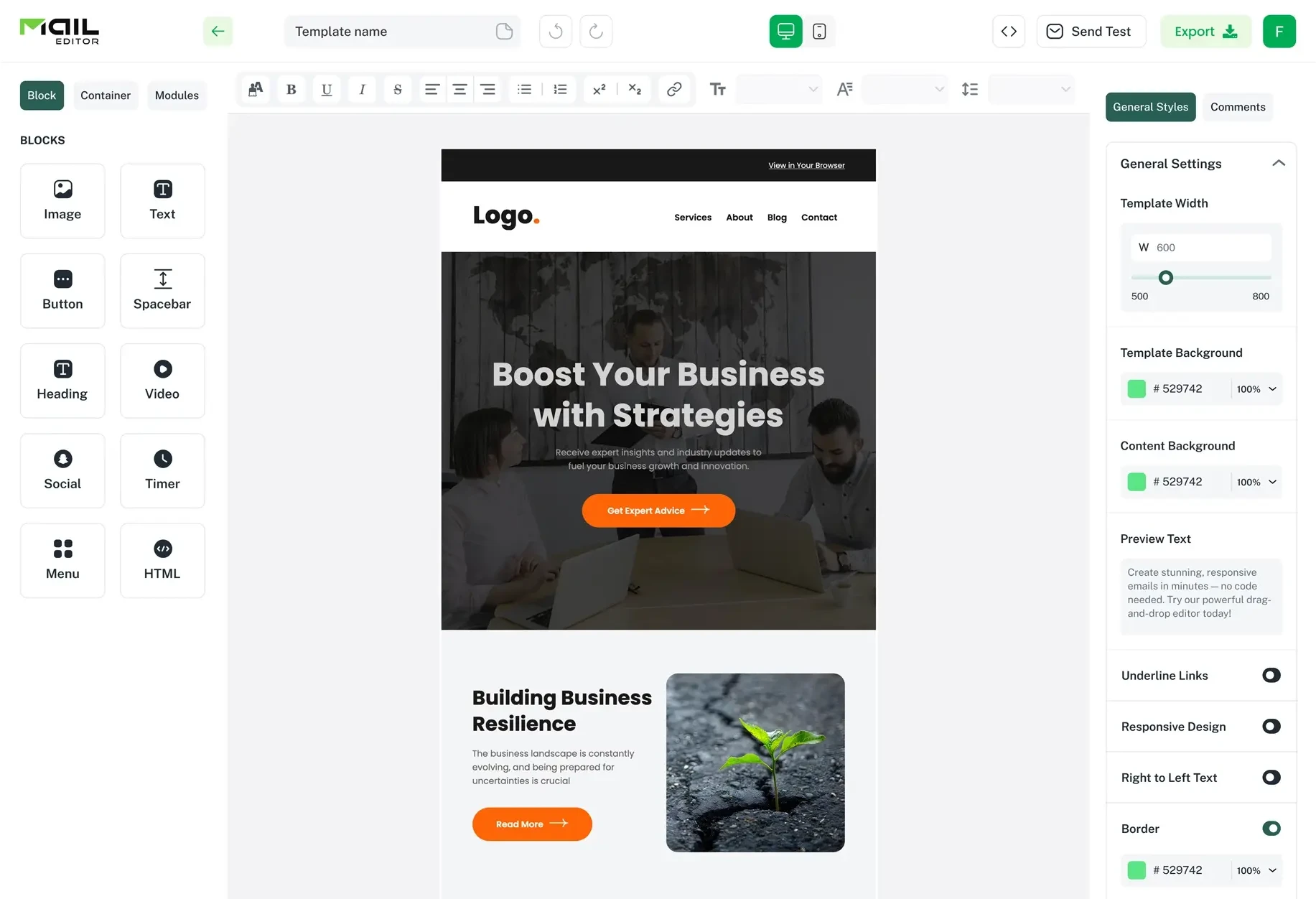
Top Email Template Builders & HTML Email Editors for 2026
Compare the best email template builders and HTML editors to design professional, responsive campaigns without coding.
Email Design9 mins to read
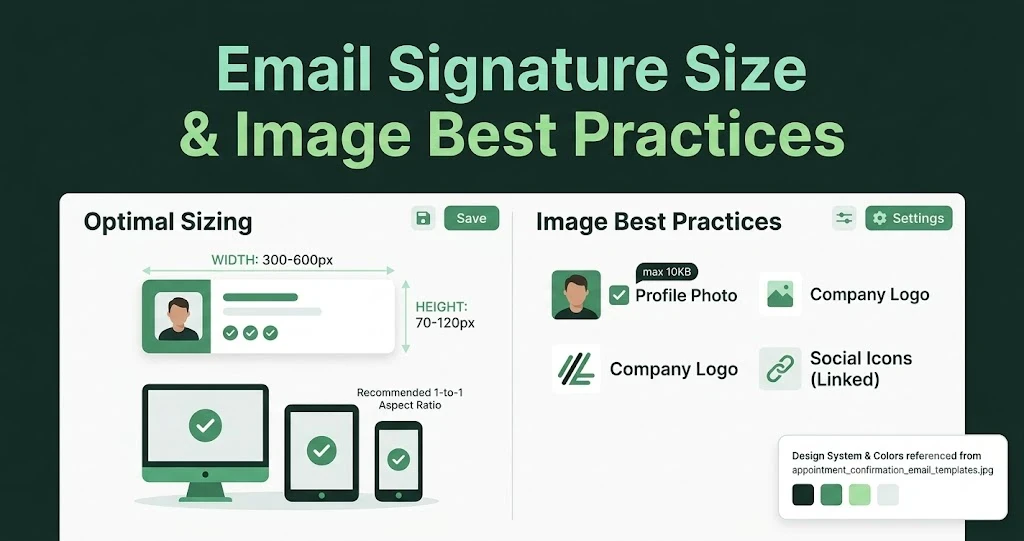
Email Signature Size and Image Best Practices
The ideal email signature is 320–600px wide and 90–200px high. Learn the best image sizes, formats, file limits, and mobile-friendly design tips.

Email Tips7 mins to read
Best Drag and Drop Email Editors in 2026
Discover the best drag and drop email editors in 2026. Compare top tools, features, templates, pricing, and automation to build stunning emails fast.

Marketing7 mins to read
4 Best Unlayer Alternatives to Design Emails
Looking for Unlayer alternatives? Explore the 4 best email design tools to create beautiful, responsive emails faster and easier.

Marketing6 mins to read
5 Beefree Alternatives to Upgrade Email Design Workflows
Looking for a better email design tool? Explore 5 Beefree alternatives that streamline workflows, improve collaboration, and elevate email campaigns.